
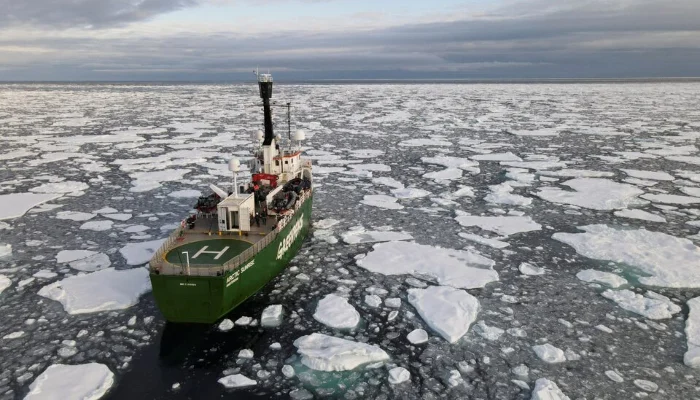

The Arctic sea ice has reached its lowest level ever recorded, matching last year’s all-time low, according to the National Snow and Ice Data Center (NSIDC) in Boulder, Colorado.
Scientists announced on Thursday that the maximum ice extent this year was measured at 14.29 million square kilometers. This amount has statistically the same value as last year’s lowest amount of ice at 14.31 million square kilometers. This is the lowest amount of ice seen in 48 years of satellite monitoring.
The maximum ice was reached on March 15 this year, a full week earlier than in 2025. However, researchers believe that the lack of ice development gives the melting in the spring and summer a worrisome head start.
NSIDC senior researcher Walt Meier stated that the lack of ice development in the winter would likely result in a fast melting once the warm weather comes.
Samantha Burgess, a researcher at the European Centre for Medium-Range Weather Forecasts, also agreed that it could trigger a fast and extensive melting in the summer.
Effects on nature and global politics
However, melting sea ice does not directly influence sea levels like glaciers do. Nonetheless, melting sea ice poses serious environmental challenges. Sea ice serves as a habitat for different animals, including polar bears. When the ice melts earlier, it alters the normal life cycles of these animals.
The melting also opens new opportunities for shipping routes and underwater mineral deposits in the Arctic region. This has revived interest in the region. Since returning to the White House, President Donald Trump has repeatedly expressed interest in acquiring Greenland.

