



Gaza Ceasefire
The United States and its Arab allies found themselves at odds over Israel’s military offensive in Gaza against Hamas. Washington, in alignment with Israel, resisted pressure for an immediate Gaza ceasefire, despite the increasing casualties among Palestinian civilians.
During a rare public disagreement, Arab foreign ministers held a press conference, urging U.S. Secretary of State Antony Blinken to convince Israel to agree to a Gaza ceasefire. However, Blinken dismissed the idea, arguing that such a pause would only benefit Hamas by allowing the militant Palestinian group to regroup and launch further attacks.
Blinken is scheduled to continue his Middle East trip on Sunday, marking his second visit to the region since the Israeli-Palestinian conflict reignited on October 7. It began when Hamas fighters, who govern the Gaza Strip, crossed the border into Israel, resulting in 1,400 casualties and over 240 hostages.
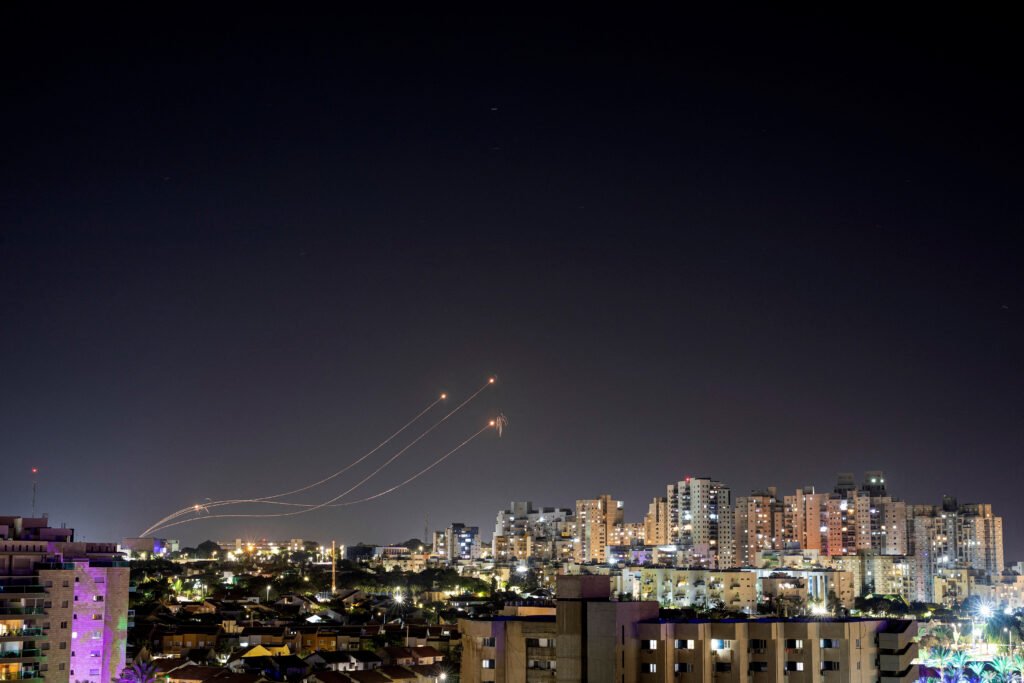
In response, Israel conducted airstrikes, imposed a blockade, and initiated a ground assault, causing global concern over humanitarian conditions in Gaza. According to Gaza health officials, the conflict has claimed the lives of over 9,488 Palestinians.
On Saturday, the Palestinian news agency WAFA reported that an Israeli bombardment of Gaza’s Maghazi refugee camp had resulted in 51 Palestinian fatalities, primarily women and children, with numerous others wounded. Reuters could not independently verify the WAFA report, and the Israeli military did not immediately respond to requests for comment.
The rising number of civilian casualties has heightened international calls for a Gaza ceasefire. However, both Washington and Israel have thus far rejected these appeals, even though they have sought to persuade Israeli Prime Minister Benjamin Netanyahu’s government to agree to localized pauses. After a meeting with Blinken on Friday, Netanyahu dismissed the idea.
When asked by reporters on Saturday if there was any progress in achieving a humanitarian pause, U.S. President Joe Biden responded affirmatively and signaled his approval. However, it remains uncertain how long the Biden administration can continue to resist these calls, as pro-Palestinian demonstrators staged protests in cities around the world, including London, Berlin, Paris, Istanbul, and Washington, demanding a ceasefire.
Jordanian Foreign Minister Ayman Safadi expressed his concerns, stating, “This war is just going to produce more pain for Palestinians, for Israelis, and this is going to push us all again into the abyss of hatred and dehumanization,” during a joint news conference with Blinken. “So that needs to stop.”
Palestinian witnesses reported that Israel struck Al-Fakhoura school in Jabalia, where thousands of evacuees were taking shelter, on Saturday. The Israeli military indicated that a preliminary inquiry suggested they had not targeted the location directly, but the explosion might have been the result of IDF (Israel Defense Forces) fire aimed at another target.
Arab leaders have been cautious about discussing the future of Gaza comprehensively, emphasizing the need to focus on ending the conflict and providing humanitarian aid. Egyptian Foreign Minister Sameh Shoukry noted, “This is premature at this time. You have to concentrate on the subject at hand,” regarding the cessation of hostilities and humanitarian assistance for Gaza.
Concerns over West Bank Amid Ongoing Israeli Offensive in Gaza
Blinken expressed his concern about the escalating violence targeting Palestinian civilians in the occupied West Bank. “This has been a serious issue that has deteriorated since the conflict began,” stated the U.S. diplomat, noting that he had raised this concern during his meetings with Israeli officials on Friday.
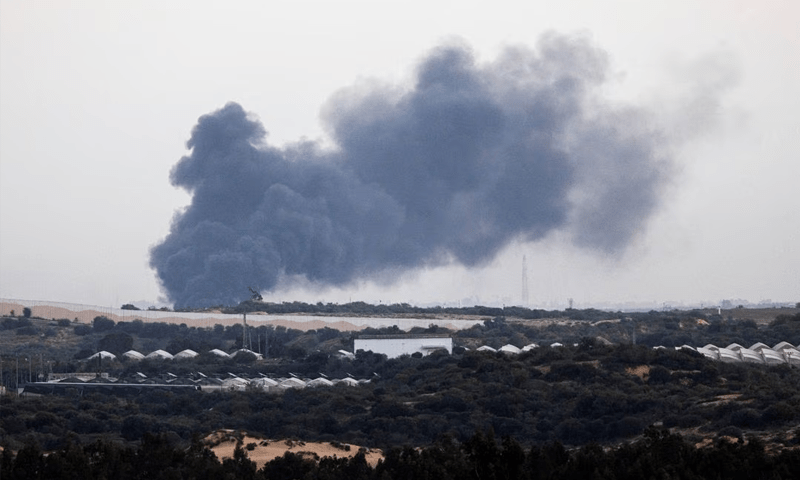
Blinken emphasized the importance of holding the perpetrators accountable. He is expected to arrive in Ankara on Sunday and hold meetings with senior Turkish officials the following day.
This year marked the deadliest period for West Bank residents in at least 15 years, with United Nations data reporting around 200 Palestinians and 26 Israelis killed. An additional 121 West Bank Palestinians lost their lives following the October 7 Hamas attacks on Israel.
According to U.N. statistics, daily attacks by Israeli settlers have more than doubled, although the majority of fatalities occurred during clashes with IDF soldiers.
The Israeli military asserted that its efforts aimed to curb violence and protect Palestinian civilians. The deteriorating situation in the West Bank has raised concerns that this volatile Palestinian territory could potentially become a third front in a broader conflict, alongside the ongoing clashes on Israel’s northern border with Lebanese Hezbollah forces.
Encircling of Gaza City Amid Israeli Offensive
U.S. Special Envoy David Satterfield reported on Saturday in Amman that between 800,000 to a million people had relocated to the southern part of the Gaza Strip, while 350,000-400,000 others remained in northern Gaza City and its surroundings.
Last month, Israel issued an evacuation order for all civilians in the northern section of Gaza, including Gaza City, instructing them to move to the southern part of the enclave.
The Israeli military announced that it would grant Palestinians a three-hour window to travel on the main Gaza highway, known as the Salah a-Din road, on Saturday. However, numerous residents expressed fear about using the road and posted warnings on social media about the presence of Israeli tanks.
Israeli officials informed a CNN reporter embedded with Israeli forces, which had advanced about a kilometer into the Gaza Strip, that they were encircling Gaza City in the northern part of the densely-populated region and cutting it off from the south.
CNN reported that fighting was “fierce” near an Israeli outpost on the outskirts of Gaza City. The report mentioned Israeli soldiers engaging in battles with Hamas fighters both to the north and south, with the sound of heavy gunfire audible in the background of footage filmed at the outpost.
An Israeli soldier stated, “IDF will be here as long as it takes – weeks, months, years – until it makes sure that Israel is safe and secure… If we need to get inside Gaza house-by-house, it’s exactly what’s going to happen.”
Israeli forces encountered ambushes from underground tunnels, and the report noted that 29 soldiers had lost their lives since Israel initiated its ground offensive. The network cited Israeli soldiers as saying they were making efforts to establish a humanitarian corridor to assist civilians in escaping the ongoing conflict.
