

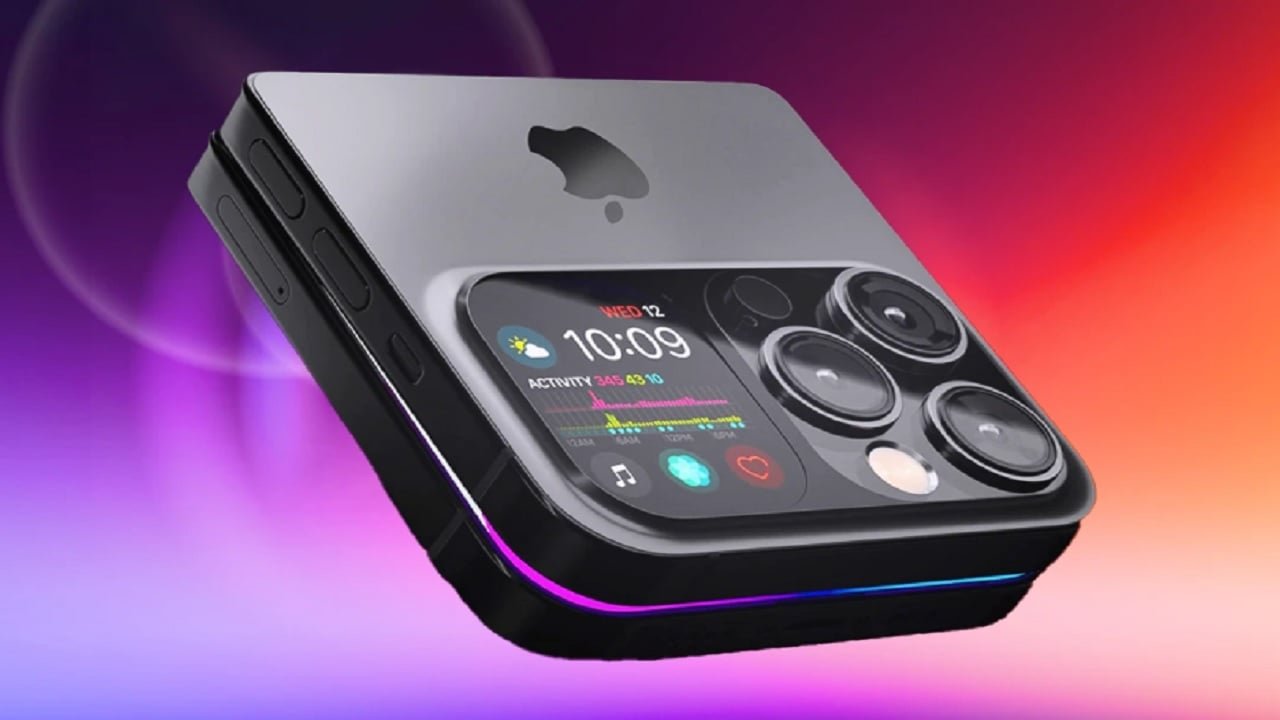

For years, fans have awaited Apple’s entry into the foldable smartphone arena. All signs now point to Apple launching its first foldable iPhone in late 2026, likely as part of the iPhone 18 lineup. This device would attempt to combine the portability of a smartphone and the usability of a compact tablet — with Apple’s refinement in design and engineering.
What to Expect
-
The design is expected to follow a book-style (horizontal) fold rather than a clamshell flip, giving a more tablet-like interior display when unfolded.
-
In closed mode, it would operate like a regular phone with an outer display; when unfolded it becomes a larger screen for multitasking, reading, media, or productivity.
-
Apple is rumored to use a titanium + aluminum hybrid frame for strength yet lightness, and possibly a hinge incorporating liquid metal or advanced alloys to minimize visible creasing.
-
To maintain a sleek profile, the unfolded thickness could be as low as 4.5 mm (or roughly that range), making it among Apple’s thinnest designs yet.
-
The outer display is rumored to be about 5.5 inches, while the inner flexible panel may reach 7.8 inches.
-
A crease-free or near-crease display is a key ambition in leaks, giving Apple a competitive edge.
-
It’s expected to reintroduce Touch ID (perhaps in the power button) rather than the Face ID system, due to space constraints or folding mechanics.
-
Internally, the chip would likely be the next-generation Apple silicon (e.g. “A20” class), paired with 12 GB+ of RAM and high-speed storage.
-
Price is forecast to land close to $1,999 at launch, making it Apple’s most premium phone to date.
Below is a possible table of specifications based on current rumors and analyst leaks:
Rumored Specifications of Apple’s Foldable iPhone (2026)
| Category | Rumored / Expected Specification |
|---|---|
| Outer Display (closed) | ~ 5.5″ OLED, LTPO, 120 Hz |
| Inner Display (unfolded) | ~ 7.8″ OLED, LTPO, 120 Hz |
| Unfolded Thickness | ~ 4.5 mm (target) |
| Folded Thickness | ~ 9.0 – 9.5 mm |
| Frame / Chassis | Titanium + Aluminum hybrid |
| Hinge / Mechanism | Advanced hinge (liquid metal / alloy) |
| Chipset | Next-gen Apple silicon (A20-class) |
| RAM | 12 GB or more |
| Storage Options | 256 GB / 512 GB / 1 TB |
| Rear Cameras | Dual 48 MP (wide + ultra-wide / telephoto) |
| Front / Inner Cameras | Under-display or hole-punch inner cam; outer display cam |
| Biometric Authentication | Touch ID (in power button) |
| Battery | Estimated 5,000 – 5,500 mAh (dual-cell arrangement) |
| Charging | High-speed wired + wireless support |
| Launch Date | September / late 2026 |
| Estimated Price | Around USD $1,999 |
Why Apple Waited and What Challenges It Faces
Apple’s timing seems strategic: by 2026, foldable display and hinge technology will have matured. Previous generations by competitors revealed durability, crease, and hinge issues. Apple aims to avoid those early pitfalls. The bigger risks will include yield rates, hinge reliability, display longevity, and cost control. If successful, the foldable iPhone could invigorate the entire iPhone ecosystem and drive upgrades across Apple’s product lines.
FAQs (About Apple’s Foldable iPhone 2026)
Q1: When exactly will Apple’s foldable phone launch?
Currently, rumors point to September 2026 as the most likely launch window, alongside the iPhone 18 series. Manufacturing is expected to begin in late 2025.
Q2: What will the displays be like?
The inner display is rumored to be ~7.8″ OLED with LTPO and 120 Hz refresh, while the outer (cover) display may be ~5.5″. A “crease-free” design is a goal.
Q3: Will Face ID work on a foldable?
Due to space and folding constraints, Apple may favor Touch ID instead, possibly embedded into the power button. Some rumors suggest under-display Face ID could be attempted, but Touch ID is considered more feasible.
Q4: How much will it cost?
Analysts believe the starting price may be around USD $1,999. Given the complexity and premium materials, it will likely be Apple’s most expensive iPhone at debut.
Q5: Will the hinge last?
Apple is reportedly developing a high-quality hinge using liquid metal or advanced alloys, aiming for durability across many thousands of open/close cycles. The goal is to minimize screen crease and mechanical wear.
Q6: Should I wait to buy this foldable?
If you’re an early adopter or tech enthusiast, it could be worth waiting. But initial units may carry higher risk of defects. If you prefer maturity, early 2027 buyers may benefit from refinements and more choices.
