

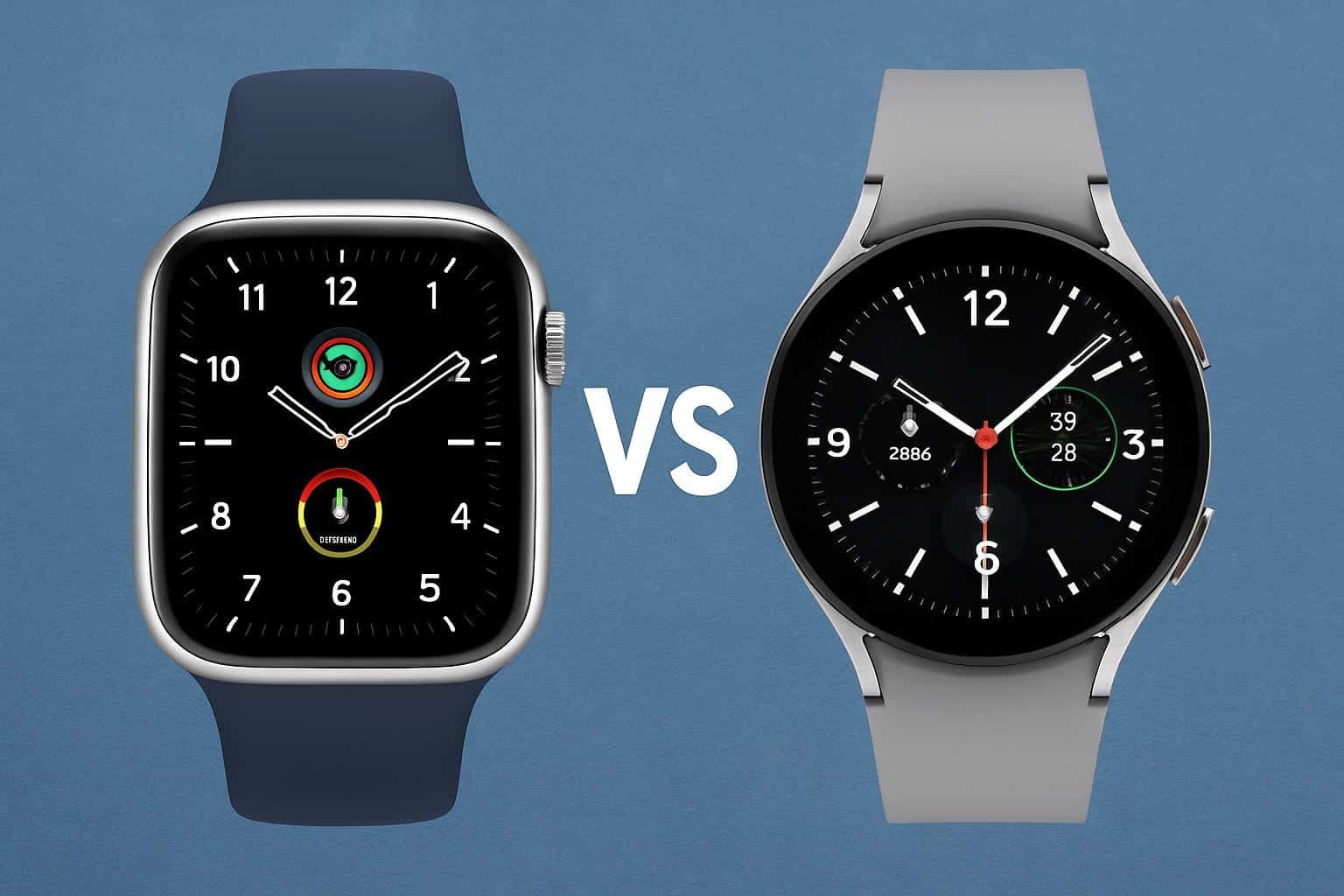

Apple and Samsung continue to dominate the smartwatch market, and their latest flagships — the Apple Watch Series 11 and Samsung Galaxy Watch 8 — push the rivalry even further. After testing both wearables, here’s how they compare across design, specs, health features, AI integration, and overall usability.
The Galaxy Watch 8 offers 3,000 nits brightness, lighter weight in the 40mm version, 2GB RAM with 32GB storage, and superior battery life of up to 40 hours without Always-On Display (AOD).
By contrast, the Apple Watch Series 11 delivers 2,000 nits brightness, 1GB RAM with a larger 64GB storage, and a maximum of 36 hours in low-power mode.
Apple’s biggest edge lies in health innovation. The Series 11 debuts advanced blood pressure monitoring, providing 30-day vascular trends to help detect early signs of hypertension — a feature not found in Samsung or Google wearables.
Its subtle AI features also integrate seamlessly into daily use, with Smart Stack suggestions, adaptive notifications, and improved on-device replies. Naturally, for iPhone users, the Apple Watch remains the only fully compatible choice.
Samsung, however, takes the lead in endurance and AI versatility. Its battery life significantly outpaces Apple’s, making it ideal for users who dislike daily charging. The Galaxy Watch 8 also introduces an AI Running Coach that tailors training plans and adapts to recovery, elevating it as the ultimate pick for runners.
With Google Gemini AI built in, the watch handles advanced queries, multitasking, and productivity tasks that Apple’s restrained AI cannot match.
Verdict: Both are powerful, ecosystem-driven choices. The Apple Watch Series 11 appeals to iOS users and health-focused buyers, while the Galaxy Watch 8 wins on practicality, AI depth, and battery life. Ultimately, your best option depends on whether you’re locked into Apple or Android.
