

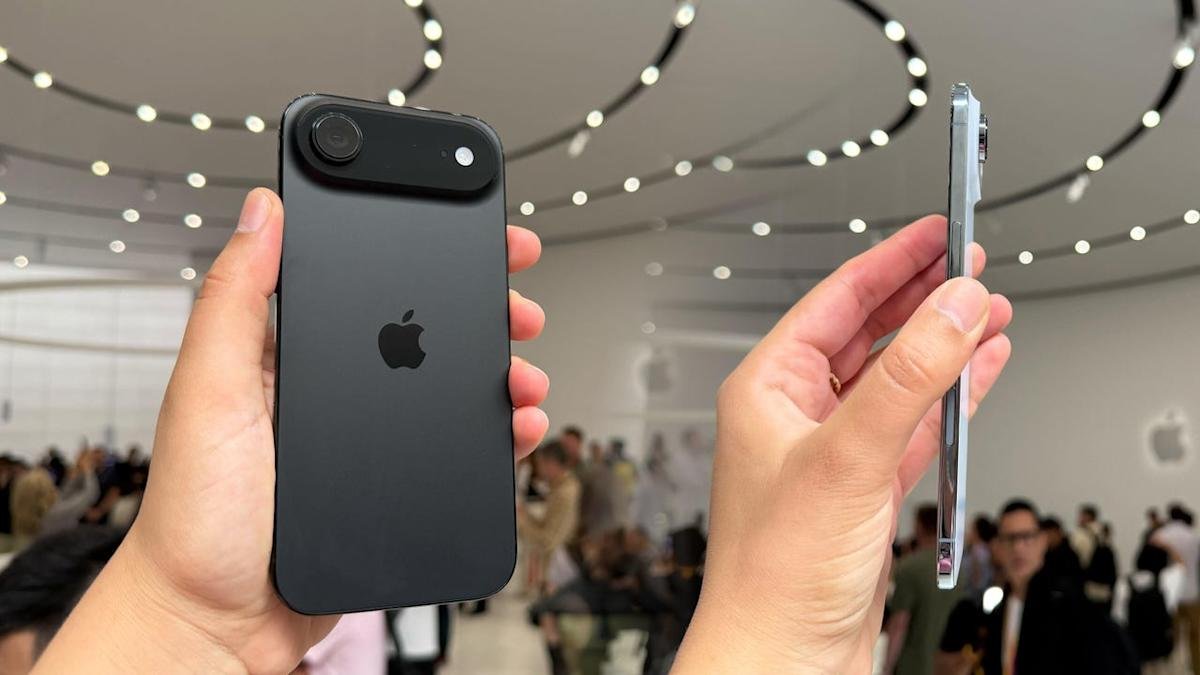

After years of incremental upgrades, Apple has introduced the iPhone Air, marking the first major design overhaul of the iPhone in nearly a decade. Described by the company as “so thin and light, it seems to disappear in your hands,” the iPhone Air represents Apple’s renewed effort to reinvigorate a slowing smartphone market and offer consumers something truly different.
While past iPhone updates have typically focused on sharper cameras, larger screens, and longer battery life, Apple now acknowledges that these improvements are no longer enough to dazzle buyers. Launching alongside the upcoming iPhone 17 lineup, the iPhone Air could help reset consumer expectations—and potentially encourage a long-awaited “supercycle” of upgrades.
A Redesign Meant to Spark New Demand
The iPhone Air comes at a time when smartphone sales have plateaued, and consumers are keeping their devices longer than ever. According to analysts, the average upgrade cycle has stretched to nearly five years, up from the once-common annual replacements. Factors such as inflation, unemployment, and tariff uncertainty have added pressure to the market, with many users now replacing phones only out of necessity.
Apple hopes that the iPhone Air’s radically different form factor—despite being more minimal in features than the iPhone 17 and 17 Pro—will be enough to persuade hesitant buyers to make the switch. Analysts like Francisco Jeronimo from IDC and Dan Ives of Wedbush Securities say the bold design shift could be a turning point. Ives estimates over 315 million iPhone users haven’t upgraded in four years, and the iPhone Air might be the product that convinces them to return.
A Glimpse Into the Future of the iPhone
Though the iPhone Air has only one camera and fewer features than flagship models, its thinness and design philosophy may foreshadow what Apple’s future smartphones—or even foldables—could look like. In an era where Samsung, Motorola, Google, and other Android makers are embracing foldables, Apple is quietly preparing for an evolution of its own.
The iPhone Air features a new N1 wireless chip for enhanced Wi-Fi and Bluetooth performance, which could support future innovations like portless iPhones—a concept previously reported by Bloomberg. Should the Air succeed, it could pave the way for Apple to reintroduce efforts toward a fully wireless iPhone, free of charging ports or cables.
With rising investment in AI-powered smart glasses from companies like Meta, Google, and Samsung—and with OpenAI collaborating with former Apple design chief Jony Ive on an AI device—there’s growing speculation that the smartphone may one day be partially replaced by more immersive technologies. Even Apple’s own Eddy Cue admitted during courtroom testimony that “you may not need an iPhone 10 years from now.”
Still, the iPhone isn’t disappearing anytime soon. Instead, its role and form may evolve, just as desktops did in the mobile era. The iPhone Air may not just be another model—it could be Apple’s vision for what comes next.
