

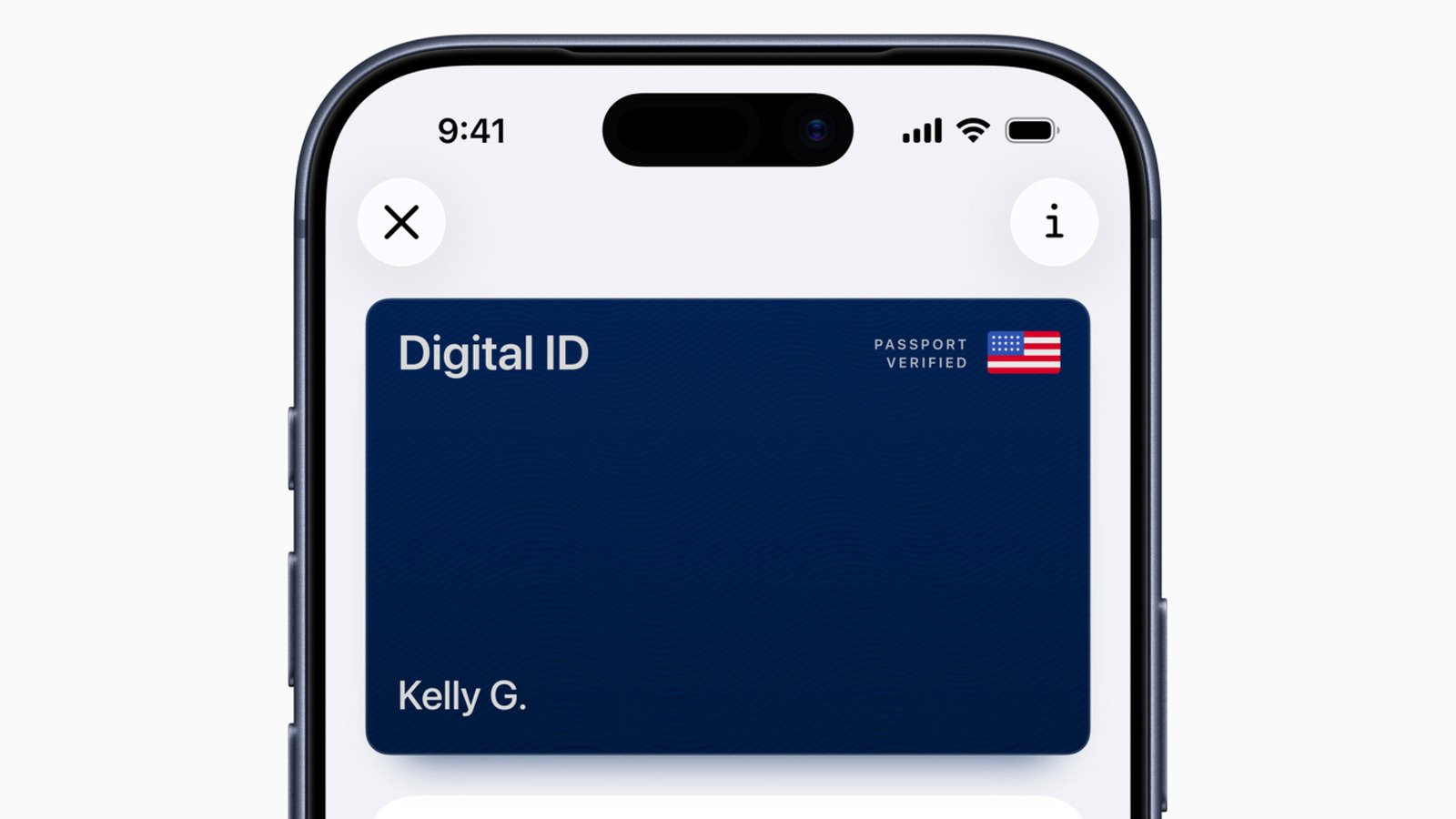

Apple has officially launched Digital ID functionality for United States passports, marking a significant expansion of its mobile identity verification system. The feature enables travelers to present their passport credentials digitally at Transportation Security Administration checkpoints nationwide.
Nationwide Airport Availability
Digital ID for passports is currently accepted at over 250 airports throughout the United States for domestic travel identity verification. While this technology streamlines the TSA screening process, it serves as a supplementary option rather than a complete replacement for physical passports, particularly for international journeys.
Simple Setup Process in Apple Wallet
Adding your passport requires several verification steps. Users begin by scanning their passport’s photo page using their iPhone camera. The device then reads the embedded security chip to authenticate document validity. A selfie capture follows, accompanied by facial and head movement prompts to confirm identity matching.
Secure Presentation at Security Checkpoints
Accessing your Digital ID requires double-clicking your iPhone’s side button or Apple Watch’s Home button to open Wallet, then selecting the Digital ID option. Hold your device near the identity reader and authenticate using Face ID or Touch ID. The system presents only necessary information for each transaction without requiring you to unlock or surrender your device.
Privacy-Focused Security Architecture
Apple implements robust privacy protections through end-to-end encryption. Passport information remains stored exclusively on your device, never on Apple servers. The company cannot track when, where, or what identification data you present during verification processes.
Future Expansion Plans
Apple indicates upcoming support for additional businesses and organizations requiring identity or age verification, extending Digital ID functionality to in-person locations, mobile applications, and online platforms. This builds upon the driver’s license feature previously rolled out across twelve states and Puerto Rico since 2022.
