
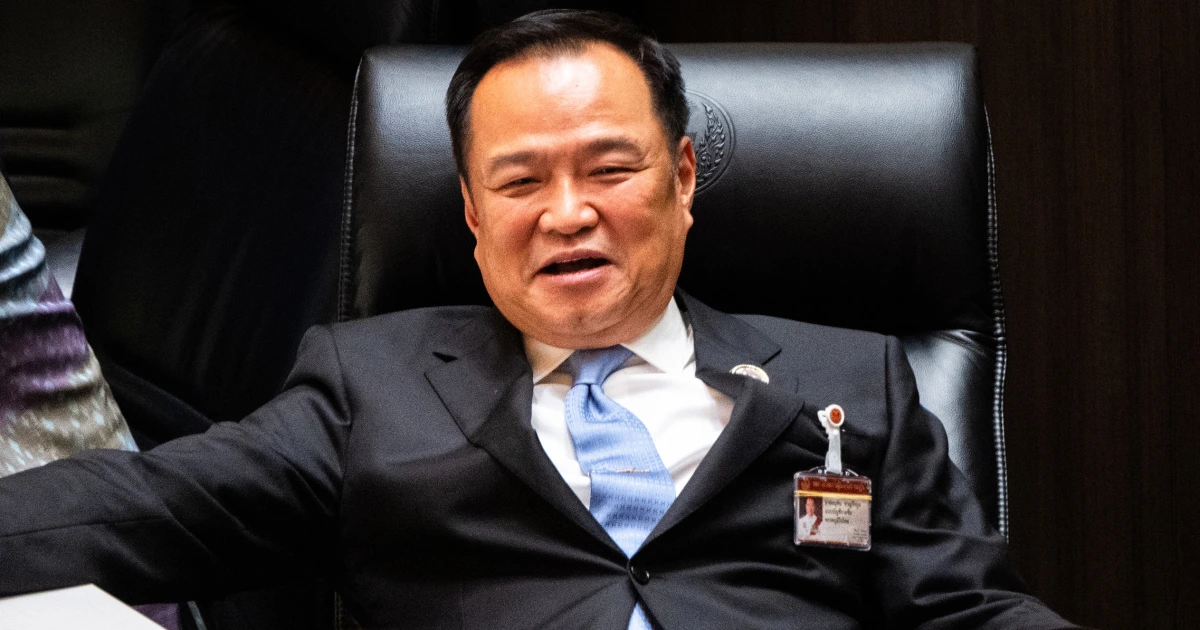

Historic Victory Signals Potential Stability for Thailand
Thailand has a new-old leader at the helm. Anutin Charnvirakul was reelected prime minister on Thursday after winning a decisive parliamentary vote. His victory marks the first time in two decades that a Thai premier has returned to office through parliamentary approval.
Anutin, head of the Bhumjaithai Party, led from the start, defeating his main rival, Natthaphong Ruengpanyawut, the surprise runner-up and leader of the progressive People’s Party. The outcome represents a significant reversal of expectations, as Natthaphong’s party had been widely tipped to win last month’s elections.
Observers say the win could usher in a period of stability for a country long plagued by political turbulence. Thailand has faced repeated government changes, military interventions, and party dissolutions over the past 20 years, leaving its economy and political landscape in constant flux.
Bhumjaithai Party Capitalizes on Political Shifts
Much of Anutin’s success stems from his opportunistic maneuvering during the past year. After the decline of the previously dominant Pheu Thai Party, he abandoned its coalition and quickly formed a new alliance following the court’s removal of a second prime minister in just over a year.
Bhumjaithai’s coalition, which includes Pheu Thai and several smaller parties, secured a strong majority in Thursday’s vote. Anutin comfortably surpassed the 251 votes needed to win reelection, with his alliance expected to control 292 of the 499 parliamentary seats.
Anutin, 59, emphasized unity and governance in his address to parliament. “Your voices are equally heard,” he said to rival lawmakers. “I’m ready to accept suggestions so I can carry out my duty as head of government. We all have the same goals — the well-being of the people.”
A staunch royalist, Anutin has navigated Thailand’s turbulent politics for two decades. By strategically positioning Bhumjaithai between competing elites, he ensured the party’s place in successive coalition governments. Analysts say this political agility has been central to his longevity and success.
Prospects for Stability and Governance
With a clear parliamentary mandate, Anutin now faces the challenge of addressing Thailand’s long-stuttering economy. High household debt, trade uncertainty, and the global energy crisis—exacerbated by the US-Israeli war on Iran—pose immediate hurdles.
Political analysts, including Napon Jatusripitak of Singapore’s ISEAS–Yusof Ishak Institute, suggest Anutin’s ability to navigate Thailand’s institutional power centers could stabilize governance. “People have strong reasons to believe that this government can last, particularly because it’s the first time in a long while that the referee and the players are on the same side,” he said.
The opposition remains fragmented, further consolidating Bhumjaithai’s influence. Analysts predict that Anutin’s survival instincts, combined with strategic alliances, may allow for a medium-term period of political calm and continuity.
As Thailand watches its next steps, Anutin’s leadership may mark a rare moment of stability in a nation long accustomed to political upheaval. His ability to unify fragmented parties and maintain institutional support will be key to his success.

