

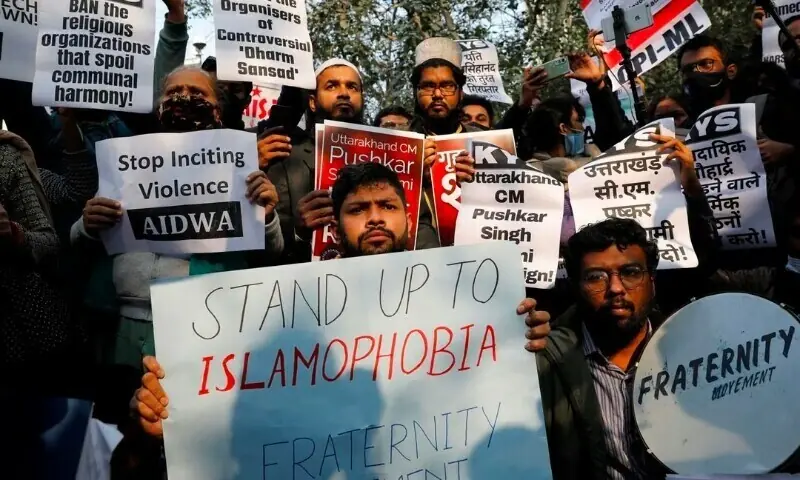

Sharp Increase in Hate Speech Cases Across India
Hate speech targeting religious minorities in India increased sharply in 2025. A new report by a United States–based research group highlights growing concerns about intolerance. Muslims and Christians were the most frequent targets.
According to India Hate Lab, 1,318 hate speech incidents were recorded in 2025. This marks a 13 percent rise compared to 1,165 cases in 2024. The increase is even more striking when compared to 668 incidents in 2023.
The group documented incidents across political, religious, and cultural events. These included political rallies, religious processions, protest marches, and public gatherings. Many speeches were delivered by political figures or religious leaders.
India Hate Lab said the rise reflects a broader trend of polarising public discourse. The organisation warned that repeated public messaging against minorities can normalise discrimination and hostility.
BJP-Governed States Account for Majority of Incidents
The report found that most incidents occurred in states governed by Prime Minister Narendra Modi’s Bharatiya Janata Party. Out of 1,318 recorded cases, 1,164 took place in BJP-ruled states or union territories.
These included states where the BJP holds power independently or as part of a coalition. The researchers said this pattern raises serious questions about political accountability.
The Indian embassy in Washington did not immediately respond to requests for comment. In the past, the Indian government has rejected allegations of discrimination.
Prime Minister Modi and BJP leaders say their policies benefit all citizens equally. They often point to nationwide welfare programs, food subsidies, housing schemes, and rural electrification initiatives as proof of inclusive governance.
The BJP has also criticised India Hate Lab. Party representatives have accused the group of presenting a biased and selective picture of India.
April Saw Major Spike Amid Regional Tensions
April recorded the highest number of hate speech incidents in 2025. The month saw 158 reported cases, making it the most volatile period of the year.
Nearly 100 incidents occurred between April 22 and May 7. This period followed a deadly attack in occupied Kashmir. It also coincided with rising military tensions between India and Pakistan.
Researchers noted that geopolitical events often trigger domestic surges in hate speech. They said minorities are frequently blamed or targeted during times of national stress.
Human rights organisations have echoed similar concerns. Amnesty International and Human Rights Watch say minority abuse has increased since Modi took office in 2014.
They cite several government actions as contributing factors. These include a religion-based citizenship law that the United Nations has called “fundamentally discriminatory.” Other concerns include anti-conversion laws that restrict freedom of belief.
Rights groups also point to the 2019 revocation of occupied Kashmir’s special status. They highlight repeated demolitions of Muslim-owned homes and businesses.
India Hate Lab was founded by US-based Kashmiri journalist Raqib Hameed Naik. It operates under the Centre for the Study of Organized Hate, a nonprofit think tank in Washington.
The group says it follows the United Nations definition of hate speech. This includes language that promotes discrimination or hostility based on religion, ethnicity, nationality, race, or gender.
The report warns that unchecked hate speech can lead to violence. It urges stronger safeguards, accountability, and protection for minority communities.
