

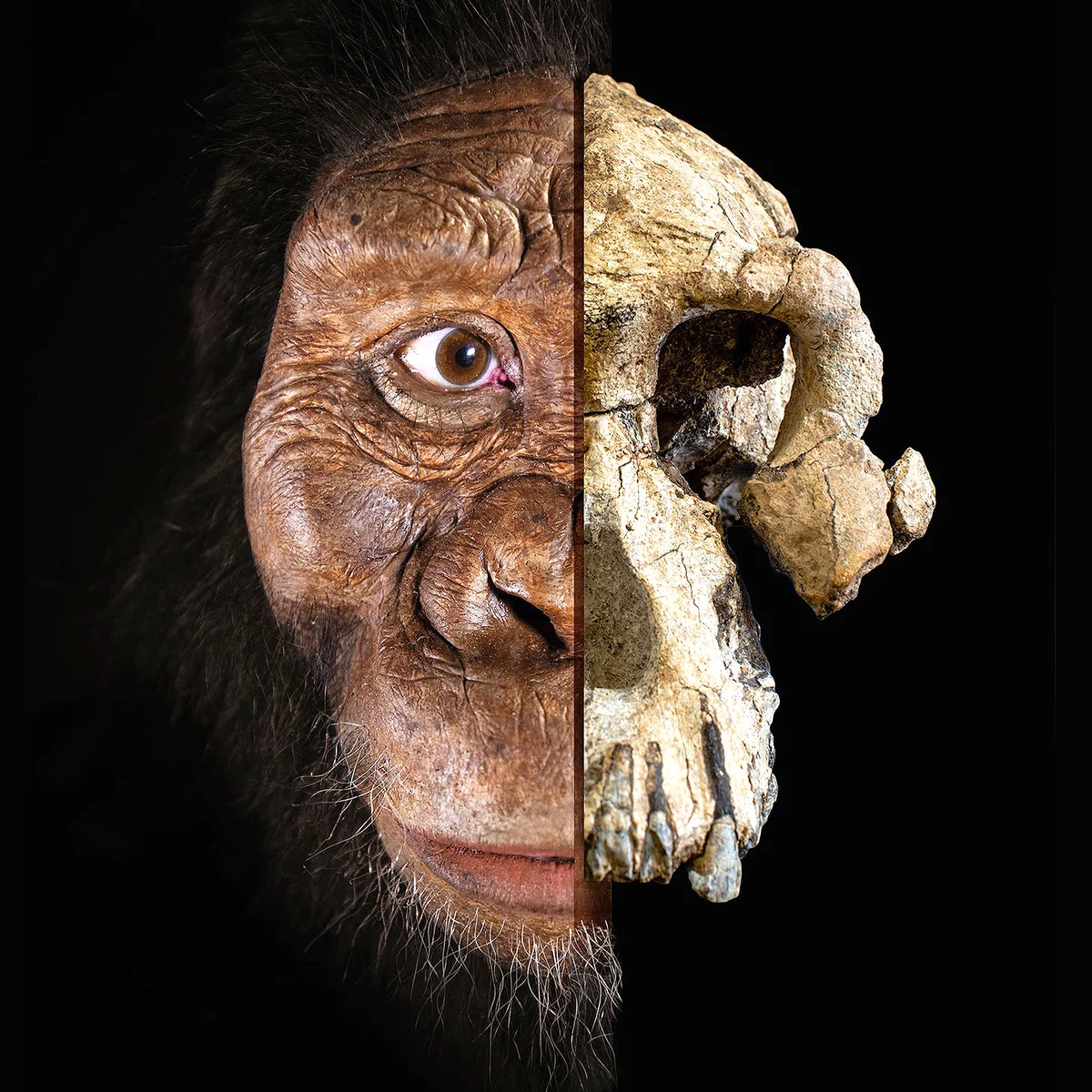

A human skull unearthed in 1990 in China’s Hubei Province, long dismissed as too deformed to assess, has now been identified as belonging to an early branch of a sister lineage to modern humans. This breakthrough could significantly reshape our understanding of human evolution over the past million years.
Through advanced scanning and digital reconstruction, researchers dated the fossil, known as Yunxian 2, to between 940,000 and 1.1 million years ago. The study, led by paleoanthropologist Xijun Ni of Fudan University and the Institute of Vertebrate Paleontology and Paleoanthropology, compared the skull with more than 100 human fossils.
The results indicate Yunxian 2 is the oldest-known member of the lineage that eventually produced the Denisovans, an extinct group that roamed Asia and interbred with Homo sapiens.
Estimated to have belonged to a male aged 30 to 40, the skull was previously categorized as Homo erectus. However, the new analysis reveals distinct features, including a broad mouth, flat cheekbones, and an expanded rear skull region, setting it apart from erectus.
Anthropologist Chris Stringer noted its long, low shape and large brain size for its time. Despite being partially crushed during fossilization, Yunxian 2 shows key resemblances to other Asian hominins such as Homo longi and the Denisovans.
The Denisovans were first identified in 2010, and subsequent research confirmed that they, along with Neanderthals, interbred with Homo sapiens. Today, many people, especially in Asia, retain traces of Denisovan DNA.
Ni’s findings suggest that five major human lineages—Homo sapiens, Homo longi, Denisovans, Neanderthals, and Homo heidelbergensis—diverged more than a million years ago, much earlier than previously believed.
Stringer emphasized that Yunxian 2 could help resolve the so-called “Muddle in the Middle,” a reference to the complex fossil record between 300,000 and one million years ago, offering fresh insight into the evolutionary processes that shaped our species.
