

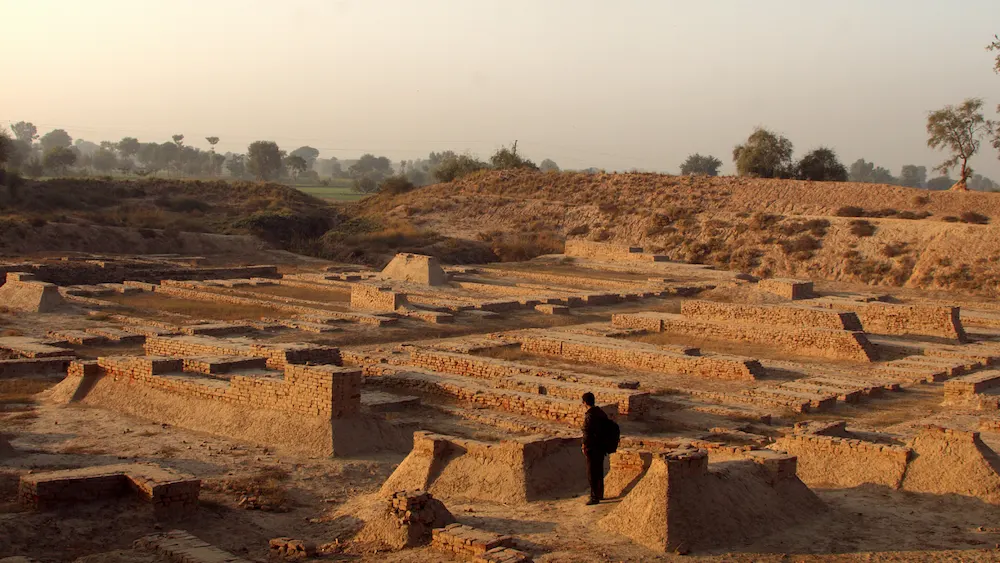

Pakistan is home to one of the world’s oldest ancient civilizations, dating back thousands of years. The region, rich in history and culture, witnessed the rise of several remarkable civilizations, leaving behind significant contributions in architecture, trade, and social development. Among them, the Indus Valley Civilization stands out as the most prominent.
Indus Valley Civilization
The Indus Valley Civilization, also known as the Harappan Civilization, thrived around 2500 BCE in the areas that are now Pakistan. It was centered around major cities like Harappa and Mohenjo-Daro, known for their advanced urban planning. These cities had well-structured streets, drainage systems, and brick houses, reflecting a high level of social organization. The people of this civilization engaged in agriculture, trade, and craftsmanship.
Trade played a vital role in the prosperity of the Indus Valley. They traded goods like beads, pottery, and metals with neighboring regions, including Mesopotamia. The civilization is also famous for its unique script, which remains undeciphered, adding an element of mystery to its rich history.
Contributions to Culture and Society
The ancient civilization of Pakistan contributed significantly to early human society. Artifacts reveal their expertise in pottery, beadwork, and metallurgy. The standardized weights and measures indicate a structured economic system. Socially, the Indus people practiced organized living with community-based layouts, public baths, and granaries for food storage.
Religious and cultural practices were also prominent. Numerous figurines and seals suggest the worship of deities, animals, and nature, highlighting their spiritual life. These cultural elements shaped the foundations of future civilizations in the region.
Other Ancient Civilizations
Apart from the Indus Valley, regions of Pakistan were home to other early civilizations. The Gandhara Civilization, flourishing between the 6th century BCE and 11th century CE, is famous for its unique Buddhist art and architecture. Gandhara blended Greek, Persian, and Indian influences, leaving a lasting legacy in sculpture and learning.
Similarly, Mehrgarh, one of the earliest farming settlements in South Asia, provides insight into early agriculture, domestication of animals, and pottery making. These civilizations collectively reflect Pakistan’s role as a cradle of human development and innovation.
Modern Significance
Understanding the ancient civilization of Pakistan is crucial for appreciating the country’s rich heritage. Archaeological sites like Mohenjo-Daro and Harappa attract scholars and tourists alike, offering a glimpse into one of humanity’s earliest organized societies. Preservation of these sites ensures that future generations can learn from the achievements of their ancestors.
