

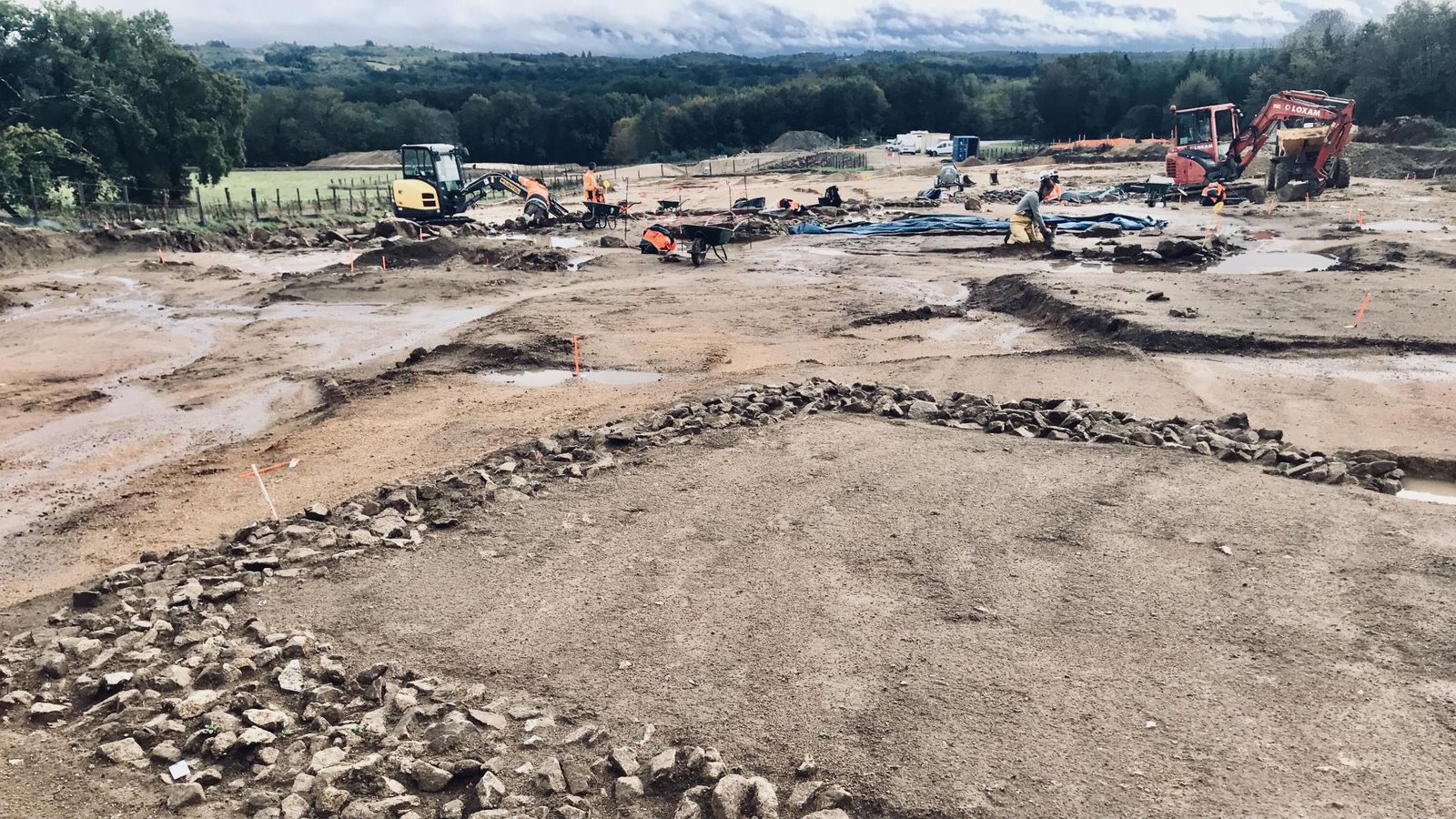

Archaeologists in France have uncovered the well-preserved remains of a Roman-era pool and a surrounding wall, which encircle a naturally occurring freshwater spring.
It is suggested by Live Science that these structures might have been built over the remnants of an ancient Neolithic religious complex, which likely dated back between 4500 and 6000 years ago.
Among the artifacts found at the Roman ruins, dating back to the Late Empire period in the third century, is a ceramic depiction of a goddess or Medusa situated near a water source.
In addition to late Roman coins and pottery pieces, the site contains flint fragments, including a potential knife fragment, which were previously available for purchase during the Neolithic period.
The archaeological site was discovered close to the village of Chamborêt, approximately 20 kilometers or 12 miles north of Limoges, which is situated in the southwest-central region of France, as mentioned in a translated announcement from the French National Institute of Preventive Archaeological Research (INRAP).
The aforementioned study revealed the presence of a Neolithic-era hole close to the spring’s origin, demonstrating its utilization during that time. Further investigations by archaeologists can enhance our understanding of the site and its historical significance.
The statement mentioned, “These installations provide an uncommon insight into the occupation during Late Antiquity. This rural site clearly demonstrates a phase in the progressive transformation towards the early Middle Ages.”
