


Alcoholic Drinks
WASHINGTON/LONDON: The US Surgeon General, Vivek Murthy, has recommended that alcoholic beverages include clear warnings about their cancer risks, signaling a potential shift toward stricter regulation similar to tobacco control measures.
Speaking on Friday, Murthy emphasized that alcohol consumption increases the risk of at least seven cancers, including breast, colon, and liver cancer, yet most Americans remain unaware of this connection.
Murthy also proposed revisiting the dietary guidelines for alcohol consumption, encouraging people to consider cancer risks when deciding how much to drink. Current guidelines recommend no more than two drinks daily for men and one for women.
His office highlighted that alcohol is the third leading preventable cause of cancer in the US, following tobacco use and obesity, and stated that the type of alcohol consumed does not impact its cancer risk.
The advisory has already affected the market, with shares in major alcohol companies like Diageo, Heineken, Pernod Ricard, and Anheuser-Busch InBev declining by over 3%.
Industry groups such as the Distilled Spirits Council of the United States (DISCUS) have pushed back, citing reports suggesting moderate alcohol consumption may have some health benefits, such as lower all-cause mortality rates.
However, DISCUS acknowledged the risks, particularly for conditions like breast cancer, and stressed that no one should drink alcohol for health reasons.
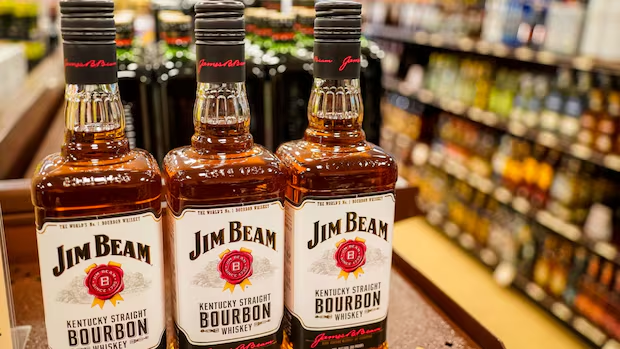
Alcoholic beverages in the US already carry warnings about risks like birth defects and impaired judgment, but these appear in small print on the packaging. Murthy’s recommendation calls for updating these labels to include cancer warnings, rather than adopting cigarette-style prominent displays.
However, analysts warn that such changes could pose long-term challenges for the alcohol industry, which is already grappling with declining sales, competition from cannabis, and shifting consumer preferences, especially among younger demographics.
Globally, public health organizations like the World Health Organization (WHO) have amplified warnings about alcohol. The WHO asserts that no level of alcohol consumption is safe, a stance that has sparked debates over the role of moderate drinking.
Countries like Ireland have already introduced warning labels on alcoholic beverages, and US companies have expressed concerns that similar measures could be adopted domestically.
Murthy’s report estimates alcohol is linked to 100,000 cancer cases and 20,000 cancer deaths annually in the US, alongside over 13,500 alcohol-related traffic fatalities. With the current US dietary guidelines set to expire in 2025, alcohol producers are lobbying to influence future recommendations.
Despite resistance from the industry, Murthy’s advisory draws comparisons to the landmark 1964 Surgeon General report on smoking, which catalyzed decades of regulation and public awareness campaigns.
While some experts argue that warning labels alone may not significantly reduce alcohol consumption, Murthy’s initiative aligns with growing global efforts to prioritize public health over industry interests.
