


When one of Pakistan’s top clothing brands unveiled its new campaign featuring an AI-generated model, social media exploded with mixed reactions. Some hailed it as a bold leap toward the future of fashion, while others called it a soulless attempt to cut costs and replace human creativity.
As artificial intelligence continues to reshape global industries, Pakistan’s fashion world finds itself questioning whether technology can truly capture the essence of human emotion and artistry.
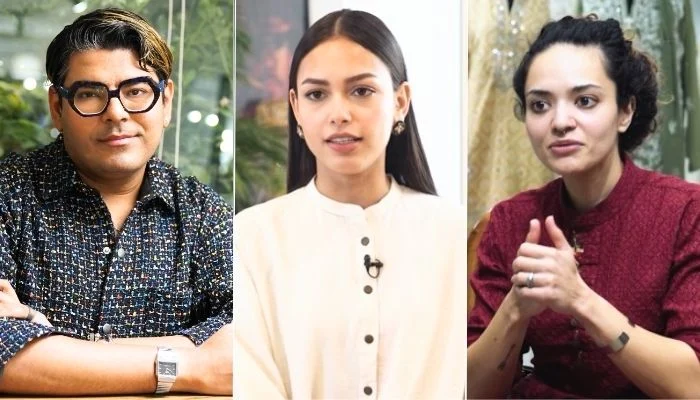
To explore this, Geo Digital spoke with leading figures from the fashion scene — designer Parishae Adnan, model Erica Robin, and stylist Tabesh Khoja — each offering a distinct take on the growing AI phenomenon.
Parishae Adnan sees AI as an inevitable part of the industry’s evolution but warns against overreliance. “AI is the future, but it’s too perfect — it lacks relatability,” she said, noting that fashion’s emotional core could be lost if brands chase flawless digital images. She added that AI, when used wisely, can enhance business efficiency but shouldn’t replace human intuition.
Model Erica Robin, Pakistan’s first Miss Universe representative, believes AI can assist but never replace real models. “Modeling is more than posing — it’s performance,” she said. “Audiences connect with real faces, emotions, and personalities. That’s something AI can’t replicate.”
Stylist Tabesh Khoja agrees, stressing that fashion without emotion is fashion without a soul. “Every look, every shoot is driven by feeling,” he said. “AI can predict trends, but it can’t feel them.”
As Pakistan’s fashion industry stands at a digital crossroads, insiders agree that while AI can make campaigns faster and cheaper, it cannot replace the emotional connection that defines true style — a reminder that fashion, at its heart, remains beautifully human.
