

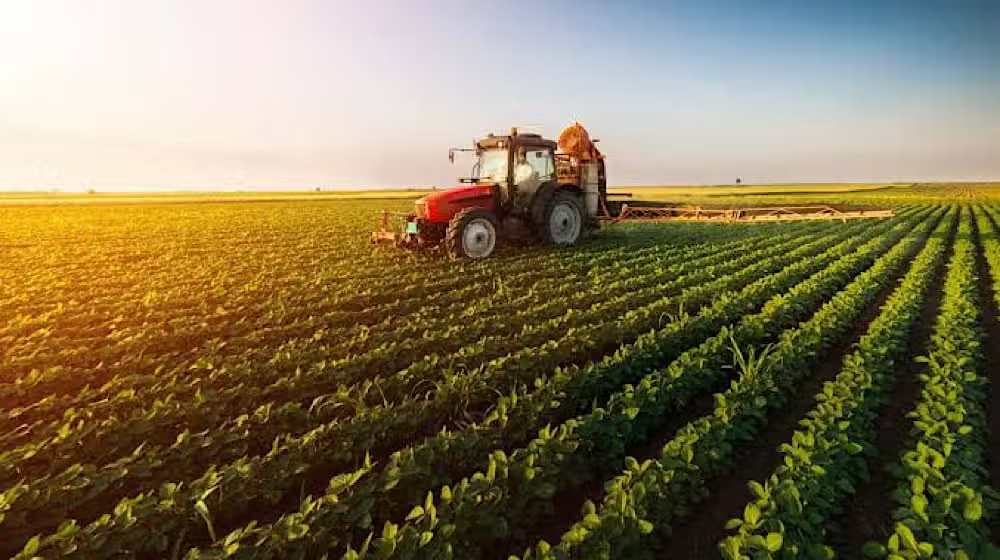

Agriculture machinery in Pakistan has revolutionized traditional farming methods, making them more efficient, cost-effective, and sustainable. With agriculture being the backbone of Pakistan’s economy, mechanization has become crucial for increasing productivity, reducing labor dependency, and improving crop quality.
Farmers across Punjab, Sindh, Khyber Pakhtunkhwa, and Balochistan are adopting modern machinery to meet rising food demands and cope with labor shortages.
Types of Agriculture Machinery in Pakistan
Modern agriculture machinery in Pakistan includes a wide range of equipment designed for different farming activities:
-
Tractors: The most common machinery, used for plowing, sowing, and transportation. Pakistani farmers prefer compact and versatile tractors for small to medium farms.
-
Combine Harvesters: These machines efficiently harvest wheat, rice, and other crops in a single pass, reducing time and labor costs.
-
Seed Drills and Planters: Ensure uniform seed distribution and higher germination rates, improving overall crop yield.
-
Irrigation Equipment: Diesel or electric pumps, drip irrigation systems, and sprinklers help maintain proper water management, especially in water-scarce regions.
-
Threshers and Balers: Used to separate grain from stalks and compress crop residues into bales, facilitating easier handling and storage.
Benefits
The adoption of agriculture machinery in Pakistan offers multiple advantages:
-
Increased Productivity: Mechanized farming covers larger areas faster than manual labor, resulting in higher crop yields.
-
Reduced Labor Costs: With machines handling heavy tasks, farmers can save on labor expenses and focus on management.
-
Timely Farming Operations: Machinery ensures that plowing, sowing, and harvesting are done at the optimal time, preventing crop loss.
-
Precision Farming: Advanced machines allow precise seed planting, fertilization, and irrigation, promoting efficient resource use.
-
Sustainable Farming: Reduced physical labor and efficient machinery use contribute to eco-friendly and sustainable farming practices.
Challenges
Despite its benefits, the agriculture machinery sector in Pakistan faces certain challenges:
-
High initial investment costs make it difficult for small-scale farmers to afford modern equipment.
-
Limited access to spare parts and maintenance services can affect machine efficiency.
-
Lack of proper training reduces the potential benefits of mechanization.
-
In rural areas, electricity shortages can limit the use of electric-powered machinery.
Future of Agriculture Machinery in Pakistan
With government support and private investment, agriculture machinery in Pakistan is expected to grow significantly. Subsidies on tractors, modern harvesters, and irrigation systems are encouraging farmers to adopt mechanized solutions. Digital farming technologies, GPS-guided equipment, and smart irrigation systems are gradually entering the market, promising higher efficiency and reduced environmental impact.
FAQs About Agriculture Machinery in Pakistan
Q1: What is the most commonly used agriculture machinery in Pakistan?
Tractors are the most widely used machinery, followed by combine harvesters and seed drills.
Q2: How does machinery improve crop productivity?
Mechanized farming reduces manual effort, ensures timely sowing and harvesting, and allows uniform planting and irrigation, leading to higher yields.
Q3: Are there any government incentives for farmers to buy machinery?
Yes, the government provides subsidies on tractors, harvesters, and irrigation equipment to encourage mechanization.
Q4: Can small farmers benefit from agriculture machinery?
Yes, compact tractors, small harvesters, and rented machinery services allow small farmers to access modern equipment affordably.
Q5: What is the future trend in agriculture machinery in Pakistan?
Smart farming technologies, precision machinery, and digital equipment are expected to become more common, increasing efficiency and sustainability.
