

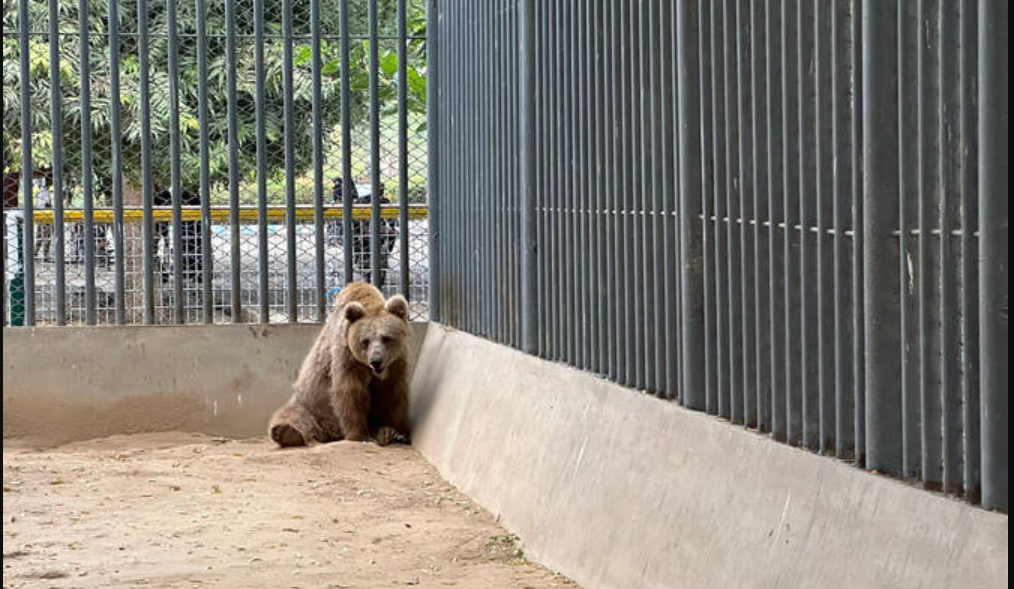

After spending more than two decades in confinement, 24-year-old brown bear Rano has finally been freed from the Karachi Zoo. Her long-awaited relocation marks a major step toward improving animal welfare standards in Pakistan. On Wednesday morning, Rano was flown to Islamabad, where she will begin a new chapter of her life in a specialized bear sanctuary.
The relocation was carried out under expert supervision, ensuring the animal’s comfort and safety throughout the process. Wildlife authorities confirmed that Rano’s transfer was smooth and stress-free, signaling the end of her years in captivity.
Smooth Airlift to Islamabad
Rano was airlifted from Karachi to Islamabad aboard a Pakistan Air Force C-130 aircraft. The plane departed around 8:30 a.m. and landed a little after 11:30 a.m. at Nur Khan Airbase. Before boarding, Rano was transported from Karachi Zoo to the Faisal Base in a specially designed wooden crate.
According to officials from the Islamabad Wildlife Management Board (IWMB), Rano entered the crate willingly and did not need to be sedated. She responded calmly to handlers’ calls and showed no signs of distress. Throughout the flight, wildlife staff continuously monitored her condition. Despite the loud engine noise, Rano appeared relaxed and even rested during the journey.
From a Concrete Cage to a Sanctuary
For many years, Rano lived in harsh conditions at the Karachi Zoo. Initially kept in a Victorian-era pit, she was later moved to a small concrete cage with hard flooring. The lack of natural surroundings and limited space caused her significant psychological stress. Her restless pacing became a heartbreaking sight for visitors and animal welfare advocates.
Animal rights groups repeatedly urged authorities to relocate her to a suitable sanctuary. Following these appeals, the Sindh High Court issued an order earlier this month for Rano’s relocation to the Balkasar Sanctuary, Pakistan’s only bear-specific rehabilitation facility. The court also formed a committee to oversee her safe transfer and ensure proper care at her new home.
Hope for Other Captive Animals
Animal welfare activists have praised Rano’s relocation as a positive step toward reforming zoo management in Pakistan. They emphasized that zoos often fail to meet the complex emotional and behavioral needs of wild animals.
According to Mahera Omar, co-founder of the Pakistan Animal Welfare Society, wild animals belong in natural ecosystems, not behind bars. She stressed that zoos should gradually be replaced with species-specific sanctuaries where animals can live freely in environments closer to their natural habitats.
“Animals are not meant for entertainment,” she said. “They deserve to live in freedom, surrounded by nature rather than concrete walls.”
A Symbol of Change
Rano’s rescue has become a symbol of hope for countless animals still suffering in captivity across the country. Her story highlights the urgent need for ethical wildlife management and compassion in conservation practices.
As Rano settles into her new sanctuary home, she represents more than just one animal’s freedom — she embodies a movement toward a future where all creatures can live with dignity, care, and respect.
