

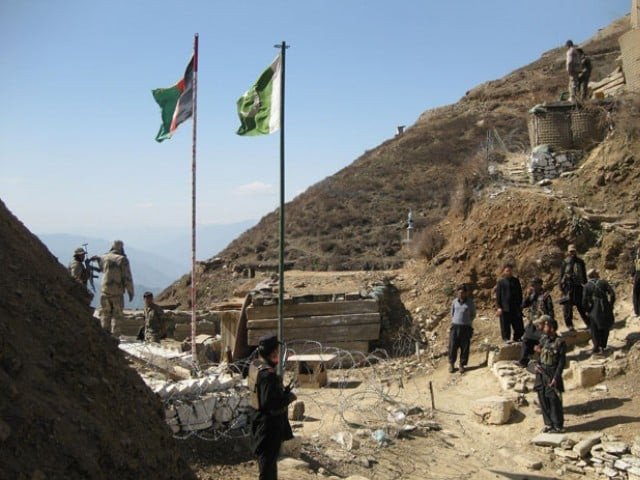

In a significant shift, the interim Afghan government has for the first time initiated a crackdown on Afghan nationals allegedly involved in facilitating cross-border terrorist attacks into Pakistan — a move that has led to a marked improvement in Islamabad-Kabul relations.
While regional attention in recent weeks has focused largely on Pakistan-India tensions, behind the scenes, Pakistan and Afghanistan have quietly made strides toward resetting their often turbulent relationship.
Turning Point in Bilateral Relations
The core of Islamabad’s longstanding concerns has been the presence of the banned Tehreek-e-Taliban Pakistan (TTP) and other militant groups operating from Afghan territory. For years, Pakistan had struggled to convince the Afghan Taliban to act decisively against these groups.
However, a March visit to Kabul by a high-level Pakistani delegation, led by Special Envoy for Afghanistan Ambassador Muhammad Sadiq Khan, marked a turning point. The delegation, which included senior military and intelligence officials, was briefed by Afghan counterparts on new steps taken to curb cross-border militancy. Express Tribune reported this development today.
According to a senior official familiar with the discussions, it was the first time since the Taliban took power in August 2021 that Pakistan sensed a genuine shift in Kabul’s approach.
“There was a clear indication that the Afghan interim government was now taking Pakistan’s concerns seriously,” the source told The Express Tribune.
Crackdown on TTP-Linked Afghan Nationals
Sources have since confirmed that the Taliban government arrested several Afghan nationals accused of either joining or recruiting for the TTP. Many were jailed, particularly those suspected of encouraging Afghan involvement in attacks inside Pakistan.
The arrests followed mounting evidence, provided by Islamabad, that Afghan nationals were increasingly involved in TTP-orchestrated attacks in Pakistan, especially in Khyber Pakhtunkhwa. The Afghan Taliban’s subsequent crackdown is believed to have led to a notable decrease in suicide bombings and restored some degree of trust between the two nations.
Diplomatic Breakthrough
These developments set the stage for a landmark visit by Deputy Prime Minister and Foreign Minister Ishaq Dar to Kabul on April 19, marking the first such visit by a Pakistani foreign minister in three years.
During the visit, both sides agreed on a series of confidence-building measures, including a renewed assurance from the Taliban that Afghan soil would not be used for activities against Pakistan.
In response, Pakistan eased trade restrictions, such as scrapping the requirement for Afghan importers to furnish bank guarantees — a move aimed at boosting bilateral trade and goodwill.
Post-Pahalgam Attack Cooperation
The Taliban’s efforts to win back Pakistan’s trust also included the apprehension of Afghan facilitators linked to an infiltration attempt by over 70 suspected terrorists, mostly Afghan nationals, in the immediate aftermath of the Pahalgam attack.
This proactive response from Kabul has been viewed as a strategic recalibration, one that could help stabilize not only Pakistan-Afghanistan ties but also regional security dynamics more broadly.
