

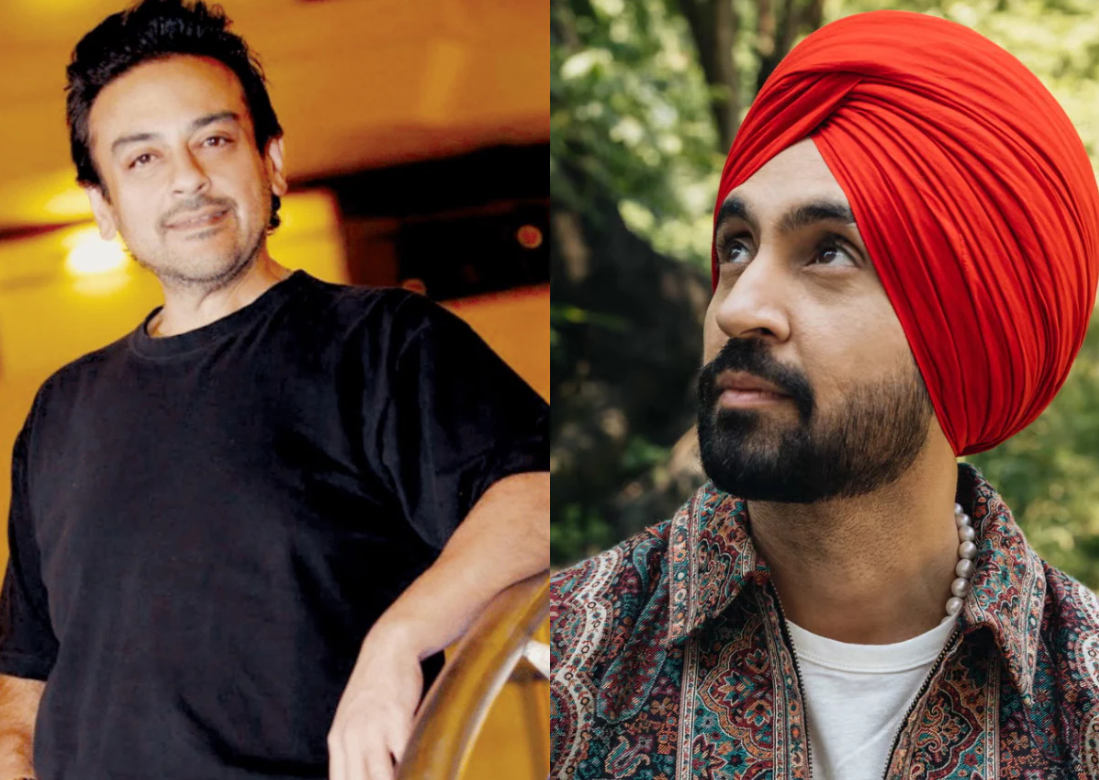

Singer Adnan Sami has voiced his support for fellow artist Diljit Dosanjh, stressing that art must remain separate from politics. His remarks come amid heated debates surrounding the ban of Dosanjh’s film Sardaar Ji 3 in India.
Adnan Sami on Nationality and Art
Speaking in a recent interview, Adnan Sami explained that politics and nationality should not be confused. He argued that while art transcends borders, an artist’s identity remains firmly tied to their nation. According to him, no artist should be compelled to adopt political stances, as their work belongs to the realm of creativity rather than ideology.
“Politics is something else, and nationality is something else,” Sami remarked. “An artist always belongs to his country, and he cannot be political.”
By drawing this distinction, Sami sought to defend artists from accusations of being “anti-national,” a label often used when political sensitivities are heightened.
Diljit Dosanjh Responds to Film Ban
The controversy began when Sardaar Ji 3, starring Diljit Dosanjh alongside Pakistani actress Hania Aamir, was banned in India. The decision followed the recent Pahalgam terrorist attack, which raised tensions between India and Pakistan.
Addressing fans at a concert in Malaysia, Dosanjh expressed disappointment over the accusations. He clarified that the film had been completed before the incident and questioned the inconsistency of the criticism. He pointed out that cricket matches between India and Pakistan continued after the attack, yet the film was targeted for restrictions.
“The film was shot before the attack, and the match was played after it,” he explained. “We are with our country and against terrorism.”
Rejection of “Anti-National” Allegations
Diljit Dosanjh firmly rejected allegations of being “anti-national.” He underlined the loyalty of the Punjabi and Sikh community, emphasizing their longstanding contributions and patriotism.
“Every effort was made to portray me as anti-national, but this is not the truth,” Dosanjh declared. “Our community has always been loyal and patriotic.”
Despite criticism and the domestic ban, Sardaar Ji 3 has performed impressively in international markets. The Punjabi diaspora has shown strong support for the film, boosting its reception abroad. Nevertheless, the casting of Hania Aamir has sparked debate within India, where cross-border collaborations remain controversial during times of political strain.
Broader Debate on Artists and Nationalism
The episode has reignited discussions about the role of artists in politically charged environments. Adnan Sami’s statement adds weight to calls for separating cultural expression from political narratives. Many argue that cinema, music, and art should be avenues for dialogue and cultural exchange rather than arenas for nationalist disputes.
At the same time, critics of such collaborations maintain that heightened security concerns demand stricter boundaries. They contend that cross-border artistic projects risk undermining national sentiment during sensitive times.
In this climate, artists like Dosanjh often find themselves balancing personal expression, cultural identity, and political pressures. With Sami’s backing, the debate over nationalism in the arts is likely to continue shaping public conversation.
