

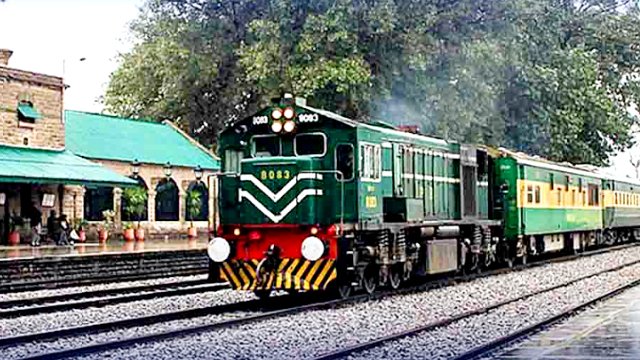

$2 billion Karachi–Rohri rail upgrade seen as crucial to copper ore transport amid stalled Chinese financing
The Asian Development Bank (ADB) is set to step in with critical financing for Pakistan’s aging railway infrastructure, stepping into a role previously expected of Beijing, as delays in Chinese funding threaten the timely development of the country’s largest mining venture at Reko Diq.
According to two sources familiar with the matter, the ADB is in advanced discussions to lead a $2 billion upgrade of a 500-kilometre rail segment between Karachi and Rohri. This stretch of railway is now considered urgent to rehabilitate, as it will form a vital transportation corridor for copper concentrate from the Reko Diq copper and gold mine, currently being developed by Canada’s Barrick Gold Corporation.
The proposed upgrade was originally part of the broader China–Pakistan Economic Corridor (CPEC) initiative—a $60 billion flagship of China’s Belt and Road Initiative (BRI) launched in 2015. Yet despite nearly a decade of negotiations, Pakistan and China have failed to finalize a financing package for the ambitious 1,800-kilometre Main Line-1 (ML-1) rail project. Mounting repayment pressure from earlier Chinese loans has also constrained Islamabad’s borrowing capacity.
In contrast, the ADB is now taking a leading role. While the bank has not confirmed the $2 billion package, it acknowledged ongoing discussions with Pakistan on railway sector development. “Any potential ADB assistance would be subject to comprehensive due diligence and consideration under ADB’s policies and procedures,” the bank said in a statement to Reuters.
Strategic Importance of the Rail Upgrade for Reko Diq
The urgency of the rail upgrade stems from its importance to the Reko Diq mining project, located in Balochistan, one of the world’s largest undeveloped copper-gold reserves. Production is slated to begin by 2028, with annual copper concentrate output projected at 200,000 metric tons.
The Karachi–Rohri section will link with a branch line extending west toward Reko Diq, allowing for the smooth transport of mineral resources to the port for export. “We will have a crisis if this upgrade doesn’t happen—how will you evacuate output from Reko Diq? The exhausted line will come under even more pressure,” a senior Pakistani official familiar with the matter said.
The ADB-financed upgrade is expected to modernize the rail track and bridges to enable faster diesel train operations, replacing outdated infrastructure on one of Pakistan’s busiest commercial routes. The deal, anticipated to be formally announced in the coming weeks, would also bring in an international engineering contractor through competitive bidding.
Barrick Gold’s Project Director Tim Cribb noted that the company and the Pakistani government would jointly work to secure financing for the connecting branch line to Reko Diq.
International Support and Geopolitical Sensitivities
ADB’s involvement is diplomatically sensitive, given the original intent for Chinese financing under CPEC. However, officials insist the new arrangement has been discussed with Beijing. “We would never do anything to jeopardize that relationship,” a senior Pakistani official assured, referring to Pakistan’s historically close ties with China.
The project also comes amid broader international interest in supporting Pakistan’s mining and infrastructure ambitions. Earlier this week, ADB announced $410 million in financing for the Reko Diq project itself, which includes a $300 million loan and a $110 million guarantee. ADB’s President is expected to visit Islamabad next week to further discuss cooperation.
Meanwhile, the International Finance Corporation (IFC) has pledged $700 million, and Pakistan is actively seeking investment from the U.S., Canada, and Japan to secure the nearly $6.6 billion needed for full-scale development of the mine.
In a related development, U.S. Chargé d’Affaires Natalie Baker recently met with Federal Railways Minister Hanif Abbasi in Islamabad. The two discussed potential American investment in Pakistan Railways, infrastructure collaboration, and bilateral support to modernize key transport corridors. Abbasi emphasized that investment in rail is essential for national connectivity and economic development, as the sector links all four provinces.
Reko Diq: A Game Changer for Pakistan’s Economy
The Reko Diq mine is at the heart of Pakistan’s plan to revive its mining sector and attract foreign direct investment. The project is a joint venture between Barrick Gold and the federal and provincial governments, with Barrick holding a 50% stake. It is projected to generate up to $70 billion in revenue over the next 37 years.
Despite the potential, the site faces multiple challenges, including security risks in Balochistan, where insurgent groups have frequently targeted rail infrastructure and mining operations.
Nonetheless, with strategic backing from multilateral financial institutions and growing global demand for copper—a key metal in green technologies—Pakistan is positioning Reko Diq as a cornerstone of its economic revival strategy.
