

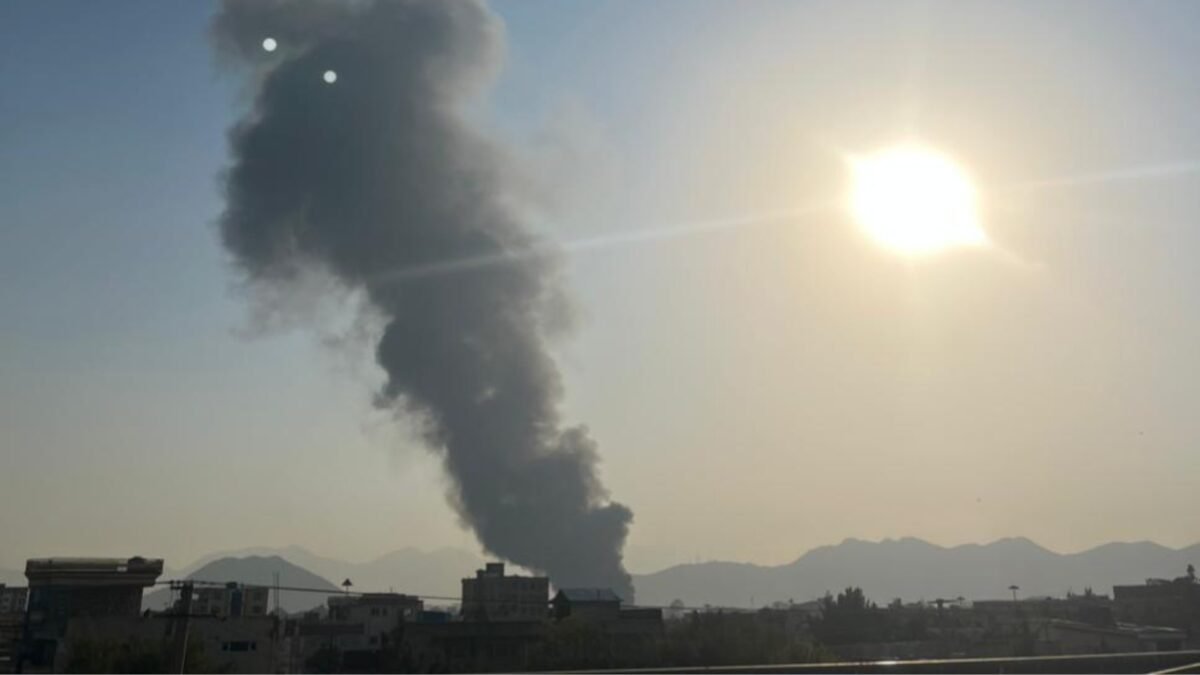

In recent days, Pakistan seemed to have changed its war doctrine, especially with Afghanistan. The recent bombing of Kabul targeting the TTP headquarters and a fierce retaliation to the Afghan Taliban’s attacks are part of the change in the war doctrine of Pakistan.
A few days ago, the Director General of the ISPR, Maj-Gen Ahmed Sharif, also indicated this change in the war doctrine when he said, “Protect your people instead of begging for peace from Afghanistan.”
A change in the war doctrine of Pakistan
Under the new war doctrine, not declared officially, the Pakistan Army will target the enemies of Pakistan in the hostile countries, particularly Afghanistan. The recent attacks on the TTP and Taliban soldiers attacking Pakistan are a clear indication of the new war doctrine of Pakistan.
Hence, Pakistan’s armed forces will now target the enemies of Pakistan inside Afghanistan, and the war doctrine may expand to India, later on.
In the last few days, Pakistani forces have killed dozens of the TTP terrorists inside Afghanistan and also killed Afghan troops in retaliation, showing a zero-tolerance policy against the terrorists, infiltrators, and their facilitators.
On Wednesday, Pakistan announced a 48-hour ceasefire on the request of Afghanistan. But if the Taliban government or the TTP terrorists continued their attacks on Pakistani security forces, they will have to face the music because Pakistan has decided to tackle this terror menace with a fierce retaliation _ a ruthless bombing inside Afghanistan and at the hideouts of the TTP in the neighboring country.
So far, Pakistan security forces have killed dozens of the TTP terrorists and Afghan soldiers.
According to available information, more than one lakh Pakistanis, including security personnel have been martyred in the terror attacks while the national economy has sustained more than 150 billion dollars worth losses.
The deadliest escalation occurred along the Pak-Afghan border, a few days in which 23 Pakistani soldiers were martyred and over 200 Taliban and affiliated terrorists killed, the military’s media wing Inter-Services Public Relations (ISPR) confirmed on Sunday. The skirmishes began late on the night of October 11-12, following what Pakistan termed an unprovoked attack by Afghan Taliban and India-backed Tehreek-e-Taliban Pakistan (TTP), also labelled by authorities as Fitna-al-Khawarij.
The ISPR stated that these attacks were part of a deliberate attempt to destabilise Pakistan’s western borders and support terrorism inside the country. The response from the Pakistan Army was swift and forceful, involving precision airstrikes, heavy artillery, and targeted raids. These operations led to significant destruction of Taliban camps and support infrastructure inside Afghan territory.
The statement revealed that Pakistan forces launched retaliatory strikes on 21 hostile positions and temporarily captured several key posts used by militants. Training camps, command centres, and logistical hubs of both TTP and ISKP/Daesh, including groups referred to as Fitna-al-Hindustan, were neutralised in the strikes.
Major Taliban Installations Flattened; Pakistan Army Carries Out Decisive Raids
Among the major Taliban strongholds targeted were:
-
Asmatullah Karar Camp at Spin Boldak — described as one of the largest hubs for cross-border attacks.
-
Ghaznali Headquarters in the Noshki Sector.
-
Durrani Camp and multiple Manojba Battalion Headquarters.
-
Barikot Base Camp, Karzai Post, and Shapola Khula Post.
-
Taliban’s Second Battalion HQ in Brabcha — used to launch India-backed terrorists into Pakistan.
State-run media also reported that Pakistani forces had hoisted the national flag on an occupied Taliban post in Zhob Sector, after destroying a Humvee APC stationed there. Multiple Taliban tanks were also destroyed near Kurram, according to ISPR.
Despite the large-scale operations, the ISPR assured that all efforts were made to avoid civilian casualties, reiterating that Pakistan’s response was aimed solely at terrorist infrastructure and not the Afghan population.
Pakistan Issues Stern Warning, Urges Taliban to End Terrorist Support
The ISPR accused the Afghan Taliban government of actively facilitating terrorist groups, warning that Pakistan will not tolerate the use of Afghan soil for attacks. The skirmishes coincided with Afghan Foreign Minister Amir Khan Muttaqi’s visit to India, a development Pakistan called “concerning,” accusing India of funding terrorist operations in the region.
Meanwhile, President Asif Ali Zardari and Prime Minister Shehbaz Sharif issued strong condemnations, declaring that Pakistan’s sovereignty is non-negotiable. President Zardari referenced UN reports that confirm attacks originating from Afghan soil and highlighted India’s support for TTP and Baloch insurgents.
Note: This article will be updated further with more information
