


By Col Muhammad Sabahuddin Chaudhry, IS (Retired)
Introduction
Pakistan stands at a decisive moment in the evolution of its national security architecture. The country’s leadership has initiated one of the most consequential defence reforms since the post-1971 restructuring, signalling a paradigm shift from traditional service-centric frameworks to a more unified, constitutionally anchored, and modern defence command system.
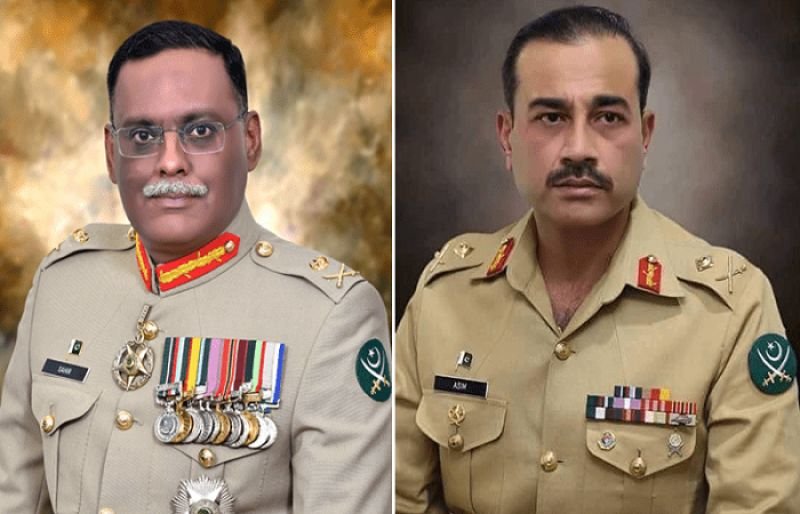
The recent institutional measures, including the establishment of the Chief of Defence Forces (CDF and the National Strategic Command (NSC), coupled with the abolition of the Chairman Joint Chiefs of Staff Committee (CJCSC), represent a deliberate recalibration of Pakistan’s command-and-control model.
These reforms must be viewed within the broader context of Pakistan’s evolving security landscape: an assertive and ideologically driven India, growing multi-domain warfare demands, persistent threats from the western front, rising internal security pressures, and the centrality of nuclear deterrence in national survival. In this environment, Pakistan’s decision to modernize and streamline its defence leadership is not merely administrative; it reflects a strategic commitment to civilian supremacy, unified operational control, and constitutional coherence.
Reinforcing Constitutional Control and Civilian Supremacy
The creation of the Chief of Defence Forces marks a significant departure from Pakistan’s previous hybrid command structure. By placing all uniformed services Army, Navy, and Air Force, under a single operational commander, the government has reinforced a clear constitutional chain of command, with the Prime Minister at the apex of national security decision-making.
This reform addresses long-standing ambiguities in Pakistan’s defence governance. Unlike the CJCSC, whose role was largely advisory and cordination, the CDF holds actual operational authority, thereby eliminating overlap, reducing bureaucratic friction, and ensuring that the implementation of national security policy remains coherent, accountable, and aligned with civilian leadership.
Simultaneously, the establishment of the National Strategic Command ensures that Pakistan’s nuclear stewardship remains professionally managed under a dedicated structure without diluting the supremacy of the National Command Authority.
Realigning the Command Structure for Multi-Domain Operations
Modern warfare has evolved decisively toward multi-domain operations land, air, sea, cyber, space, and information battlespaces now intersect in real time. Pakistan’s previous service-centric approach was no longer adequate in the face of:
- India’s development of integrated theatre commands,
- Its rapid militarization under an aggressively nationalist doctrine,
- Hybrid threats stemming from the western frontier,
- The emergence of cyber and electronic warfare,
- The growing significance of drones, counter-drones, artificial intelligence, and space-enabled ISR systems.
The new command model empowers the CDF to integrate planning, resource allocation, force readiness, and joint operations under a single command crucial for ensuring decisive response capability in both limited conflicts and full-scale contingencies. For a land-centric security environment like Pakistan’s, this structural shift ensures relevance, agility, and operational harmony across the services.
Comparative Perspectives: Global Models of Unified Defence Command
Pakistan’s shift toward a unified command structure aligns with the defence evolution seen in various countries adapting to modern conflict environments.
United States: Operational authority is delegated to Unified Combatant Commands, enabling highly integrated responses across continents. This model has demonstrated immense strength during operations such as the Gulf War, though its extensive bureaucracy can sometimes slow decision-making and inflate administrative overhead.
China: Through its sweeping 2015 military reforms, created theatre commands and streamlined the PLA’s command hierarchy. The move significantly strengthened joint operations and improved real-time coordination across space, cyber, and electronic warfare domains. Critics, however, note that its highly centralised system lacks transparency and allows minimal institutional debate.
India: India is in the midst of establishing integrated theatre commands under the Chief of Defence Staff (CDS). While conceptually promising, progress has been delayed due to inter-service rivalry and political hesitancy. Operational shortcomings were evident during the 2020 Ladakh crisis, where coordination gaps emerged despite India’s push for modernisation.
United Kingdom: UK has one of the world’s most disciplined and functional joint structures. Its Chief of Defence Staff and Permanent Joint Headquarters offer clear unity of command. The system has yielded success in multinational operations, though resource constraints sometimes limit strategic flexibility.These examples show that unified command frameworks succeed when roles are clear, civilian authority is undisputed, and inter-service cooperation is institutionalised rather than personality-driven. Conversely, they falter where reform is resisted, operational control is ambiguous, or bureaucracy overtakes efficiency. Pakistan’s model if executed with discipline and doctrinal clarity has the potential to incorporate global best practices while avoiding common pitfalls.
Abolition of the CJCSC: A Structural Necessity
The abolition of the Chairman Joint Chiefs of Staff Committee is a reform long considered within strategic circles. While respected as a senior advisory position, the CJCSC lacked executive authority and increasingly became a ceremonial and cordinating office. Given Pakistan’s unique threat matrix, dominated by:
- Constant high-intensity land threat from India,
- Two decades of counterterrorism operations,
- The central role of land forces in both war and internal stability,
the overlap created by the CJCSC structure produced inefficiencies. Consolidating responsibilities under the CDF removes redundancy, accelerates crisis response, and enhances clarity during wartime and contingency operations.
Strategic Appointment of the Army Chief as Chief of Defence Forces
In Pakistan’s security environment, where the land domain largely shapes national defense, appointing the serving Army Chief as the Chief of Defense Forces is a strategically sound decision. It ensures that the most experienced operational leader commands all services under a unified structure, aligning national defense with the realities of Pakistan’s threat spectrum.
Additionally, the Commander of the National Strategic Command—appointed by the Prime Minister on the recommendation of the Army Chief ensures continuity, professionalism, and constitutional oversight over nuclear and strategic forces.
Honouring National Service and Ensuring Institutional Continuity
The constitutional retention of the ranks of Field Marshal, Marshal of the Air Force, and Admiral of the Fleet represents Pakistan’s commitment to honouring exceptional service. These historic ranks carry constitutional protection under Article 47, ensuring that senior officers of outstanding merit remain accountable only to the Constitution and not to shifting political winds. This reinforces institutional dignity, continuity, and respect for national service.
Safeguarding Distinguished Service and Strengthening Professionalism
A core pillar of any modern defence structure is the ability to preserve the dignity, neutrality, and professional standing of its officer corps—both serving and retired. For Pakistan, this is not merely a matter of institutional pride; it is fundamental to ensuring national stability, managing civil-military relations, and maintaining public trust. The restructuring under the new defence appointments must therefore be accompanied by a clear framework that protects the honour of distinguished service while setting boundaries that prevent retired officers from being inadvertently entangled in political, commercial, or foreign-policy sensitivities.
Why This Protection Matters
Retired senior officers, especially those with decades of strategic experience, often remain influential voices in public discourse. Their commentary can shape national narratives, foreign perceptions, and domestic political interpretations. Without a structured framework, the reputational burden of political debates can fall disproportionately on them, undermining both their dignity and the perceived neutrality of the armed forces.
A well-defined post-retirement code of conduct, institutional support mechanism, and advisory role can safeguard the officers’ honour while ensuring they continue contributing responsibly to national policy thinking.
Comparative Models from Other Countries
- United States: Clear Boundaries and Structured Engagement
In the United States, retired generals may offer expert analysis or accept civilian appointments, but they remain bound by the Uniform Code of Military Justice (UCMJ) for actions that may compromise national security.
- Positive:
- Ensures public trust in a politically neutral military.
- Permits retired officers to advise government on defence reforms without entering partisan politics.
- Negative:
- Retired generals appearing on media panels sometimes become associated with partisan debates.
- Success Indicator:
- Strong civil–military discipline; public confidence in the apolitical nature of the military remains high.
Lesson for Pakistan:
Maintain clear, enforceable guidelines for public commentary, while allowing retirees to participate in structured policy consultation forums.
- United Kingdom: Advisory Roles and Preservation of Dignity
The UK follows an established tradition where retired senior officers may enter think tanks, academia, or civil service advisory bodies, but with strict restrictions on political endorsements.
- Positive:
- Retired officers play constructive roles in national strategy.
- Dignity of service is preserved through clear protocols.
- Negative:
- Limited voice in active political matters, even when they possess critical expertise.
- Success Indicator:
- High respect for retired officers and minimal politicisation.
Lesson for Pakistan:
Offer institutional platforms—such as the National Defence Advisory Council—where retired officers contribute without being exposed to political risk.
- China: Strict Post-Retirement Protocols
China’s PLA enforces stringent post-retirement protocols. Retired generals cannot give public interviews, write political commentary, or join foreign think tanks without approval.
- Positive:
- Prevents misuse of sensitive information.
- Maintains consistent strategic messaging.
- Negative:
- Retired officers have minimal independent public intellectual presence.
- Outcome:
- Strong message discipline; minimal reputational risks.
Lesson for Pakistan:
Some elements—such as protecting sensitive information—may be adapted, but Pakistan’s democratic environment requires a more flexible system.
- India: Growing Politicisation and Mixed Results
India provides an important cautionary example. Over the past decade, several retired senior officers have openly joined politics or made partisan media appearances.
- Positive:
- Offers officers a second career.
- Negative:
- Politicisation of the retired military community.
- Erosion of perceived neutrality of armed forces in public debates.
- Outcome:
- Sharp public debates around civil–military boundaries.
Lesson for Pakistan:
Avoid the Indian model, where unchecked politicisation dilutes institutional prestige and fuels polarisation.
Key Takeaways for Pakistan
Based on international lessons, Pakistan can structure its system around the following pillars:
- Clear Post-Retirement Code of Conduct
- Boundary on political participation
- Guidelines for media commentary
- Protection against being misquoted or exploited in political controversies
- Institutional Platforms for Retired Expertise
- Advisory councils under National Security Division
- Participation in strategic think tanks
- Structured involvement in crisis response consultations
- Protection of Reputation and Distinguished Service
- Legal remedies against defamation
- Support mechanisms for officers wrongfully implicated
- Recognition programmes to honour excellence
- Encouraging Responsible Public Thought Leadership
- Encourage writing, research, and lectures on defence reforms
- Facilitate collaborations with universities and policy institutes
- Promote contributions that enhance Pakistan’s security narrative globally
By studying global models and adapting their strengths to the Pakistani context, the state can build a system that both preserves the dignity of retired officers and benefits from their vast strategic experience. A structured framework—neither overly restrictive nor permissive—will strengthen professionalism, enhance civil–military harmony, and reinforce Pakistan’s overall defence posture. The reform package includes protective mechanisms for officers who have served the state with distinction. By ensuring constitutional safeguards, these provisions prevent political victimization, preserve morale, and maintain the meritocratic ethos of Pakistan’s armed forces. Salaries, privileges, and service conditions being determined by the President, on the Prime Minister’s advice reflect a balanced, constitutionally sound civil-military relationship. These steps collectively reinforce the professionalism, stability, and credibility of Pakistan’s defense institutions.
Implications for National Security
The strategic implications of these reforms are wide-ranging:
- A unified and rapid crisis-response mechanism, reducing decision-making friction;
- Strengthened nuclear command and control, in alignment with Pakistan’s deterrence doctrine;
- A joint operational philosophy, tailored for multi-domain warfare;
- Clearer civilian oversight, enhancing democratic legitimacy;
- Stronger institutional cohesion, vital for long-term strategic planning;
- Improved readiness, allowing Pakistan to respond to conventional, hybrid, and asymmetric threats with greater efficiency.
In a region marked by instability, revisionist powers, hybrid proxies, and an accelerating arms race, these reforms signal a forward-looking and sovereignty-driven national security trajectory.
Conclusion
Pakistan’s defence reforms represent a historic restructuring of the nation’s security architecture. By establishing the Chief of Defence Forces, forming the National Strategic Command, and abolishing the CJCSC, the government has laid the foundation for a more coherent, modern, and constitutionally aligned command system.
These measures, if implemented with discipline and continuity, will strengthen civilian oversight, enhance joint operational capability, and provide Pakistan with a defence framework capable of meeting the complex challenges of the future. They reflect not only administrative evolution but the nation’s strategic resolve to safeguard sovereignty, maintain peace, and ensure stability in an increasingly volatile regional and global security environment.
