

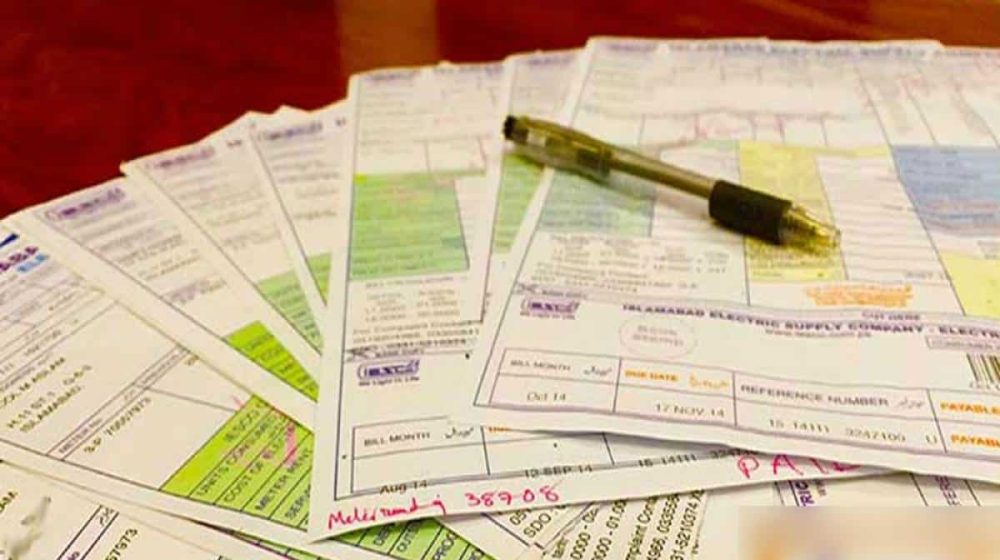

ISLAMABAD: The Power Division on Monday confirmed that widespread overbilling by Lahore Electric Supply Company (LESCO) had been verified through a probe ordered by Prime Minister Shehbaz Sharif, and punitive action had been taken against the responsible officials.
However, it clarified that the federal government cannot abolish electricity duty — as announced earlier by the power minister — without the agreement of all provincial governments.
Speaking at a public hearing hosted by the National Electric Power Regulatory Authority (Nepra), Additional Secretary for Power, Mehfooz Bhatti, said the probe into overbilling had been completed and the findings submitted to the prime minister. While confirming that action had been taken, he declined to share further details until the report’s recommendations are formally processed and presented to the regulator.
His statement triggered concerns among consumers about similar overbilling practices in other power distribution companies, prompting calls for wider investigations.
The hearing was held to consider a request from ex-Wapda distribution companies (Discos) for a negative quarterly tariff adjustment of Rs1.80 per unit, aiming to refund Rs53.4 billion to consumers for the August–October billing cycle. The refund is due to capacity payment savings during the fourth quarter (April–June) of FY2025.
Nepra member from Sindh, Rafique A. Shaikh, reminded the Power Division that a Nepra-led investigation two years ago had uncovered significant overbilling, which was initially challenged by the division. However, a subsequent internal inquiry by the Power Division confirmed even greater discrepancies. Mr. Shaikh noted that Nepra had facilitated refunds to overbilled consumers.
He also referenced Power Minister Sardar Awais Leghari’s announcement last month that the federal government had written to provinces proposing the elimination of electricity duty starting July 1, 2025. Only two provinces have responded so far, and the Power Division stressed that electricity duty cannot be removed unless all provinces consent.
During the hearing, it was disclosed that approximately 128,000 applications for new electricity connections are pending beyond the allowed timeframes, delaying the use of about 1,070MW of power generation capacity. Additionally, more than 4,000 net-metering applications are delayed, with Faisalabad Electric alone accounting for nearly half. Over 70,000 faulty meters have also not been replaced, resulting in consumers receiving estimated bills.
The Power Division also reported that 700–800MW of captive power had returned to the national grid due to higher gas tariffs under a special levy linked to the IMF programme. This shift, along with improved economic indicators, currency stability, lower interest rates, and better efficiency at Discos, has helped reduce circular debt from Rs2.39 trillion to Rs1.6 trillion over the past year. Overall electricity consumption rose by 1.6%, with industrial usage increasing by 6.3%.
Industrial representatives from Karachi and Lahore highlighted that electricity rates had gone up by 14% since July 1 — a rise corroborated by Pakistan Bureau of Statistics data. They also pointed out that a 19% tariff imposed by the U.S. under the Trump administration had already hurt Pakistani exports, and rising power costs were further eroding competitiveness with countries like India. They called for the elimination of cross-subsidy charges on industrial users, which they claim amount to Rs137 billion, although the Power Division puts the figure at Rs73 billion.
Despite claims of better performance, industrial consumers noted that system losses had climbed to 18.3% in FY2025, compared to 17.55% in FY2024 and 16.5% in FY2023.
The Power Division said the proposed tariff adjustment stemmed from Rs18 billion in savings due to non-payment to the currently non-operational Neelum-Jhelum Hydropower Project, Rs17 billion in revised power plant contracts, and gains from falling interest rates and currency stabilization.
