

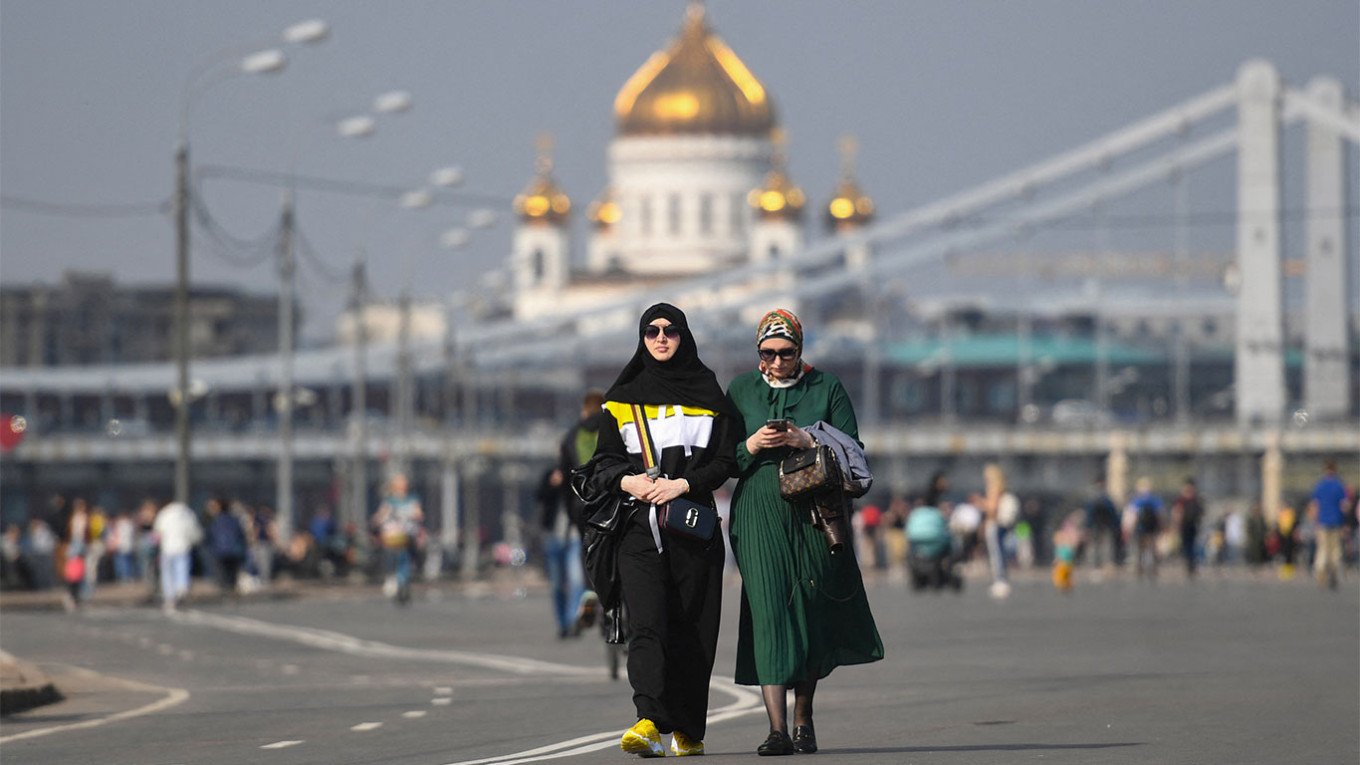

Yasmina, a Muslim woman from Russia, shared her experiences with discrimination after adopting the hijab. Previously, she enjoyed acceptance and opportunities due to her typical Russian appearance. However, upon donning the hijab, she faced prejudice and was labeled as a terrorist, despite her education and professional experience.
Islam is prevalent in Russia, with approximately 20 million Muslims residing in the country. Yet, discrimination against practicing Muslims persists, affecting veiled women who encounter barriers to employment, education, and even access to public spaces. This discrimination contradicts Russia’s claims of religious harmony.
Yasmina’s story reflects the challenges faced by veiled Muslim women across Russia. Despite her conscious decision to wear the hijab after converting to Islam, she encountered regular harassment and hostility, both in central Russia and her hometown in the Caucasus.
The situation worsened after the recent attack at Crocus City Hall, claimed by the Islamic State group, leading to heightened fear and warnings for Muslim women to avoid going out alone or after dark. Additionally, debates over religious head coverings have fueled Islamophobia, resulting in restrictions and bans, such as the hijab ban in schools upheld by Russia’s Supreme Court in 2015.
Furthermore, Muslims in Russia are often subjected to profiling and suspicion by security forces, equating religious practices with terrorism. Despite efforts in regions like Dagestan to promote the hijab, prejudices against veiled women persist, even within Muslim-majority communities.
However, not all veiled Muslim women feel discomfort in public spaces. Some, like a woman from Bashkortostan, don’t perceive any negative reactions, reflecting a sense of inner confidence and acceptance of their identity.
Overall, the accounts of veiled Muslim women in Russia highlight the complex landscape of religious discrimination and the ongoing struggle for acceptance and inclusion in society.
