

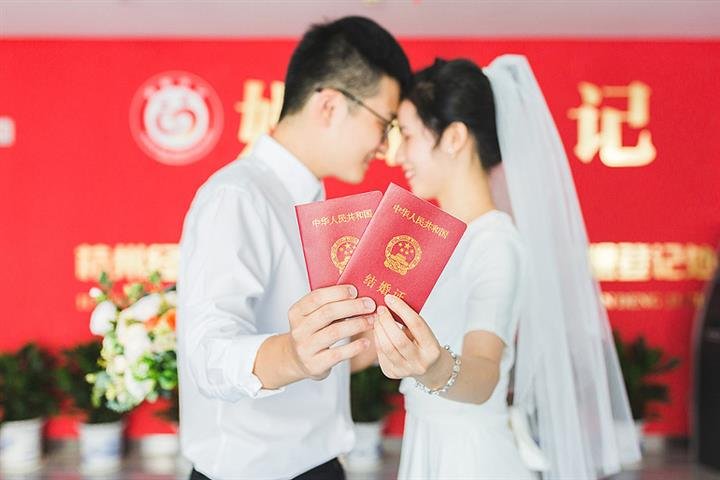

In Hong Kong, on March 18th, it was reported by Reuters that the number of new marriages in China experienced a 12.4% increase in 2023 compared to the previous year. This marks a reversal of a declining trend that has persisted for nearly a decade.
The rise in marriages can be attributed to a higher number of young individuals deciding to get married after postponing their weddings due to the COVID-19 pandemic. The Ministry of Civil Affairs recently released data showing that the number of newlyweds reached 7.68 million in the previous year, which is an increase of 845,000 couples from 2022. However, this number is still significantly lower than the peak of 13.47 million couples recorded in 2013.
Following Premier Li Qiang’s commitment in March to create a nurturing environment for birth and foster long-term, balanced population growth, the government aims to decrease the expenses associated with childbirth, parenting, and education.
As they confront the challenge of revitalizing their population, which is experiencing a decline in birth rates and rapid aging, it is projected that approximately 300 million Chinese citizens will retire within the next ten years, equivalent to nearly the entire population of the United States.
In 2023, China experienced a decrease in population for the second year in a row. This decline was influenced by a historically low birth rate and an increase in COVID-19 related deaths. Concerns arise as officials believe this downturn may significantly impact the economy’s growth potential in the long term.
However, there is some optimism among policymakers, as an increase in marriage rates could potentially lead to more births and help mitigate the population decline in 2024.
In the Year of the Dragon, starting on February 10th, there has been an increase in births occurring in hospitals across China, according to recent financial news from Yicai. This is because the Dragon sign in the Chinese zodiac is considered highly auspicious.
Despite this positive trend, numerous young individuals are choosing to remain single or postpone marriage due to unfavorable job prospects, record-high youth unemployment, and persistently low consumer confidence as the growth of the world’s second-largest economy slows down.
