

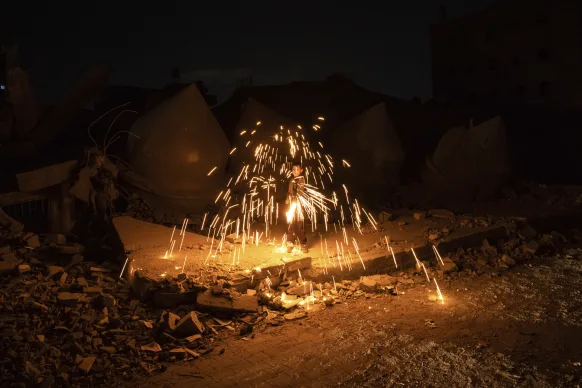

Each year, the people of Gaza eagerly anticipate the arrival of the fasting month with lively celebrations, vibrant decorations, and the illumination of streets, markets, and mosques. However, this year marks a stark departure from the usual festive atmosphere, as Palestinians in this besieged territory find themselves in a somber mood, overshadowed by the specter of Israel’s genocidal warfare and starvation during the sacred Muslim month of Ramadan.
Since the initiation of the conflict on October 7, Israel has claimed the lives of over 31,000 Palestinians in Gaza, imposing a total siege that severely restricts the entry of essential supplies such as food, water, and medicines. Tragically, even those awaiting deliveries of limited aid trucks face fatal shootings by Israeli forces.
UN experts have pointed out that Israel’s deliberate starvation of Palestinians in Gaza has led to severe shortages, leaving families with scant resources for breaking their fasts during Ramadan. The majority of Gaza’s 2.3 million population has been forced to flee to the southernmost city of Rafah under Israeli army orders, yet airstrikes persist, claiming more lives and leaving displaced individuals in squalid conditions with limited access to necessities.
In northern Gaza, famine is spreading, resulting in the tragic deaths of over two dozen people due to malnutrition, dehydration, and hunger. Despite urgent humanitarian needs, Israel obstructs aid efforts and continues to bomb hospitals and refugee camps.
Israeli Heritage Minister Amichai Eliyahu’s alarming call to “wipe out” the month of Ramadan reflects pervasive racism and dehumanization against Palestinians. Regrettably, Israel’s Western allies, including the United States, have largely supported the regime. Under domestic pressure, the U.S. has initiated aid drops into Gaza and proposed a plan for a sea port, though aid groups view these actions as mere publicity stunts.
As the U.S. hesitates to intervene in Israel’s war, more lives are lost in Gaza due to strikes and starvation. Concerns persist about a potential Israeli ground assault on Rafah, with Prime Minister Benjamin Netanyahu vowing to proceed despite warnings from global leaders.
The international community, including Germany’s Foreign Minister Annalena Baerbock and President Joe Biden, expresses concerns about a humanitarian catastrophe but falls short of attaching conditions to military support for Tel Aviv. Amidst Israel’s brutal actions in Gaza, excessive violence in the West Bank, particularly around Al-Aqsa Mosque, raises tensions during Ramadan, potentially fueling the flames of a third Intifada – a Palestinian uprising against the regime’s occupation.
The repercussions of such an uprising could extend beyond the region, with the U.S., complicit in Israel’s actions, bearing responsibility for the potential catastrophic consequences of an escalating conflict in West Asia.
