

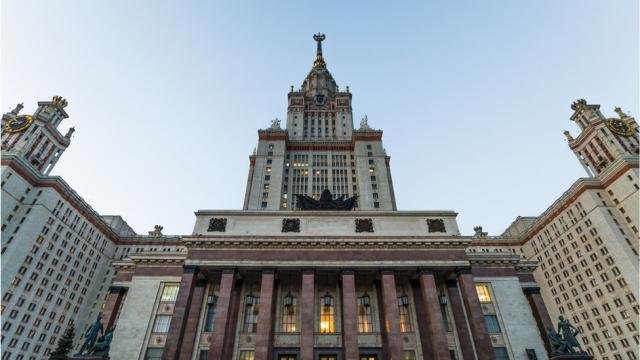

In a recent development reported by Russian media, a Moscow State University student named Oleg Tarasov has been sentenced to 10 days in jail within the capital city for an unusual reason: renaming his Wi-Fi router with a pro-Ukraine slogan. The court found Tarasov guilty of displaying what it deemed “symbols of extremist organizations” on Thursday. His act involved renaming his Wi-Fi network to “Slava Ukraini!”, translating to “Glory to Ukraine!”.
The incident unfolded when a police officer noticed the network name and reported it to authorities. Subsequently, Tarasov was arrested in Moscow and his student accommodation was inspected by officers. Inside, they found his personal computer along with a Wi-Fi router. Court documents revealed that Tarasov had utilized the network to disseminate the slogan “Slava Ukraini!” to an unrestricted number of users within Wi-Fi range. Consequently, the court confiscated his router.
The slogan “Slava Ukraini!” has gained prominence as a rallying cry among supporters of Ukraine, particularly during protests against Russia’s full-scale invasion of the country. However, in the eyes of Russian authorities, the slogan was deemed as a demonstration of Nazi symbolism or symbols affiliated with extremist organizations.
This incident sheds light on a broader crackdown on dissent in Russia. According to the Russian human rights group OVD-Info, over 260 individuals have been incarcerated in Russia for crimes linked to expressing anti-war sentiments. Shockingly, the group has documented more than 20,000 detentions in relation to such cases.
Tarasov’s case underscores the tightening grip on freedom of expression within Russia, where even innocuous acts like renaming a Wi-Fi network can lead to legal repercussions. The episode serves as a stark reminder of the complex socio-political dynamics prevailing in the region, where expressions of solidarity with Ukraine can be perceived as acts of defiance against the Russian state.
