

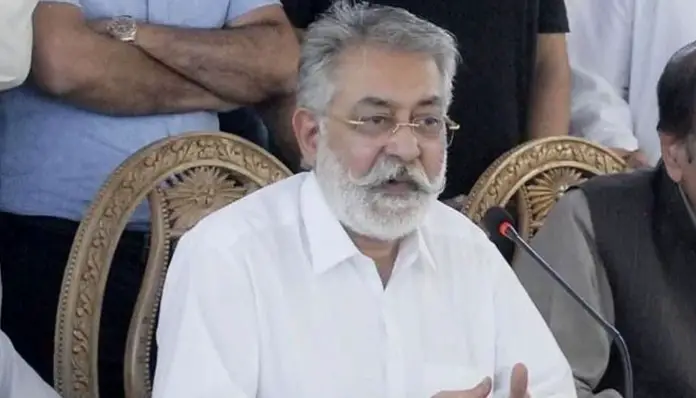

In a bold assertion, Grand Democratic Alliance (GDA) chief Pir Pagara has raised the specter of “Emergency or Martial law” in Pakistan, suggesting that such measures could be imposed with the judiciary’s legal sanction. As his party protests what they perceive as rigged February 8 general elections, Pagara’s statements underscore the growing political tensions and concerns about the electoral process.
Amid widespread discontent over the election outcomes, various political parties have taken to the streets, with allegations of rigging echoing across the political landscape. While major parties scramble to form alliances and secure their positions in the next government, the GDA, led by Pagara, has launched an agitation campaign against what they deem as electoral malpractice, particularly in Sindh.
Addressing a large protest gathering in Jamshoro, Pir Pagara voiced grave reservations about the integrity of the 2024 elections, alleging that results were predetermined and payments made long before polling day. Pagara lamented the absence of genuine national-level leadership in the country by expressing disdain for the political culture of falsehoods and deceit.
Despite criticizing the electoral process, Pagara emphasized that the protests were not directed against national institutions, including the armed forces, acknowledging their role in safeguarding the country’s security and stability.
Rejecting calls for election boycotts, Pagara emphasized the importance of engaging in the democratic process, albeit with reservations about its integrity. He warned of the challenges of governance without a unifying national-level leader. He suggested that emergency measures could be invoked to address any perceived uncertainty, with the judiciary providing legal legitimacy.
Pagara’s statements reflect broader concerns about the state of democracy and governance in Pakistan, highlighting the need for credible and transparent electoral processes. As political actors navigate the complexities of post-election dynamics, the specter of emergency measures looms large, raising questions about the country’s democratic trajectory and institutional integrity.
