

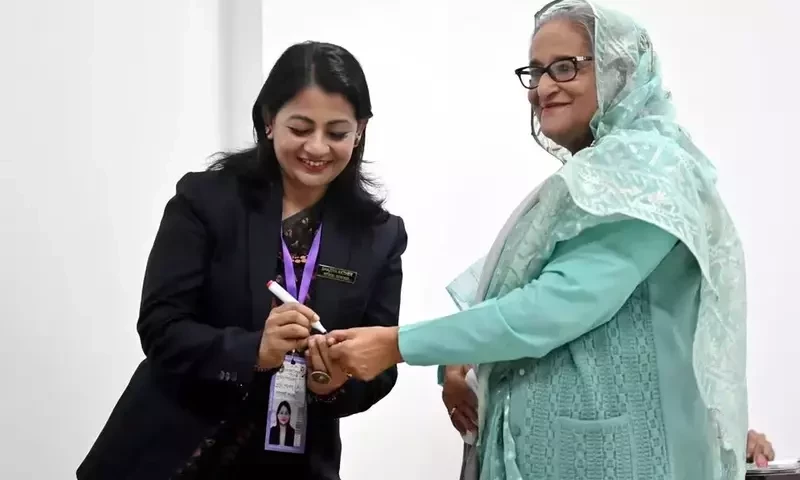

As anticipated, Bangladesh Prime Minister Sheikh Hasina secured a fourth consecutive term, with her party achieving an absolute majority in the general election, according to the election commission’s announcement on Monday.
The main opposition, the Bangladesh Nationalist Party (BNP), boycotted the polls, citing Hasina’s refusal to resign and allow a neutral authority to oversee the election. Hasina, the daughter of Bangladesh’s founding father Sheikh Mujibur Rahman, won her first term in 1996 and is now set for her fifth overall.
During her 15 years in power, she is credited with economic improvements, particularly in the garments industry, and received international acclaim for providing shelter to Rohingya Muslims escaping persecution in Myanmar.
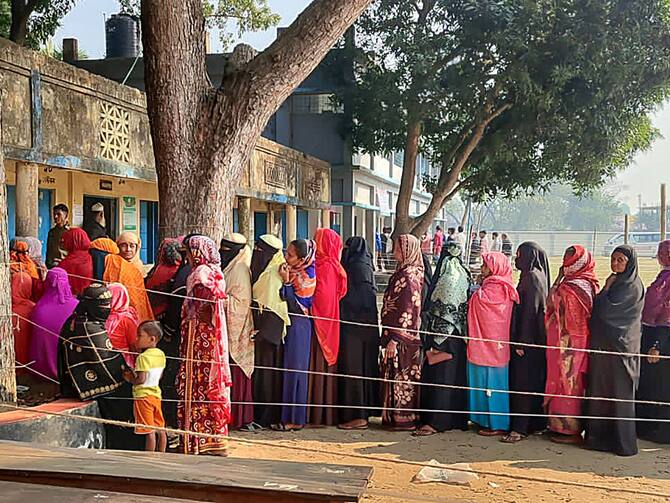
Despite a low voter turnout and incidents of violence, the ruling Awami League party secured 167 seats out of 227, with the remaining results yet to be disclosed. The overall voter turnout was around 40%, a significant drop from the 80% recorded in the 2018 election.
Rights groups expressed concerns about potential one-party rule, while the United States and Western nations, major customers of Bangladesh’s garment industry, urged a fair and transparent election.
Sheikh Hasina won her constituency in Gopalganj decisively, with her nearest rival receiving only 469 votes. While acknowledging the challenges, Hasina expressed her commitment to sustaining democracy in Bangladesh, emphasizing her accountability to the citizens.
Despite the victory, she instructed her party not to organize victory processions or celebrations. The opposition BNP, accusing the ruling party of supporting ‘dummy’ independent candidates to manipulate the election’s appearance of credibility, called for a two-day nationwide strike.
The election, covering 299 directly elected parliamentary seats, witnessed nearly 120 million eligible voters choosing from nearly 2,000 candidates. Notably, independent candidates, many affiliated with the Awami League, secured 49 seats.
The BNP’s two-day strike and call for a boycott claimed success with the observed low turnout. Hasina accused the opposition of fueling anti-government protests in Dhaka, leading to fatalities. The recent train fire, labeled as arson by the government, and attacks on polling booths, schools, and a Buddhist monastery added to the election-related turmoil.
Critics of Hasina cite authoritarianism, human rights violations, restrictions on free speech, and suppression of dissent. Additionally, economic challenges, exacerbated by the Russia-Ukraine war, compelled Bangladesh to seek a $4.7 billion bailout from the International Monetary Fund.
