

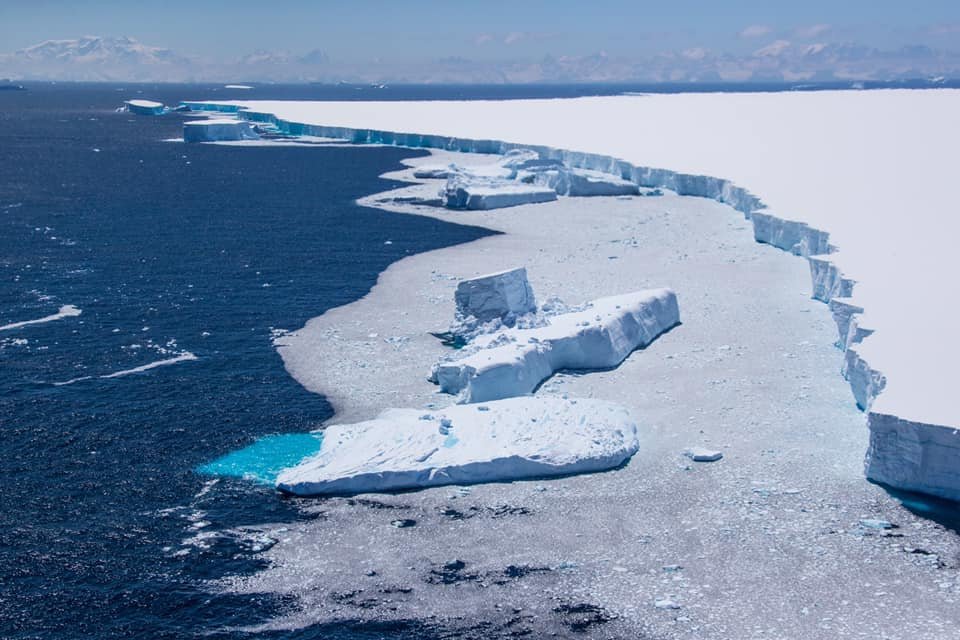

Southern Ocean
In a remarkable turn of events, the world’s largest iceberg, A23a, has begun its first significant movement in over three decades, according to scientists’ reports on Friday. This colossal Antarctic iceberg, boasting an expansive 4,000 square kilometers (1,500 square miles), equivalent to three times the size of New York City, initially calved off West Antarctica’s Filchner-Ronne Ice Shelf in 1986.
However, since then, it had been largely immobilized, its base firmly lodged on the floor of the Weddell Sea, except for its recent liberation.
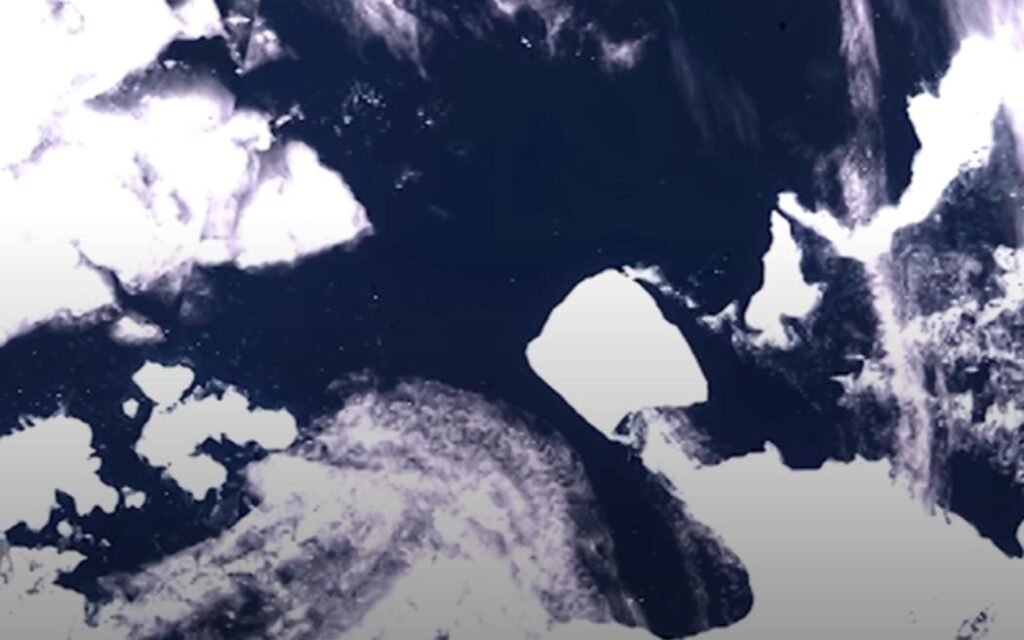
Recent satellite imagery has unveiled the iceberg’s swift drift past the northern tip of the Antarctic Peninsula, propelled by robust winds and ocean currents. This unexpected journey raises scientific interest, as it is a rare occurrence to witness an iceberg of such magnitude in motion.
Glaciologist Oliver Marsh from the British Antarctic Survey emphasizes the importance of closely monitoring its trajectory as the iceberg gains momentum, anticipating its course into the Antarctic Circumpolar Current and the Southern Ocean, following a route known as “iceberg alley.”
The reasons behind A23a’s sudden movement remain uncertain. Marsh speculates that slight thinning over time may have provided the iceberg with added buoyancy, enabling it to lift off the ocean floor and be propelled by ocean currents. Notably, A23a is among the world’s oldest icebergs.
There is a possibility that it might again become grounded, potentially at South Georgia island, posing a threat to the region’s vibrant wildlife, including millions of seals, penguins, and seabirds.
Recalling the recent iceberg scare with A68 in 2020, which raised concerns about a collision with South Georgia, Marsh notes that while A23a could break into smaller pieces, it also has the potential to endure in the Southern Ocean, disrupting shipping routes and potentially making its way northward towards South Africa. The unfolding journey of A23a introduces both scientific curiosity and concerns about its impact on the delicate ecosystems of the Southern Ocean and beyond.
