

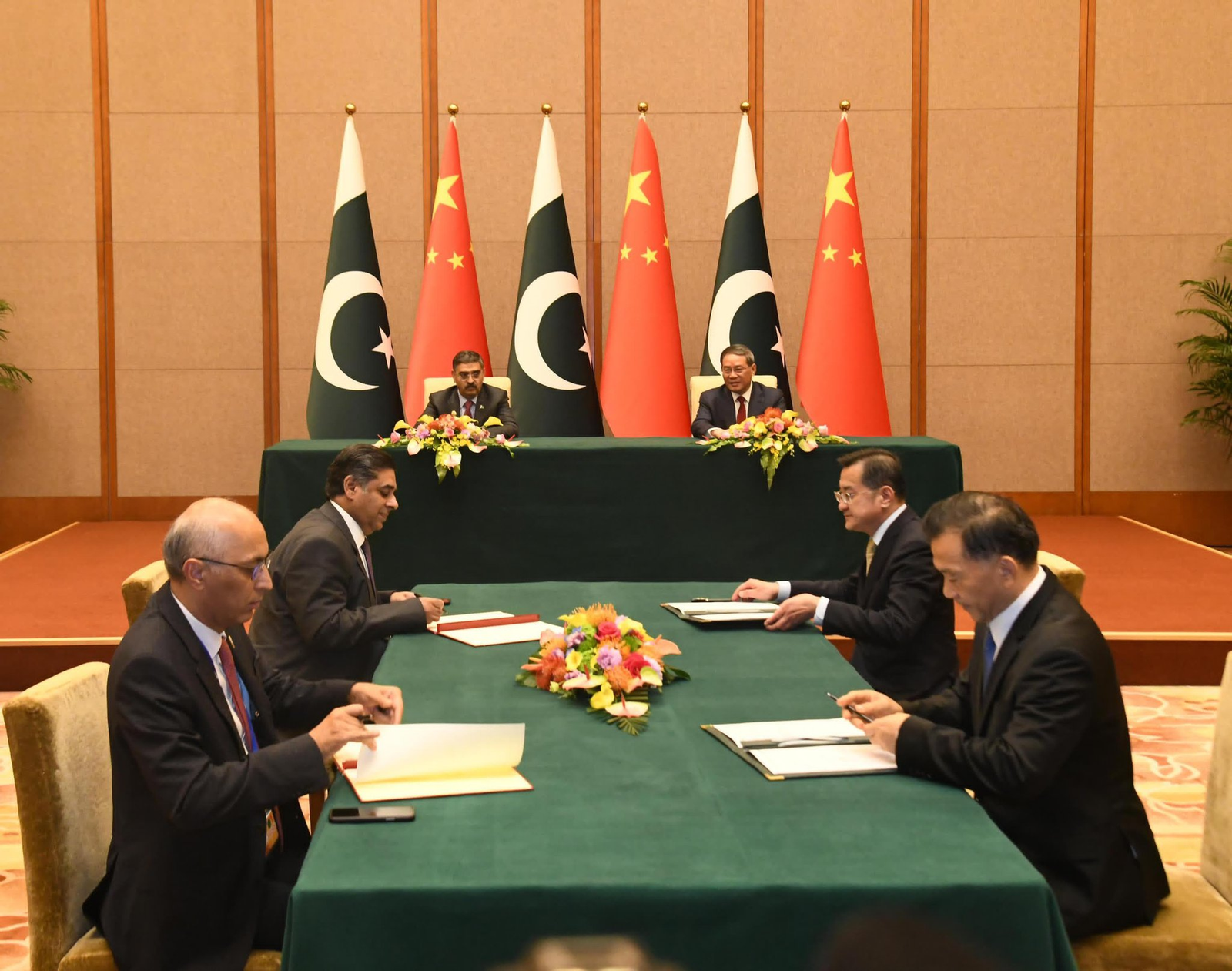

ISLAMABAD: Pakistan and China have agreed to expand the scope of the multibillion-dollar CPEC infrastructure project. This expansion will encompass areas such as industrial development, ICT, livelihood projects, mining and mineral exploration, and agriculture. Currently, the corridor is limited to road and rail connectivity and economic zones.
Both nations also signed an agreement for the strategic Main Line-1 (ML-1) rail project, as stated by the Ministry of Railways.
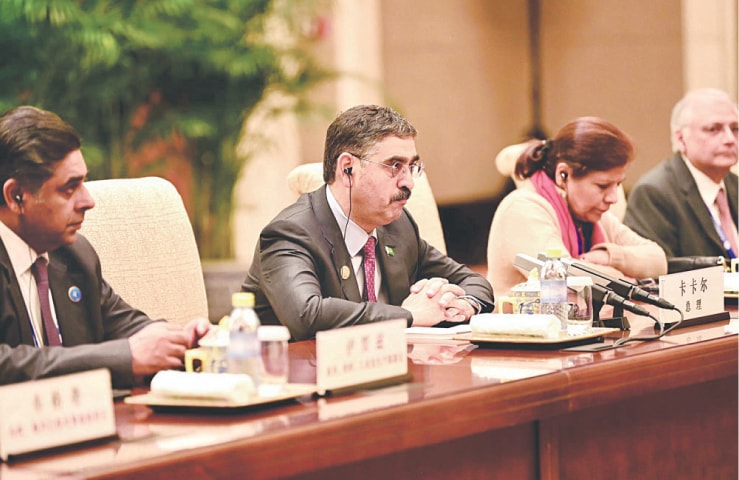
Furthermore, both sides committed to enhancing high-level dialogue and engagement, deepening relations in political, economic, education, science and technology, culture, and people-to-people exchanges.
Caretaker Prime Minister Anwaarul Haq Kakar made these commitments during a meeting with top Chinese leadership. Mr. Kakar was in China to attend the 3rd Belt and Road Forum in Beijing.
According to the Prime Minister’s Office (PMO), discussions on bilateral ties took place during a meeting between Prime Minister Kakar and Chinese Premier Li Qiang on the sidelines of the conference.
The two leaders also witnessed a signing ceremony where several memorandums of understanding (MoUs) and agreements were inked in the areas of commerce, communication, and transport, including the Main Line-1 (ML-1) rail agreement, food security and research, media exchanges, space cooperation, urban sustainable development, capacity building, mineral development, industrial cooperation, climate change, and vaccine development.
Additionally, the United Energy Group of China and Pakistan Refinery Ltd signed an MoU for a $1.5 billion investment aimed at increasing the refinery’s production capacity. This agreement will boost PRL’s petrol production capacity from 250,000 tonnes to 1.6 million tonnes and high-speed diesel from 600,000 tonnes to 2 million tonnes.
ML-1 Project
As for the ML-1 rail project, Railways Secretary Syed Mazhar Ali Shah stated that work on the project would commence shortly. The rail project, with a revised cost from $9 billion to $6.7 billion, will span 1,733 kilometers, connecting Peshawar to Karachi. It has the potential to expand the number of trains traveling between both cities to 100.
Mr. Shah emphasized that this crucial agreement would transform Pakistan’s entire transportation network, increasing Pakistan Railways’ market share from 4% to 20% and creating 20,000 jobs for technical experts.
During the meeting, Mr. Kakar described the Belt and Road Initiative (BRI) as a project of immense significance for global connectivity and shared prosperity. He expressed hope that the next phase of the CPEC project would bring benefits to rural farmers, education, small businesses, job creation, and poverty alleviation.
Prime Minister Kakar also noted Pakistan’s collaboration with China in the information technology sector and the potential for modernization, food security, and agricultural and environmental protection through CPEC’s green corridor.
In his address at the Belt and Road Forum, Mr. Kakar expressed Pakistan’s commitment to working with China and other regional partners to promote global connectivity and open economies. He emphasized the need for a united global response to address complex transnational challenges and urged investment in infrastructure development, particularly in transportation, energy, and the digital economy.
