



ISLAMABAD: Reportedly, China has implemented a policy barring officials at central government agencies from utilizing Apple’s iPhones and other foreign-branded devices for work purposes or even bringing them into the office.
In recent weeks, superiors have issued instructions to staff in workplace chat groups or meetings, with the extent of these orders’ distribution remaining unclear.
This ban comes ahead of an upcoming Apple event next week, which analysts predict will feature the launch of a new line of iPhones. This development may raise concerns among foreign companies operating in China as tensions between China and the United States continue to escalate.
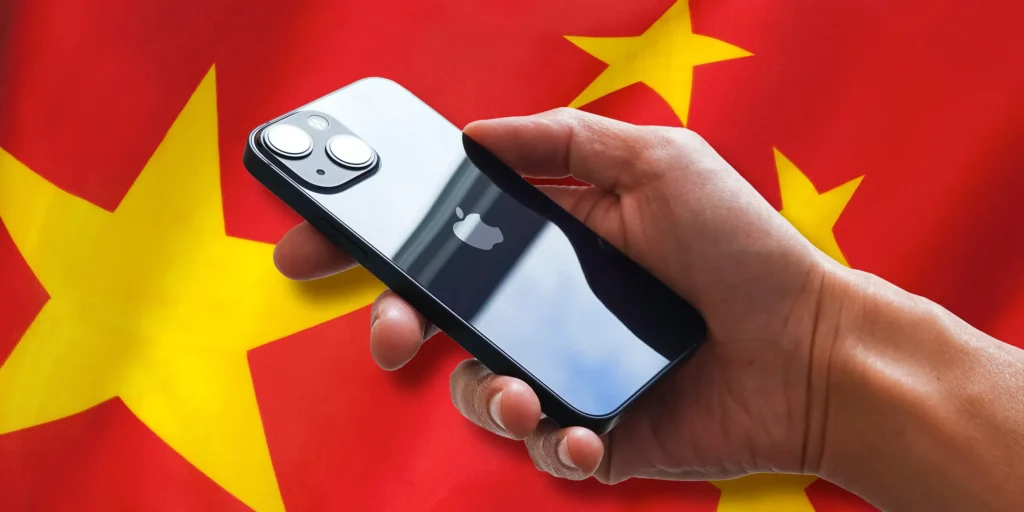
Significantly, the report exclusively mentioned Apple (AAPL.O) as the affected phone manufacturer. Apple and China’s State Council Information Office, responsible for media inquiries on behalf of the Chinese government, have not responded to Reuters’ requests for comments.
The shares of the iPhone maker saw a 1.5% decline in early trading.
China has been actively working for over a decade to reduce its dependence on foreign technologies. This initiative involves promoting the adoption of domestic software among state-affiliated entities such as banks and fostering the local production of semiconductor chips.
In 2020, Beijing heightened its efforts by proposing the “dual circulation” growth model, with the goal of reducing reliance on foreign markets and technology, driven by concerns over data security.
In May, China called upon major state-owned enterprises to take a leading role in achieving technology self-reliance, further escalating competition amid tensions with the United States.
Sino-US tensions have remained elevated, as the United States, in collaboration with its allies, works to hinder China’s access to vital equipment necessary to maintain competitiveness in the chip industry. In response, Beijing has imposed restrictions on shipments from prominent U.S. firms such as Boeing (BA.N) and chip manufacturer Micron Technology (MU.O).
China’s Impact on Apple and U.S. Concerns
Several analysts have observed that this reported action underscores Beijing’s unwillingness to spare any U.S. company in its efforts to reduce dependence on American technologies. Even Apple, with its extensive operations in China, including a substantial workforce involved in product assembly through its partnership with Foxconn, is not exempt from this trend.
This development should motivate companies to diversify both their supply chains and customer bases to reduce their reliance on China, especially if tensions continue to escalate.
China constitutes a significant portion of Apple’s revenue, contributing nearly 20%. CFRA Research analyst Angelo Zino suggests that, despite the reported developments, no immediate impact on earnings is expected, given the iPhone’s popularity in China.
During a recent visit to China, U.S. Commerce Secretary Gina Raimondo relayed concerns expressed by U.S. companies. They found China’s business environment increasingly challenging for investment due to fines, raids, and other actions that heightened risks in the world’s second-largest economy.
China’s latest restriction resembles similar bans imposed by the United States on Chinese firms like Huawei Technologies (HWT.UL) and ByteDance-owned TikTok, a Chinese-owned short video platform.
