


ISLAMABAD: Indonesia could appear as a logical candidate for inclusion in an extended BRICS, a consortium of emerging economies consisting of Brazil, Russia, India, China, and South Africa.
With over 270 million people, the Southeast Asian nation stands as a significant emerging economy, possibly reaching the world’s top five economies by the middle of the century, according to certain projections.
However, when Cyril Ramaphosa of South Africa unveiled the expanded BRICS membership in Johannesburg last week, Indonesia found itself absent from the list, which includes Argentina, Egypt, Ethiopia, Iran, Saudi Arabia, and the United Arab Emirates.
Indonesia’s decision to refrain from joining BRICS, despite its parallels with other emerging economies, signifies a long-standing caution against getting caught up in geopolitical alliances. It also reflects uncertainties about the potential economic advantages that membership might provide, as per analysts.
“It is not really surprising, since many analysts and former diplomats had already warned against joining BRICS and the economic benefits are not clear and apparent, while the political and economic cost due to the backlash from the West are quite certain,” said Radityo Dharmaputra, a lecturer at the Department of International Relations at Universitas Airlangga.
‘Bebas-aktif’
Prior to the BRICS summit in South Africa last week, around 40 countries had reportedly indicated interest in becoming part of the alliance, including Indonesia.
Indonesian President Joko “Jokowi” Widodo, following his participation in the Johannesburg event on Thursday, mentioned that he was contemplating membership but aimed to avoid hasty decisions.
Discussing Indonesia’s potential membership, Anil Sookal, South Africa’s ambassador to BRICS, mentioned that Jakarta had requested a postponement to engage with its Association of Southeast Asian Nations (ASEAN) counterparts for consultation.
Dharmaputra from Universitas Airlangga indicated that one of Indonesia’s concerns could be the perception of aligning with countries like China and Russia.
He said, “The image of Indonesia being seen as part of the China-Russia world would be a problem.”
“Especially since Indonesia really emphasises its independent and active foreign policy. How can you sell that to the other countries, while being in the same group with China and Russia?”, he further added.
During the Cold War, Indonesia played a role as one of the founding members of the Non-Aligned Movement, and it has maintained a ‘Bebas-aktif’, or an independent and active foreign policy approach, often participating in peace efforts worldwide.
For instance, President Widodo visited Russia and Ukraine in June last year as part of such efforts.
Indonesia’s Pragmatic Approach: Weighing BRICS and Global Alliances
Yohanes Sulaiman, an international relations lecturer at Universitas Jenderal Achmad Yani in Bandung, expressed the view that there is “no benefit” for Indonesia in joining BRICS.
“We have yet to see any real results from BRICS other than as a grouping to counter the United States and there doesn’t seem to be any concrete progress being made,” he said.
BRICS has positioned itself as a champion of the Global South. It established the New Development Bank (NDB) as an alternative to the IMF and World Bank and even explored the idea of a new currency. However, perceptions of BRICS as an emerging anti-Western alliance could complicate Indonesia’s ties with the US.
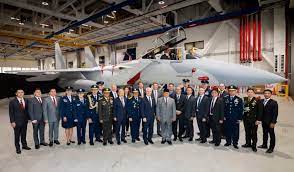
Last week, Jakarta and US aircraft maker Boeing finalized an agreement for the sale of 24 F-15EX fighter jets to Indonesia. This deal followed Indonesian Defence Minister Prabowo Subianto’s visit to Washington, DC.
Sulaiman from Universitas Jenderal Achmad Yani emphasized that Indonesia would find more alignment in groups like ASEAN, which involve its neighboring countries. This stands in contrast to arbitrary groupings of nations with limited historical or trade links to Indonesia.
“Indonesia already has ties with China, and Russia is now the subject of an international boycott, so there is no benefit there,” he said. “South Africa is facing a financial crisis and we can also work directly with other countries like India.”
Under Widodo’s leadership, Indonesia has set forth ambitious development targets. These encompass the relocation of its capital to Eastern Borneo and the expansion of its domestic capability to process commodities into finished goods. This pursuit forms a cornerstone of Jakarta’s mission to attain a gross domestic product (GDP) per capita of $25,000 by 2045.
Indonesia Favors OECD Over BRICS for Trade Benefits
Dharmaputra highlighted that Indonesia is directing its attention towards other global coalitions that offer more direct benefits, particularly in trade. One such example is the Organisation for Economic Cooperation and Development (OECD), which consists of 38 member nations.
He said, “Indonesia wants to join the OECD and joining BRICS would be seen as an obstacle to this.”
Sulaiman stated that BRICS’ endeavors to contest the supremacy of the US dollar would probably not appeal to Indonesia. “This was a highly rational decision,” he said. “Things would be the same whether we joined or not.”
