

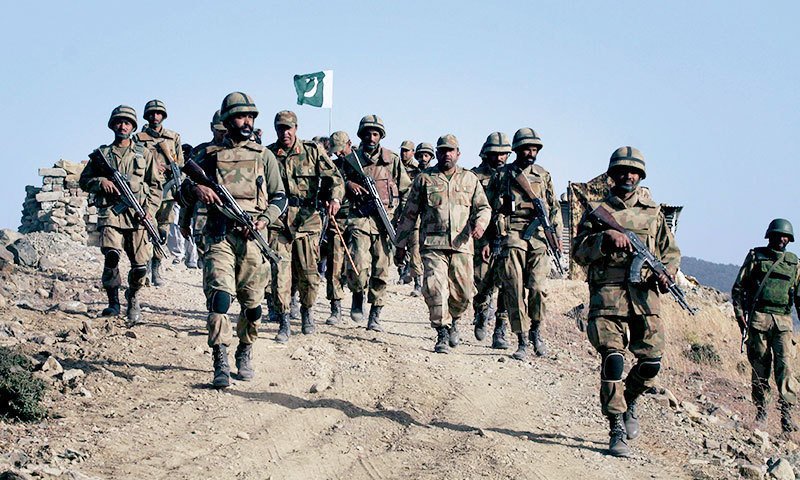

ISLAMABAD: The British High Commissioner to Pakistan, Jane Marriott, commended the Pakistan Army’s sacrifices in the war against terrorism. She emphasized that the sacrifice of the armed forces was not only for the sake of domestic peace but also for global security. Besides this, she discussed other domains such as bilateral trade between the two countries and climate change efforts.

Marriott underlined Pakistan’s pivotal role on the frontlines of the battle against terrorism as a key ally to her country. She conveyed her condolences to the families of those who lost their lives in the war against terrorism.
The High Commissioner highlighted that the Tehreek-e-Taliban Pakistan (TTP) and other terrorist groups, including the Haqqani Group, are still active in Afghan territory. Marriott expressed that the Taliban need to address these groups immediately. If these groups are not curtailed timely, they will pose a threat not only to Pakistan but to the entire world.
She clarified that while the conflict between Ukraine and Russia is being closely followed on UK television channels, this does not mean neglecting Afghanistan. The world’s attention is still fixed on Afghanistan’s issues. The UK is actively engaged in finding ways to negotiate with the Taliban-led government in Afghanistan.
Marriott pointed out that discussions involving various parties and the Taliban were held in Doha. There are concerns about the humanitarian conditions in parts of Afghanistan, especially the limited rights for women and girls. Negotiations with the Taliban government would continue on these fronts.
The British High Commissioner acknowledged that security in Afghanistan has shown improvement with the Taliban’s assumption of control. Notably, during the Taliban’s rule, a significant reduction in opium cultivation has occurred. She believes it is crucial in curbing the drug’s negative impact on global youth.
Pakistan and the UK Collaborate on Climate Change and Trade
Talking about climate change, Marriott emphasized its undeniable significance. She acknowledged Pakistan’s vulnerability to climate-related challenges, evident from its experiences with floods. Given Britain’s own history with industrialization, she expressed the need for collective global efforts to mitigate climate change’s adverse effects. Acknowledging the financial requirement for such endeavors worldwide, she affirmed the UK’s commitment to supporting Pakistan in international climate financing through private investments.
Marriott revealed that the current trade volume between Pakistan and the United Kingdom stood at 4.4 billion pounds (Rs1,672 billion). It underscores the substantial economic ties between the two nations. She concluded by noting the mutual understanding of each other’s needs solidifies Pakistan and the UK as strong trading partners.
