

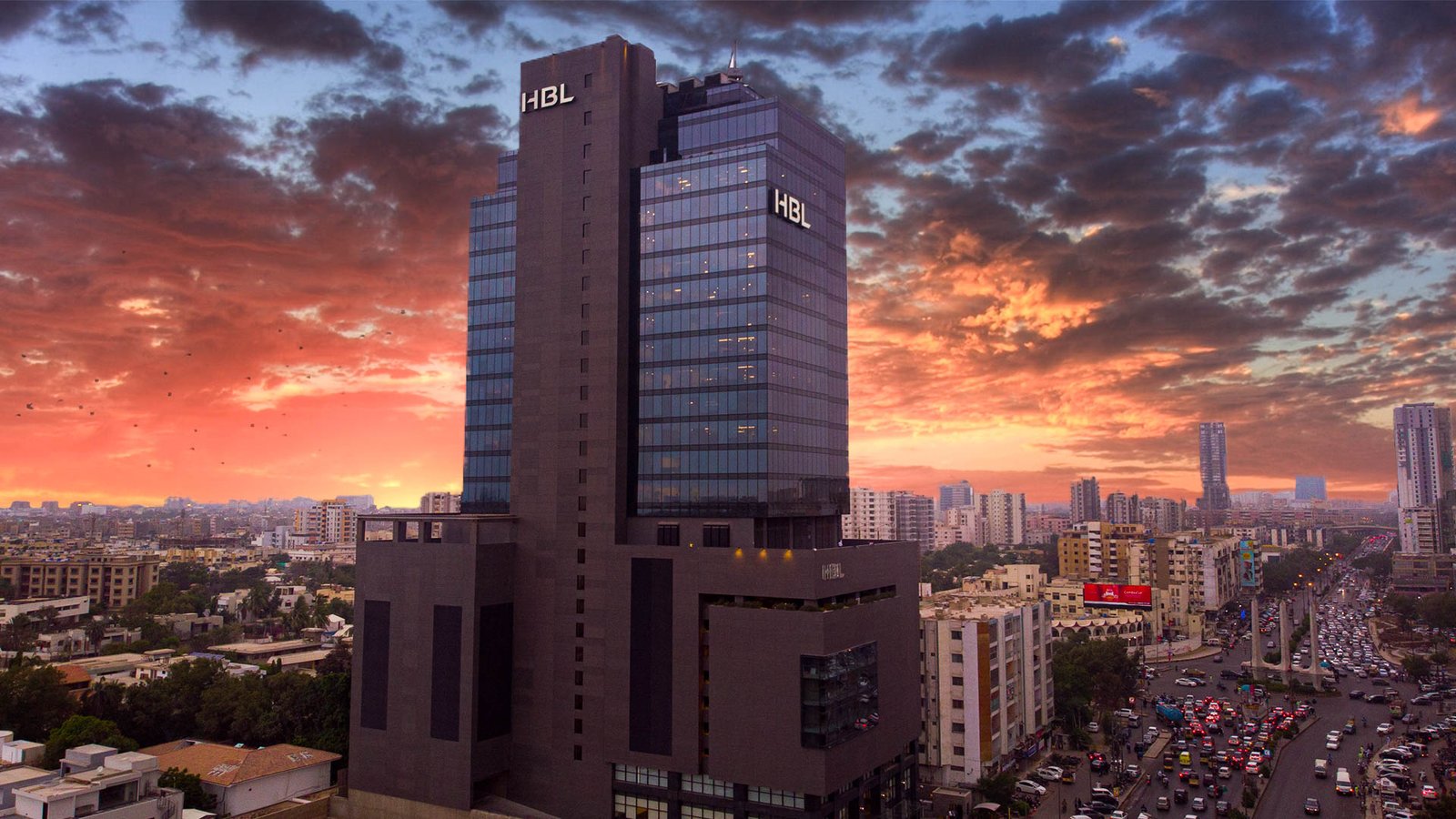

KARACHI/ISLAMABAD: The Switzerland-based organization, Aga Khan Fund for Economic Development (AKFED), which holds majority controlling stakes in Habib Bank Limited (HBL), is planning to make an additional investment of Rs3.47 billion in the bank. This investment will involve acquiring more shares available for trade at the Pakistan Stock Exchange (PSX).
The Aga Khan Fund is utilizing its accumulated dividend income within Pakistan to make an investment. Due to low foreign exchange reserves in the country, the Fund couldn’t repatriate the dividend income to its headquarters abroad.

This investment represents the second buy-back exercise by the Aga Khan Fund in the last three months. Previously, they used the same accumulated dividend income to acquire HBL’s stocks from the retail market (PSX) for Rs3.53 billion.
The stock market investors have responded positively to this new investment decision, leading to a significant increase in HBL’s stock price. The stock price soared by 5.74% to reach a 14-month high at Rs102.20.
High Trading Volume And Potential Share Acquisition At PSX
The trading volume at the PSX was also high, with 18.67 million shares being traded. At the current share price, the majority shareholder has the potential to acquire another 2.31% shareholding. This is equivalent to 33.97 million shares, using the available fund of Rs3.47 billion.
Several listed companies at PSX have recently adopted a buy-back trend. This trend has become more prevalent, especially after these companies experienced significant declines in their share prices. This decline is due to the economic slowdown and partial closure of industrial units.
This approach of buy-back has proven beneficial for both company owners and general investors
Share prices are expected to rebound, particularly after Pakistan secured a $3 billion loan program from the IMF in June 2023, as economic activities gradually recover.
insights on HBL’s Shareholding and Foreign Investment Challenges in Pakistan
According to HBL’s annual report for 2022, AKFED held a 51% stake in the bank during both 2021 and 2022. The stake amounted to 748.09 million shares. It is likely that the shareholding has increased in 2023. This increase follows the first buy-back announced in May 2023, which was worth Rs3.53 billion.
HBL’s company secretary notified PSX about the AKFED’s intention to acquire additional shares of HBL from the open market. The Aga Khan Fund will make this acquisition by utilizing the accumulated dividends, totaling Rs3,472,172,945, which they have not repatriated.
Topline Research commented on the previous buy-back of shares by the Fund. They suggested that the State Bank of Pakistan (SBP) does not allow dividend repatriation due to low foreign exchange reserves.
Instead, the authorities can utilize funds within Pakistan to prevent a net outflow of US dollars.
Pakistan’s foreign exchange reserves have shown a significant improvement, reaching a two-month high import cover of $8.2 billion. This improvement is attributed to recent inflows from the IMF and friendly countries like Saudi Arabia and the United Arab Emirates (UAE).
This marks a substantial improvement compared to the reserves, which were less than $3 billion in the recent past.
However, despite taking these measures to strengthen reserves, the authorities still do not allow foreign investors to repatriate profits and dividends to their headquarters.
The government has encouraged foreign investors to reinvest their earnings in the domestic economy to support economic growth. However, its response to the matter of repatriation remains unknown.
According to the central bank’s latest data, the overall repatriation of profit and dividends to foreign headquarters by global investors operating in Pakistan has significantly decreased by 80% to $331 million in the previous fiscal year, compared to $1.68 billion dispatched in FY22.
Despite the economic slowdown, banks operating in Pakistan have continued to register notable profit growth, primarily due to substantial lending to the cash-strapped government for budgetary support at a historically high interest rate of around 23%.
Additionally, many banks have earned significant revenues from the rupee-dollar exchange business, as the local currency has been consistently depreciating against the US dollar amid high demand for the greenback over the past several years.
