



ISLAMABAD: The Islamabad High Court (IHC) has directed its registrar to request the relevant authority to draft rules for the recording of evidence through video conferencing. It also calls for the integration of modern technology in court proceedings. Chairman PTI, Imran Khan had requested the IHC to allow him to participate in court proceedings through video-link
IHC has issued a detailed verdict on a petition filed by Imran Khan, who is facing multiple criminal cases in courts across the country. Imran Khan requested relevant authorities for video link arrangements in all cases for his participation and appearance. He requested the facility for cases either within the jurisdiction of the IHC or anywhere else in the country.
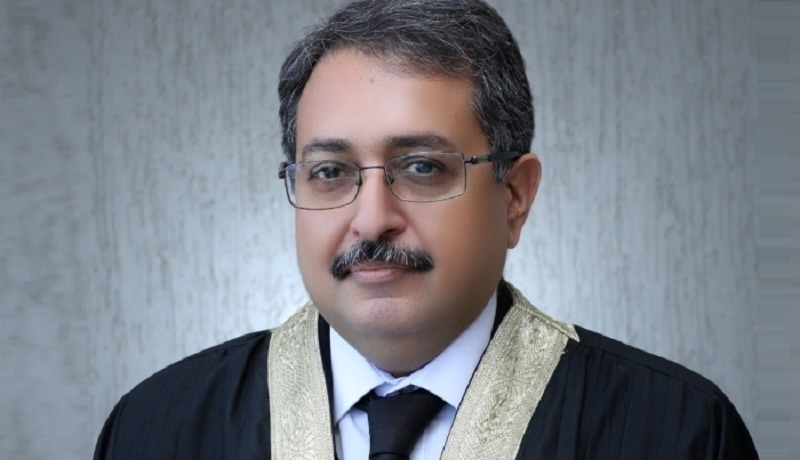
IHC Chief Justice, Aamer Farooq, stressed the urgent need to modernize Pakistan’s criminal justice system and utilize technology efficiently. He highlighted that the use of modern technology in the dispensation of justice can revolutionize the judicial system. It can improve the quality and quantity of judgments, and expedite the process of justice delivery.
The verdict noted that courts do not sufficiently utilize modern means of communication. The judiciary was urged to adapt to modern information and communication technologies, as the future lies in their adoption. The court also called on the government and the Law and Justice Commission of Pakistan to take urgent measures to align the judicial and criminal justice system with modern technologies.
Regarding criminal investigations, the court noted that arresting an accused is not essential, and summonses or warrants for appearance can be issued to cooperate in the investigation. The court clarified arrest and pre-arrest bail conditions, stressing the accused’s presence in court during trial and verdict announcement.
The court clarified that an investigating agency can arrest an accused without a warrant if the offense is “cognizable.” This is permissible when there is sufficient evidence to justify the arrest. The agency must obtain a warrant before making an arrest if the offense is “non-cognizable.”
The court clarified that an investigating agency can arrest an accused without a warrant if the offense is “cognizable.” This is permissible when there is sufficient evidence to justify the arrest. The agency must obtain a warrant before making an arrest if the offense is “non-cognizable.” This distinction ensures that arrests are according to the legal procedure.
