

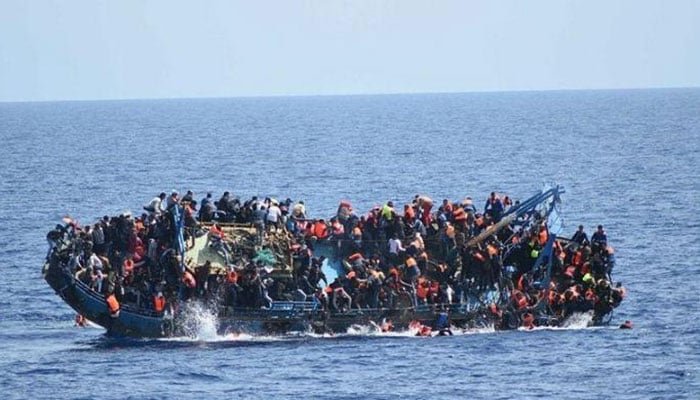

GUJRAT: The Gujrat circle of the Federal Investigation Agency (FIA) is initiating an inquiry into the cases of around 40 victims linked to a human trafficking racket based in Libya. Authorities have arrested two more suspects involved in facilitating illegal migration, resulting in the tragic boat incident off the coast of Greece, which claimed many lives.
According to a statement from an FIA official, authorities have yet to register approximately 40 cases related to victims of the tragic boat incident. The reason is that the heirs of these victims are hesitant to share crucial information about the agents and travel history of their loved ones.
Last month, these heirs cooperated by providing their DNA samples during a two-day camp organized by the Punjab Forensic Science Agency (PFSA) at the local FIA office.
In response, senior FIA authorities have launched an inquiry into these 40 cases, aiming to gather crucial details about the victims through their air travel history.
Additionally, they seek to obtain information about the human traffickers involved in sending the victims to Libya, with their ultimate destination being Italy by boat. Based on the inquiry report, there is a possibility of filing cases against these human traffickers.
In the meantime, the local FIA circle reported the arrest of two more agents. Authorities apprehended Afzal, who hails from Amra Kalan village near Dinga town, and Hameed Ahmed, from Chorand village in Mandi Bahauddin district.
Notably, the FIA police station in the area had already lodged cases against both suspects.With these arrests, the number of arrested suspects has reached 41.
Authorities arrested these suspects from Gujrat, Mandi Bahauddin, and Wazirabad areas in the crackdown launched on the agents involved in sending boat tragedy victims abroad.
As of now, the authorities have not transported the bodies of the six victims from Gujrat district, who were identified through DNA matching with their kin, to their native areas.
The FIA police station collected DNA samples from approximately 120 individuals, who belong to the families of the victims, to aid in the identification process.
