

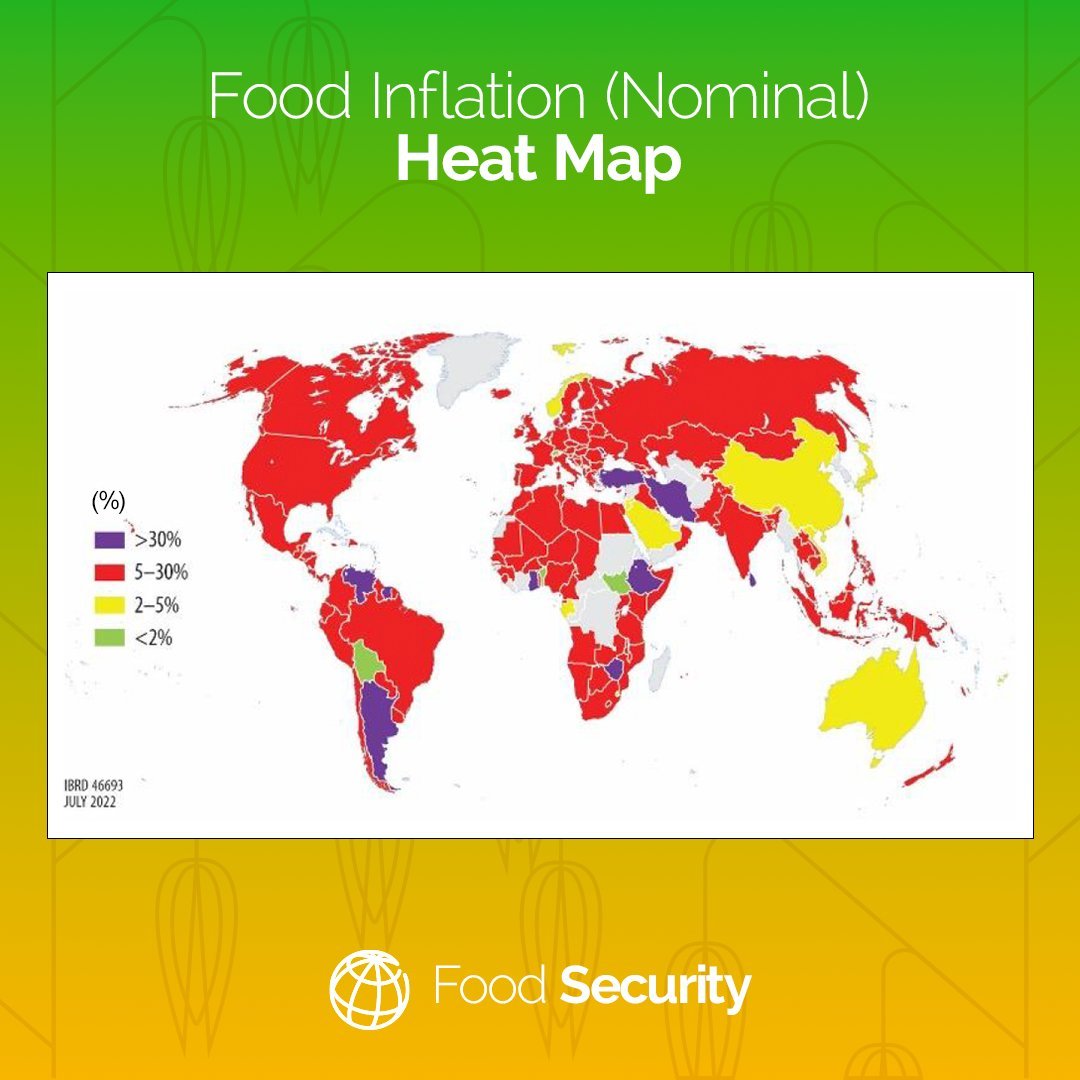

The World Bank in its latest update for the month of October had opined that domestic food price inflation would continue to rise, especially in low and middle-income countries, including African nations.
Zimbabwe, Lebanon, Venezuela and Turkey ranked first four countries in the assessment while Iran, Sri Lanka, Argentina, Moldova, Rwanda and Ghana were the remaining countries in the list published by the World Bank on Sunday.
“Globally, domestic food price inflation is still strong. According to data from May to August 2022, almost all low- and middle-income countries experienced high inflation; 88.2% of low-income nations, 91.1% of lower-middle-income nations, and 93% of upper-middle-income nations experienced inflation levels above 5%, with many experiencing double-digit inflation. With around 82.1% of high-income nations experiencing high food price inflation, the percentage of countries with high inflation has also dramatically increased, according to the update.
In addition to rising energy prices, the bank stated that fertiliser prices have also increased as a result of policy actions like export limits that have decreased the availability of fertiliser throughout the world.
“The conflict in Ukraine has changed global trade, production, and consumption patterns in ways that will keep prices high through the end of 2024, escalating food shortages and inflation. High food prices have sparked a global crisis that has increased hunger and malnutrition and pushed millions more people into extreme poverty, according to the bank.
According to its Finance Minister Mthuli Ncube, the Zimbabwean economy expanded less than the 4.6% previously predicted this year due to a number of circumstances, including rising inflation and cuts to government spending.
4.6 percent was the projection offered in July during a budget review after an earlier expectation of 5.5 percent growth had been lowered.
On the other side, figures from the nation’s statistics office in September 2022 showed that Ghana’s GDP grew 4.8% year over year in the second quarter of 2022, driven by growth in the fishing, manufacturing, and education services sectors.
The country that produces gold announced in June of this year that it would seek assistance from the International Monetary Fund (IMF) as its balance-of-payments situation deteriorated.
