

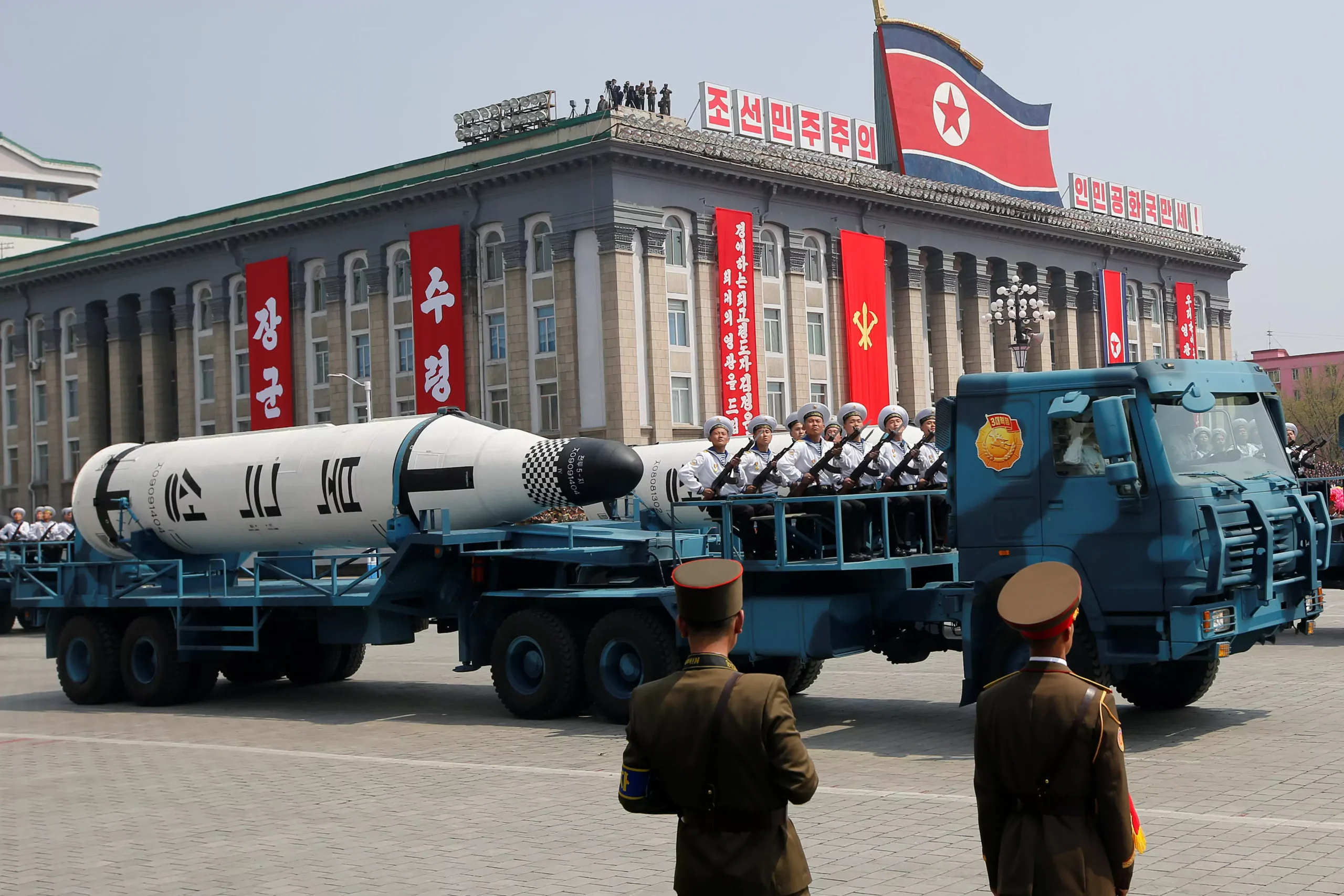

In a new display of power that the US has warned might lead to a nuclear test, North Korea launched a short-range ballistic missile, launched an artillery bombardment, and flew fighter jets close to the border with the South on Friday.
As Seoul and Washington claim Kim Jong Un is close to completing what would be his country’s seventh nuclear test, Pyongyang has drastically increased missile launches and military drills in recent weeks, which it now refers to as “tactical nuke” operations.
The military of North Korea said in a rare statement that its most recent operations were in response to a “provocative” artillery drill by South Korea close to the border.
According to a statement published by the official Korean Central News Agency early on Friday, the Korean People’s Army “made significant military countermeasures.”
According to the statement, Pyongyang gave “a harsh warning to the South Korean military for recklessly creating military tension in the frontline area.”
The launch of a ballistic missile was reportedly seen by South Korea’s military early on Friday, only hours after Pyongyang flew 10 fighter jets near to the inter-Korean border.
The North Korean aircraft breached a “reconnaissance line” established by Seoul, which results in an immediate operational response. The Joint Chiefs of Staff reported that Seoul subsequently scrambled military aircraft, including F-35A fighter jets.
Additionally, according to JCS, North Korea violated a maritime “buffer zone” established by a 2018 agreement by firing about 170 artillery rounds into the oceans off its east and west coasts.
In a statement, Seoul’s National Security Council denounced what it called a barrage of “hostile measures” that occurred overnight and warned that “such provocations will have repercussions.”
Additionally, on Friday, the South issued its first unilateral penalties in five years against North Korean people and organizations.
The United States also denounced the launch of a further ballistic missile, claiming that it violated many UN sanctions just like the many other recent launches.
A State Department representative referred to the North by its formal name, the DPRK, and added, “We continue to seek serious and prolonged discussion with the DPRK, but the DPRK refuses to engage.”
