

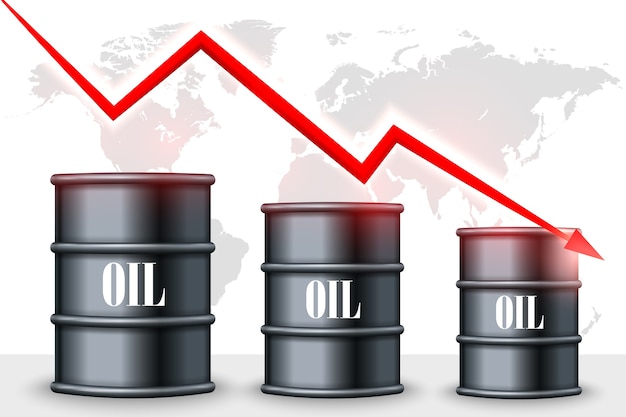

On Monday, oil prices fell for a second day due to concerns about weaker fuel consumption from an anticipated global recession brought on by rising global interest rates as well as the fact that non-dollar buyers of crude are less able to purchase it due to the strengthening US dollar.
At 0640 GMT, the price of Brent crude futures for November settlement fell $1.35, or 1.57%, to $84.80 per barrel. The contract dropped to $84.51, its lowest price since January 14.
The November delivery price of US West Texas Intermediate (WTI) oil futures fell $1.15, or 1.46 percent, to $77.59 a barrel. WTI dropped to $77.21, its lowest level since January 6.
On Friday, both contracts fell by almost 5%.
On Monday, the dollar index, which compares the value of the dollar to a basket of international currencies, reached a 20-year high.
A higher dollar tends to reduce demand for oil priced in dollars since foreign currency buyers have to pay more for petroleum.
In order to combat rising inflation, central banks in many oil-consuming nations, including the United States, the world’s largest consumer of petroleum, have hiked interest rates. This has generated concerns that the tightening could cause an economic downturn.
Prices have received some boost from the interruptions caused by the Russia-Ukraine conflict and the impending European Union sanctions that would ban Russian crude beginning in December.
Russell Hardy, the chief executive officer of energy broker Vitol, claimed that fuel shipments are being hampered by the fact that supplies of Russian oil are planned to move to Europe while products from that region are projected to flow to Asia and the Middle East.
Furthermore, more than a million barrels per day (BPD) of US crude are anticipated to be shipped to Europe to make up for the shortfall in Russian supply, according to Hardy, who spoke at an energy conference in Singapore.
