

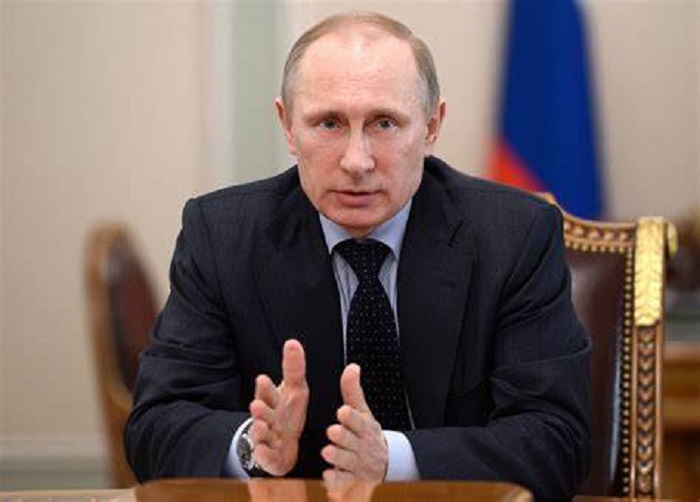

Putin has referred to the sanctions that the West has imposed on Russia as a “global pandemic.”
These sanctions are a direct result of Russia’s involvement in the conflict in Ukraine.
During his speech at a business conference in Vladivostok, he declared that despite the economic “attack” from the West, Russia was managing to keep up with the competition.
However, Russian President Vladimir Putin warned that the sanctions were causing a drop in living standards for people in Europe while preventing food from reaching the nations that are the poorest in the globe.
In addition to this, he claimed that Europe was depriving countries in the developing world of food that was being sent from Ukraine.
It is not true, as stated by Russian President Vladimir Putin, that only two grain ships have made their way to Africa since Russia’s exports resumed at the beginning of August.
The Russian troops had been preventing access to the ports in Ukraine for several months.
Russia started its invasion of Ukraine on February 24th, and as of right now, it is responsible for roughly 20% of the country’s territory is under its hands.
After six months, it was pushed back from the region around Kyiv and the north, and it is now facing a counteroffensive from the Ukrainians in the south and the east.
As a direct response to the war, western nations imposed sanctions on a diverse group of Russian persons and organizations.
Moscow has temporarily shut down its essential Nord Stream 1 gas pipeline to Germany, citing technical concerns as the reason for the move.
This move is part of a strategy to lessen the dependence of the EU on Russia for the supply of gas and oil.
On Friday, the ministers of the EU will meet to discuss how to respond to the situation, during which the Russian leader has called a plan to cap Russian gas prices “stupid” because of the rise in energy prices.
The meeting will take place after the Russian leader’s criticism of the idea.
The West is attempting to impose its principles on countries all around the world, as stated in Mr. Putin’s speech, which may be found here.
A great number of companies indeed madee a rapid exit from Russia; but, “now we are seeing how production and employment in Europe are closing one after another,” he said.
But Russia is also experiencing difficulties, with inflation on the rise and businesses struggling to obtain components that are critical to their operations.
During a speech that looked to be geared both at Western bystanders and a domestic audience, he made the argument that faith in the dollar, the euro, and the pound was crumbling right in front of their eyes.
And Russia emerged from the conflict stronger than it had ever been: “I am sure that we have not lost anything, and I am sure that we will not lose everything.”
When asked if Russia was trying to blackmail Europe with its energy resources, Ukrainian Foreign Minister Dmytro Kuleba responded, “Putin wants to harm the stability and well-being of every home in Europe.”
Kuleba made this statement in response to the question.
At the forum, the President of Russia stated that it is impossible to successfully isolate Russia no matter how much someone may want to do so.
Li Zhanshu, a prominent figure in Chinese legislative politics, was present as well.
According to reports published in Russian media outlets, Russian President Vladimir Putin and Chinese President Xi Jinping are scheduled to meet in Uzbekistan the next week.
Before a deal under the auspices of the United Nations was reached to remove Russia’s blockade of three Ukrainian Black Sea ports, there had been a significant reduction in the amount of grain that could be exported.
Last week, a ship carrying food for drought-stricken areas of Ethiopia landed in Djibouti, and since then, another ship has left for Yemen.
Both ships were chartered by the United Nations. The number of shipments has gradually increased. Egypt has been visited by a great number of ships over the years.
