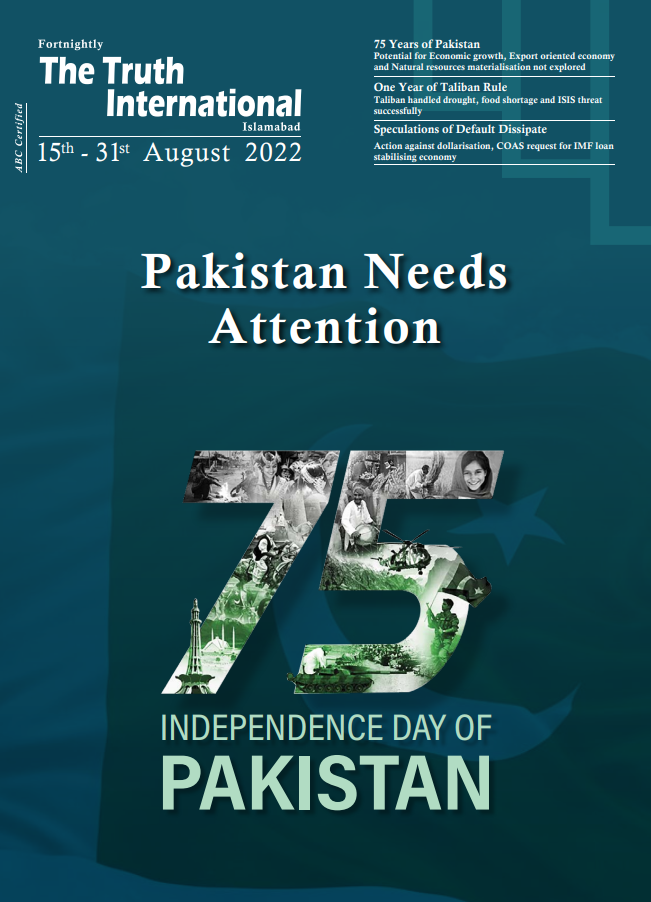

The 14th of August 2022 marks 75 years of independence for Pakistan, a land that was created for the predominantly Muslim majority population of British India to live as a separate nation, away from Congressional dominance. The transitions that have taken place in the country’s history are unparalleled and unique, which outsiders could view as examples of political instability. The truth is that within this time frame, Pakistan has gained significant achievements while confronting challenges that are not unique to the country alone. It is imperative for observers to view this country’s history impartially prior to coming up with definitive conclusions.
Firstly, Pakistan’s societal evolution has meant that the once overtly religious society has transformed into a more inclusive, tolerant, and civically engaged polity. The Zia years of Islamization may have left a footprint on certain segments of society that brandish the religion card for narrow parochial interests, but the society in 2022 is defined by greater ethnic inclusivity, an understanding of human rights, and a greater cause for social identity. Interethnic marriages, for example, demonstrate that most Pakistanis, while predominantly Muslim, still consider fellow citizens to be part of a nation, not a monolithic ethnic identity that has been historically dominated by the Punjabi elite.