


In an effort to prevent unrest before a vote in parliament this week to select a new president, Sri Lanka’s interim President Ranil Wickremesinghe issued directives for a state of emergency late on Sunday.
Since April, when public protests began over the government’s handling of a deteriorating economic crisis and a persistent lack of basic necessities, Sri Lanka’s beleaguered authorities have proclaimed a state of emergency four times.
“It is expedient in the interests of public security, the protection of public order and the maintenance of supplies and services vital to the existence of the community,” the notification read.
After president Gotabaya Rajapaksa fled the nation to avoid a mass revolt against his administration, Wickremesinghe proclaimed a state of emergency last week, although it had not been officially notified or gazetted.
Wickremesinghe, who was sworn in on July 15 as acting president, proclaimed a new state of emergency late on Sunday, the particular legal elements of which have not yet been revealed by the government.
As a result of previous emergency rules, the military has been utilized to conduct arrests and detentions, search private property, and suppress public demonstrations.
Colombo, the country’s business metropolis, was a quiet place to be on a Monday morning.
State of emergency declarations are increasingly being used as a first line of defense by governments, according to Centre for Policy Alternatives senior researcher Bhavani Fonseka.
Fonseka told Reuters, “This has been counterproductive in the past.”
One week ago, hundreds of thousands of anti-government protestors took to the streets of Colombo and occupied his official mansion and office, prompting Rajapaksa to flee to the Maldives and then Singapore.
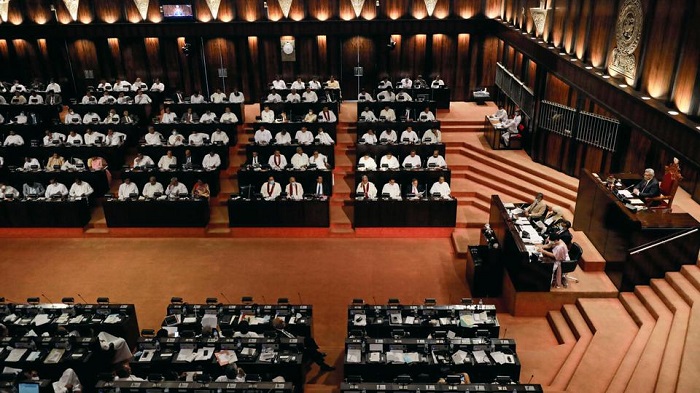
Rajapaksa’s resignation was accepted by parliament on Friday, and the process of electing a new president commenced on Monday, with the vote scheduled for Wednesday.
A consignment of petroleum came to help the crisis-stricken country cope with the shortages.
One of the main candidates to become the presidency full-time is Wickremesinghe, a six-time prime minister and perceived supporter of Rajapaksa, but demonstrators also want him gone, raising the possibility of fresh turmoil should he be elected.
Dullas Alahapperuma, a prominent legislator from the ruling party who served as minister of mass media and cabinet spokesperson, and Sajith Premadasa, head of the main opposition Samagi Jana Balawegaya (SJB) party, are both strong contenders.
