


The 969-megawatt Neelum-Jhelum hydropower project, finished at an estimated sanctioned cost of roughly Rs508 billion, has been shut down due to significant cracks in its tailrace tunnel amid nationwide electricity shortages.
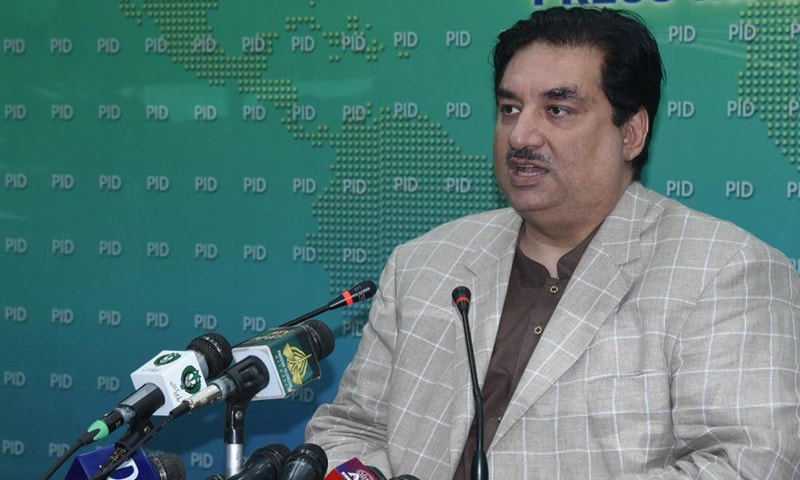
“Unfortunately, Neelum-Jhelum is not accessible. Power Minister Khurram Dastgir Khan said during a news conference that details of its suspension or malfunction had not yet been resolved. He also said that rigorous investigations were ongoing into all of its channels, which are lengthy and deep and some of which are buried behind enormous mountains.
After 21 years of waiting, the project’s construction finally began in 2002, and it was finished in April 2018 despite numerous cost overruns and missed deadlines.
Chinese contractor CGGC-CMEC (Gezhouba Group), hired in December 2007, completed significant construction involving 58 kilometres of tunnels.
The project’s production has frequently exceeded its installed capacity of 969 MW, reaching 1,040 MW. It was supplying the national grid with more than five billion kWh, or units of electricity, each year at an average cost of around Rs 9 without incurring any fuel costs.
The project’s “tailrace tunnel has been obstructed and as a result, the power station has been closed for safety concerns,” the Water and Power Development Authority (Wapda), which manages hydroelectric plants, later stated.
“The causes of the tailrace tunnel’s closure are currently being looked into. Once the causes are identified, steps will be taken to remove the blocking of the tailrace, according to a statement released in Urdu by Wapda.
However, the minister claimed that because Tarbela’s production grew by just 2,500MW, the situation with regard to the supply of electricity has improved. Following the last five days of enhanced river inflows and the beginning of coal imports from Afghanistan, he said that the Tarbela power station had increased its electricity generating level to 3,684MW from merely 1,125MW.
As a result, the power shortage of 4,000–5,000 MW decreased by nearly 50%.
He added that loadshedding would further decrease during Eid days as the 1,100MW unit 2 of Karachi Nuclear Power Plant (K-2) will go online in a few days following a laborious refuelling process. At the same time, power consumption has also fallen because of better weather, he said.
The minister said that significant progress had been made in importing coal from Afghanistan and that Islamabad and Kabul governments had acted as brokers in the 1,320 MW Sahiwal Coal Power Project’s arrangement for coal supply with a private Afghan business. He said that Sahiwal plant had already received three trains’ worth of Afghan coal.
He said that key government officials would travel to Kabul to discuss how to permanently organise coal supply chains. He said Pakistan would ask the interim Afghan administration to guarantee continuous border operations, particularly at night, to ensure ongoing coal supply.
According to him, Afghanistan’s top objective was to clear as much of its perishable produce, such as fruits and vegetables, during the day so that coal operations could continue into the night.
The minister chose not to respond to some recent criticisms made by an Afghan minister, saying that he would rather promote the idea that enhanced trade ties between neighbours were best for the people on both sides and had a favourable effect on international relations.
He claimed that the supply of coal was a significant business deal that both governments supported. It is a business-to-business agreement between Afghan coal suppliers and independent power producers (IPPs). He stated that the Pakistani delegation would bring up the subject of increased export taxes with Afghan officials as well.
The minister announced that during the current fiscal year, the government would upgrade the national grid system by an additional 5,000MW. He said that all of these initiatives were launched by the previous PML-N administration under the direction of party leader Nawaz Sharif.
There would be no more capacity addition in the future outside of these projects, with the exception of hydro, solar, wind, local coal, and other domestic resources.
