

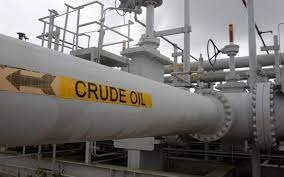

NEW YORK– As Moscow and Kyiv began peace talks, oil prices rose around 4% on Wednesday as supply tightened because of another fall in US crude stocks and the looming likelihood of renewed Western sanctions against Russia.
By 10:57 a.m. EDT (1457 GMT), Brent futures had risen $4.17, or 3.8 percent, to $114.40 a barrel, while WTI oil had risen $3.97, or 3.8 percent, to $108.21.
Last week, crude stocks in the United States decreased for the second week in a row, falling by a larger-than-expected 3.4 million barrels, bringing inventories in the world’s top consumer to 410 million barrels, the lowest level since September 2018, according to official data.
“Despite increased output and yet another robust SPR (Strategic Petroleum Reserve) release into commercial inventories, US crude stockpiles have exhibited another drop,” said Matt Smith, principal oil analyst at Kpler, noting that the crude decline was driven by rising processing activity.
After six weeks of stagnation, US crude output increased by 100,000 barrels per day (bpd) to 11.7 million bpd last week, while SPR inventories plummeted to their lowest level since May 2002, and Gulf Coast refinery utilisation increased to its highest level since January 2020.
After Russia agreed to pull back military activities surrounding Kyiv in the previous session, the market suffered a significant sell-off, but rumours of strikes remained.
In a note, Commonwealth Bank analyst Tobin Gorey said that crude’s price rebound on Wednesday “suggests the oil market, at least, has high suspicion about any ‘progress’ (in the peace negotiations).”
New sanctions are being planned by the US and its allies against other areas of Russia’s economy that are vital to the country’s invasion of Ukraine, including military supply networks.
“If ties with Europe deteriorate and an oil embargo is imposed, we expect an extra 1 million barrels per day of Russian output to be put at risk, though we still believe this is improbable,” wrote JBC Energy in a note.
After demanding that “unfriendly” nations pay in roubles for its gas, Russia’s top legislator warned the European Union on Wednesday that oil, grain, metals, fertiliser, coal, and timber exports might soon be priced in roubles.
As a result, Germany launched an emergency plan on Wednesday to regulate gas supply in Europe’s largest economy.
Whereas OPEC+, the Organization of Petroleum Exporting Countries and Allies, which includes Russia – meets on Thursday, major oil producers are expected to adhere to their scheduled output goal rise of approximately 432,000 bpd, according to various sources close to the organisation.
Oil prices, on the other hand, are under pressure from falling demand in China because of tightening mobility restrictions and COVID-19-related lockdowns in several cities, including Shanghai, the financial capital.
China will implement policies as quickly as possible to stabilise the economy, official television CCTV said on Wednesday, citing a cabinet meeting.
