

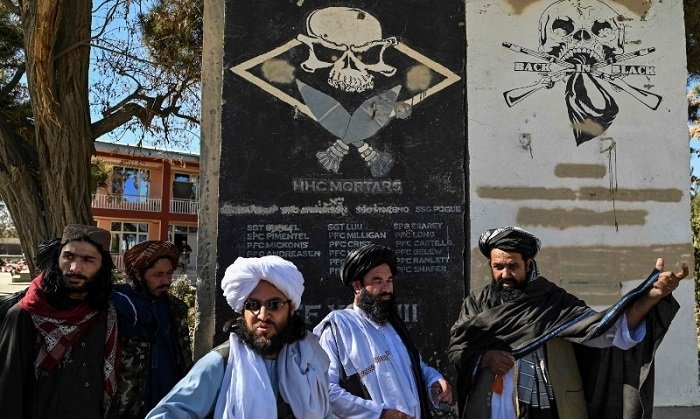

To the satisfaction of the Taliban militants gathered at the governor’s compound in Ghazni Province, Afghanistan, a new historical exhibit has been unveiled: demolished walls from a decommissioned US military base.
The Taliban’s provincial cultural chief, stood with the Taliban militants in front of a broken wall at a former US military facility in Ghazni with the names of fallen US troops. They aimed to show that they had won the War on Terror.
The names and battalions of the US soldiers who fought in the province throughout America’s longest war were written on the broken walls. Traditionally, it had been common practise for the soldiers to scrawl their names on the walls of their bases.
After 20 years of battle, the Taliban are using broken and abandoned U.S. bases to support their claim that they have defeated U.S.-led forces. Mullah Habibullah Mujahid, the Taliban’s regional cultural commander, told media that “we have to exhibit this so that Afghans, the world, and future generations know that we crushed the Americans, who called themselves the superpowers of the world.”
Three days before Kabul fell, on August 12, Taliban troops captured Ghazni, a city 150 kilometres (95 miles) south of the capital. After 3,500 years of documented and rich history, the Taliban are presently hard at work penning the next chapter in which they show the world the extent of their military success.
At a time when the nation is on the verge of economic collapse and the UN estimates that more than half the population is experiencing acute hunger, Afghanistan’s new rulers are under pressure to transform their country from an insurgency to a governing force. Yet another impromptu display celebrating the Taliban’s triumph has appeared outside of the approximately 200,000-person city.
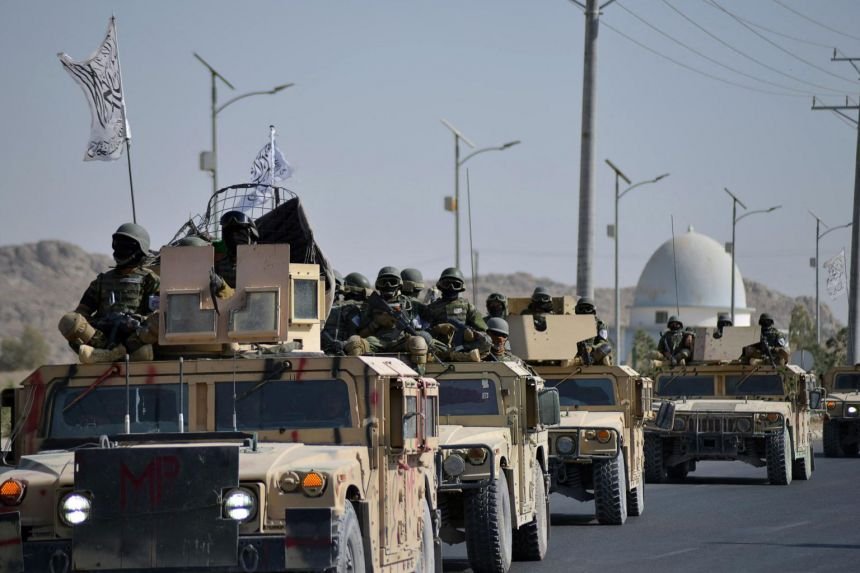
The rusted remains of American armoured vehicles, their armaments removed, and their tyres worn to a crisp, are on exhibit. The debris includes the carcasses of Soviet tanks that were abandoned during the decade-long occupation of Afghanistan. As the final U.S. forces depart Afghanistan, the Taliban celebrate their “full freedom.”
The Soviets were humiliated in that invasion, and Afghans are keen to remind foreigners that their nation has now prevailed over three foreign empires, including the defeat of British soldiers in the nineteenth century. As many in the country do, 18-year-old Taliban fighter Ozair said, “We are pleased with our success when we witness this.”
Afghans born here proved to America that they could defeat the powerful nation, he said, examining the burnt Humvees and smashed vehicles. Afghanistan is littered with reminders and artefacts from the two decades of US-led occupation, some of which can still be put to good use.
In the final days of the US-backed administration, much of the military supplies sent to Afghan police and armed personnel ended up in the hands of the Taliban. Afghanistan’s new leaders have received evidence of their victory thanks to the influx of guns, cars, and uniforms – the spoils of war.
But putting together a genuine tribute to the Taliban’s return to power is still a struggle for those who have collected the awards. Mujahid Mullah Habibullah said the names etched on the blast walls included “major commanders and generals” who had been killed in the battle. Although the ranks stated were all junior, none of the names appeared in databases of Americans killed in the conflict.
