


ISLAMABAD: At present Pakistan has more or less 16,000 to 18,000 MWs of surplus electricity, but more than 485,500 pending applications for new connections of electricity indicate the height of “Nalaiky” of the authorities concerned.
In this scenario, one can only repent on the incompetence of lack of interest of the government officials who have enough surplus electricity at this time, but they are not in a position to give new connections to those who are seeking electricity for months or years.
Instead of crushing the existing power consumers with growing burden of hike in power tariff frequently, the government can earn a substantial additional revenue by bringing on board more consumers.
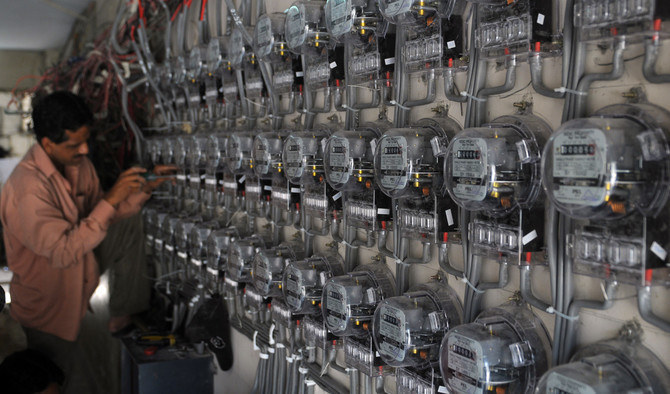
According to Energy Division’s data, on an average 10,000 megawatts electricity is surplus in summer and it doubles to around 18,000 megawatts in winter.
Last year, Power Division submitted a plan before cabinet to curtail circular debt by December 2020 to Zero but this proved a just theory as circular debt continued to increase at a higher rate as compared to previous years.
Power sector involves a series of misaligned and reactive policies and found itself at a critical stage despite successive upward revisions in the consumer-end tariff in last three years. This was almost 45 percent increase in tariff, but circular debt piled up more than Rs 2.3 Trillion.
Break-up available of pending new electricity applications shows Multan Electricity Power distribution Company is at top with 218, 000 applications, following by Lahore Electricity Supply Company with 107,866 applications.
Furthermore, PESCO has pendency of 4, 664, IESCO has 44225, GEPCO 51,030, FESCO 54,278, HESCO 3,069, SEPCO 524 and QESCO 470. Whereas K Electrict has 17,705 pending applications on 30th June 2021. All this has resulted at accumulation of circular debt to the tune of more than Rs 2.3 trillion, which is still on rise despite tall claim of government to curtail it.
A year wise study of last five years increase on circular debts revealed that in current year increase in debt reduced but still this is more then increase in 2016-17. In 2016 circular debt increase to Rs 818 billion, in 2017-18 to Rs 1127 billion, in 2018-19 to Rs 1618 billion, in 2019-20 to Rs 2151 billion and in 2020-21 increased to 2280 billion.
Further beak up of Circular Debt showed that in 2016-17 payable due to IPPs and GENECO show was Rs 379 billion, in 2017-18 was Rs 544 billion, in 2018-19 it went up to Rs 812 billion in 2019-2020 was Rs 1147 and in 2020-21 shoot up to Rs 1350 billion. And circular debt payable to ebergy payable sawp through loan from commercial banks by Power Holding Company in 2016-17 was Rs 818 and in 2020-21 rose to Rs 930 billion.
Revision in contracts with a significant number of IPPs will help in revamping the sector, however, circular debt would continue to increase without addressing governance issue, inefficiency in sector and likely addition of over 12000 megawatt of installed capacity by 2028.
The accumulation of electricity circular debt can rightly be termed as one of the country’s foremost macroeconomic challenge, he added. This is well known fact that electricity tariff in Pakistan was highest in the region which was hampering economic development.
