

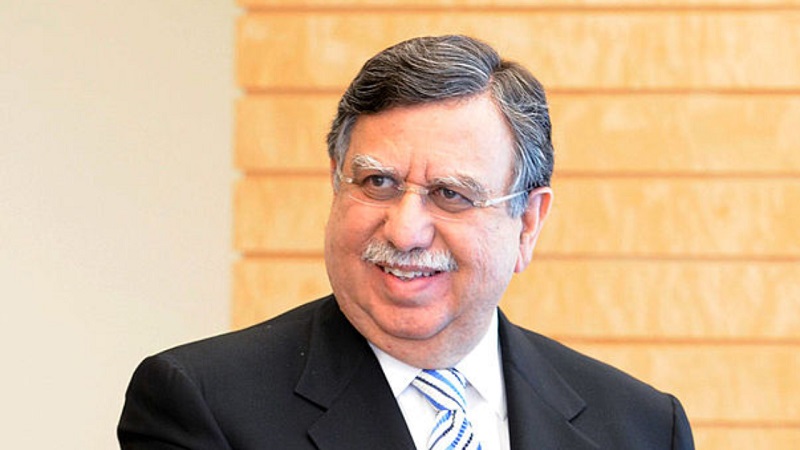

ISLAMABAD: Shaukat Tarin, Adviser to the Prime Minister on Finance and Revenue Shaukat Tarin today left Washington without completing talks with the International Monetary Fund (IMF).
His presence in Washington could have expedited the process, leading to endorsement of the government’s economic policies by the International Monetary Fund (IMF) and approval of the next tranche.
Tarin, nonetheless, left behind Finance Secretary Yousaf Khan to further pursue the talks for the resumption of a $6 billion loan facility that would bring an immediate relief to the cash-starved government by delivering a suspended tranche of $1 billion.
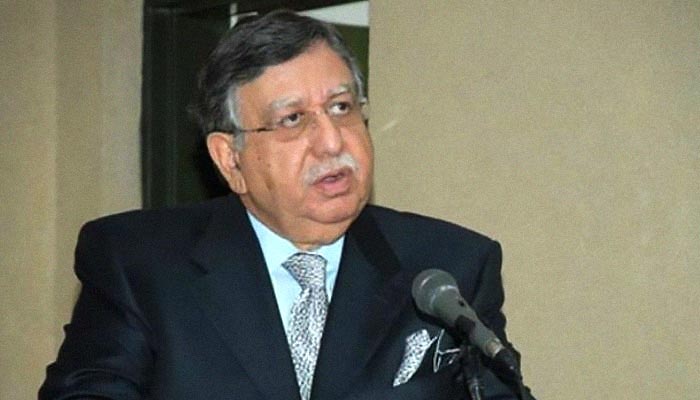
Mr Tarin first came to Washington in early October and went to New York on Oct 15 after a 10-day stay. He was scheduled to fly to London from there, but returned to Washington on Tuesday as an IMF official said at a news briefing that the talks had progressed to “a very good step.”
Till Wednesday evening, the Pakistan delegation expected a positive outcome and scheduled a news briefing on Thursday morning to share the good news with the media. However, they sent another alert to the media late at night, cancelling the briefing.
Later Shaukat Tarin silently left Washington, hopping on a train to catch an international flight from New York. He may join Prime Minister Imran Khan who is scheduled to visit Saudi Arabia this weekend.
During his two visits to Washington, Mr Tarin met IMF Managing Director Kristalina Georgieva and other officials twice, and after both meetings each side expressed the hope that the consultations would soon lead to a positive conclusion. They did not.
Pakistani officials, however, still insist that it would be a mistake to say the talks had failed. “I think we are in a good place,” said one of them. “We are getting positive vibes.”
Mr Tarin, who was the finance minister when he first came to Washington earlier this month, is now the financial adviser to the prime minister as he had to be a member of parliament to retain the minister’s position.
Although Mr Tarin’s team stayed silent on IMF-Pakistan talks, sources in the IMF said the government was reluctant to take certain steps needed to reduce the ever-widening gap between revenues and expenditure. Apparently, the government fears that such measures could lead to a price hike and inflation and the government could not take such risks to avoid further fury of public.
The problem areas highlighted by the IMF include electricity and government enterprises, such as PIA and Pakistan Steel Mills. The Fund argue that releasing the next tranche — of $1 billion — was not the real issue as the IMF had recently released $2.7 billion to help Pakistan deal with the Covid-19 crisis.
Concluding an IMF programme with a country sends a positive signal because the programme involves economic management.
