

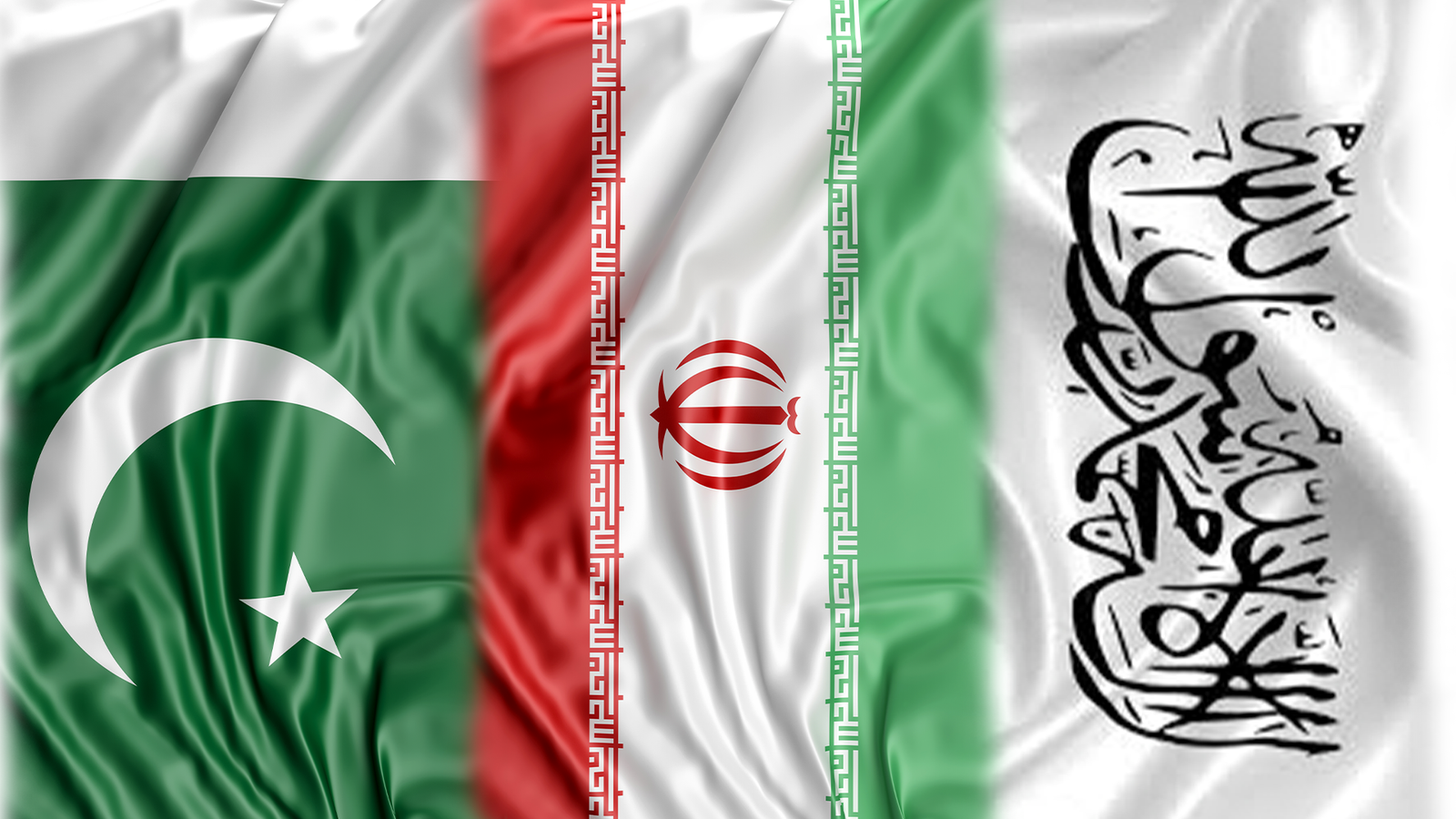

The regional response to Taliban’s military takeover of government in Afghanistan is mostly supportive. Iran has described withdrawal of US troops and subsequent events as a good omen for the national reconciliation in Afghanistan. Russia does not perceive any threat to itself or to its Central Asian client states from Taliban return to power. China wants to develop diplomatic relations with the Taliban government. And people in the Pakistani state machinery are euphoric over their “strategic assets” taking over the reins of power in Afghanistan.
This evolving regional response is highly favourable to Taliban primarily because in
the past civil wars in Afghanistan have always been fuelled by one of more of the neighbours of this war-torn country providing weapons, training, and finances to the one of the other side in the internal conflict. Now it seems all the neighbours are happy with the rise of the Taliban.
During the peak of US presence in Afghani- stan, the US intelligence reportedly present- ed the US Administration with the information that Iran and Russia both were providing weapons, intelligence support, and finances to Taliban for attacks on US forces inside Afghanistan.
It is also well known that the Afghan Taliban, at the behest of Russians and Iranians, have carried out operations against Daesh affiliated groups in Northern and Eastern Afghanistan, in the period between 2014 and 2016, when there was a sudden rise in the profile of ISIS in Afghani- stan. Pakistan’s ISI even hosted the intelligence chiefs of Russia, Iran, and China in Islamabad for a conference in July 2018 where it was agreed that the four intelligence services would coordinate their efforts against the rise of ISIS in Afghani- stan.
Does this mean that Russia and Iran have a working relationship with the Afghan Taliban? Does it also mean that for regional players the conservative Taliban are more acceptable than the radical ISIS, which, according to reports, were emerging inside Afghanistan? There are no clear answers to these questions as of now.
Iran has welcomed withdrawal of foreign troops and Russia has indicated willingness to use military force to protect its regional allies like Tajikistan, Turkmenistan, and Uzbekistan. Taliban are not mentioned as a threat in any of the Russian statements, although it is obvious heightened political instability or violence will be inimical to the interests of these states.
According to Pakistani officials and experts, Russians are particularly wary of the rise of ISIS in Northern Afghanistan close to its border with Central Asian States including Tajikistan, Turkmenistan and Uzbekistan. Russia still considers the security of Central Asia States as their prime responsibility. However, Russians have been discussing this problem with Taliban leaders and see Taliban as a poten- tial ally against ISIS and other extremists groups emerging in Northern Afghanistan.
The story of ISIS in Afghanistan is one of persistent decline. After a dramatic rise in Afghanistan from 2014 to 2016 with membership running into the thousands, the group has seen its power steadily wane. Over the last two years, the group has suffered back-to-back losses against US and Afghan military operations in the eastern provinces of Kunar and Nangarhar.
These losses have been compounded by the Afghan Taliban’s separate military campaign against the Islamic State. The Islamic State is reported to command around 2,200 fighters, but its overall trajectory is marred by defections of leaders and rank-and-file, loss of territory, and fragmentation of battlefield allies.
Can Pakistan afford to go along with this developing and favourable regional response to Taliban’s military takeover of Afghanistan? Pakistan’s Foreign Policy establishment is confronted with a much more complex set of foreign policy challenges and Afghanistan is just one piece of the bigger jigsaw.
The Taliban victory cannot overshadow all other aspects of Pakistan’s foreign policy and it is unlikely that Pakistani foreign policy establishment would get carried away and act under the sway of this victory of their strategic allies in Afghanistan.
First and foremost, Islamabad has to be mindful of its own financial situation, for which it is dependent on Washington’s nod for IMF and World Bank loans. This would remain a dominant factor in determining a country’s foreign policy directions and its position in the geopolitical chessboard in the regional power struggles in the foresee-able future.
Pakistan cannot afford to get on board the regional bandwagon led by countries like Russia, China, and Iran that seem to be moving towards completely excluding America from influencing events in Afghanistan and Central Asia. China and Russia are opposed to any move to provide bases to US forces in Central Asia.
American forces will be withdrawn completely from Afghanistan in the coming months. At the political level, the protégés of Washington have been squarely defeated in Afghanistan’s power struggle and pro-American forces are in complete disarray.
The politically ascendant Taliban are in a close embrace with Iranian and Russian security establishments. Experts say that Taliban leaders regularly consult Russian and Iranian officials before taking any major step or deciding on a new course of action.
One clear element that demonstrates that Islamabad doesn’t seem to be in the mood of completely breaking with Washington on Afghanistan is the latest Foreign Office comment on Afghan situation in which the mandarins of our foreign policy thought it appropriate to mention human rights and women rights as a determining factor in its policy and attitude towards the new Afghan government.
Human rights and women rights are not a factor in the stated policy towards Taliban of any of the regional countries including Russia, China and Iran. Such high ideals are exclusive to Washington and its western cousins. How far can Islamabad match its action with the words of its human and women rights policy is difficult to predict for the moment, but it is safe to say Islamabad doesn’t seem to completely ignore Washington’s concern.
There is also a possibility that Washington itself wanted the regional countries to take responsibility for managing the security of Afghanistan as it would have appeared natural for anyone making guesses about Afghanistan that the vacuum left behind by the withdrawing American forces would be filled by regional powers.
Regional power now seems to be providing support to the Taliban’s military takeover by awarding them political legitimacy in the form of acceptance of their advances
and victories. There are very strong voices in Washington accusing rising powers like China to be the beneficiaries of Americans sacrifices in blood and treasure.
The objective that Afghanistan should not become a hotbed of terrorism and Sunni militancy is a common aim shared by the United States with all regional players including Russia, China, and Iran.’
A simplistic analysis would suggest that the future scenario would only see a change of guards in the region. While previously it was American military handling the security in and around Afghanistan, now the regional militaries and security apparatuses would act as a supervisor for security in Afghanistan with Taliban acting as a surrogate of regional powers.
All the regional powers have an interest in not letting Afghanistan become a hub of terrorism and militancy, although the motivation stems from each country’s own security calculus. Iran is concerned with the rise of Sunni militancy in Western Afghani- stan, Russia is deeply concerned about rise of Daesh in Northern Afghanistan, and China is concerned about its Uighur militants finding safe harbour in Afghanistan.
The last scenario may be hypothetical at the moment, but the Pakistani security establishment will hit a goldmine if this scenario materializes.
Pakistani, Iranian, Russian and Chinese intelligence services have been coordinating their efforts in Afghanistan to prevent the rise of ISIS in the war torn country since 2018. Will that mean Pakistan be playing a central role in the regional efforts to prevent the rise of ultra-extremist Sunni groups in Afghanistan?
Two strong pointers in that direction are Pakistan’s more than normal influence on Afghan Taliban, a factor which will make Islamabad an effective player; and the considerable experience of tackling the Sunni militancy and terrorism in the region the Pakistani security apparatus has amassed. Not surprisingly both Russia and China have expressed an interest in learning from this experience.
The task before Pakistani foreign policy establishment will be to make all this acceptable for Washington. A destabilized Afghanistan will be a public relations disaster for Washington as well. However,
a scenario in which the Taliban as winners takes all is unlikely to be palatable for Washington.
All considered, some kind of national reconciliation in Afghanistan where pro-American political forces are given legitimacy within the new Afghan system, is what the Pakistani security establishment should aspire to achieving in the coming days.
That would mean Pakistan would again be a frontline state – a frontline state with its backers sitting not just in Washington but also in Beijing, Moscow, and Tehran.
