
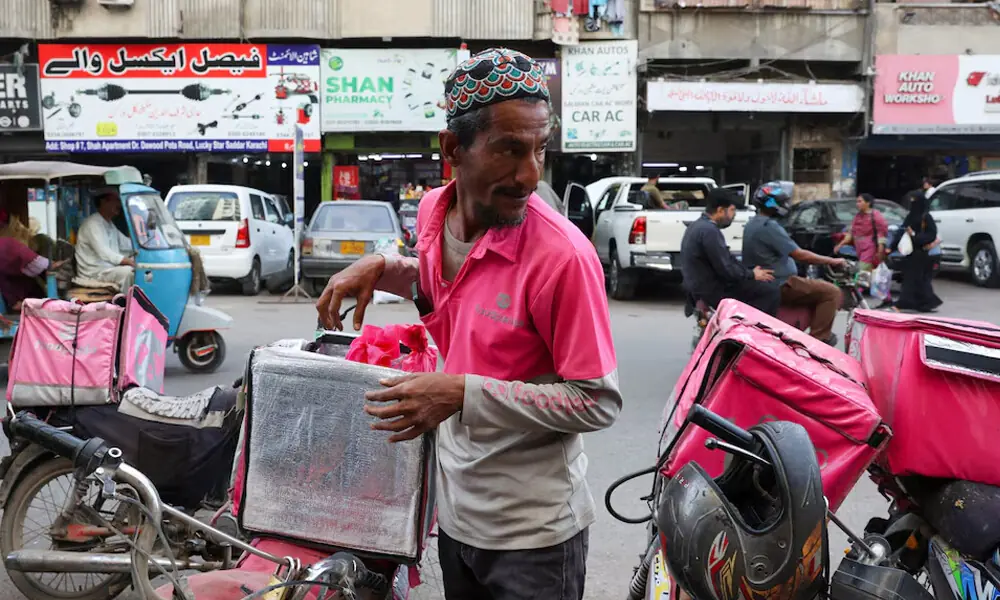

Rising Costs Shrink Earnings Despite Longer Working Hours
KarachiAs Eid al-Fitr approaches, delivery riders in Karachi report working longer hours while earning less due to soaring fuel prices. The increase, driven by disruptions in global oil supplies amid the US-Israeli conflict with Iran, has significantly reduced their take-home income.
Mohammad Mohsin, a 23-year-old rider, said he previously earned around Rs1,500 daily. However, his income has dropped to nearly Rs1,100 as petrol prices climbed above Rs320 per litre. Consequently, a large portion of his earnings now goes toward fuel expenses.
“Before it was all mine, now a huge sum goes into petrol,” he explained. Like many others, Mohsin finds it increasingly difficult to save for Eid-related expenses such as clothes and food.
Gig Workers Face Financial Strain Amid Inflation Pressures
Meanwhile, broader economic pressures continue to compound the problem. Inflation, which had eased after reaching a record 38% in 2023, has risen again to around 7%, increasing the cost of food, rent, and utilities. As a result, many riders earn below the Rs32,000 monthly minimum wage without any job security or benefits.
Additionally, austerity measures, school closures, and work-from-home trends have reduced commuting trips, affecting ride-hailing income. Although delivery demand rises during Ramadan, riders say it does not compensate for higher fuel costs.
Companies such as foodpanda claim they are adjusting pricing to support workers. However, riders argue that these measures fall short of rising expenses, forcing them to stay on the road longer.
For many, Eid celebrations now depend on how many extra hours they can work rather than festive joy.

