
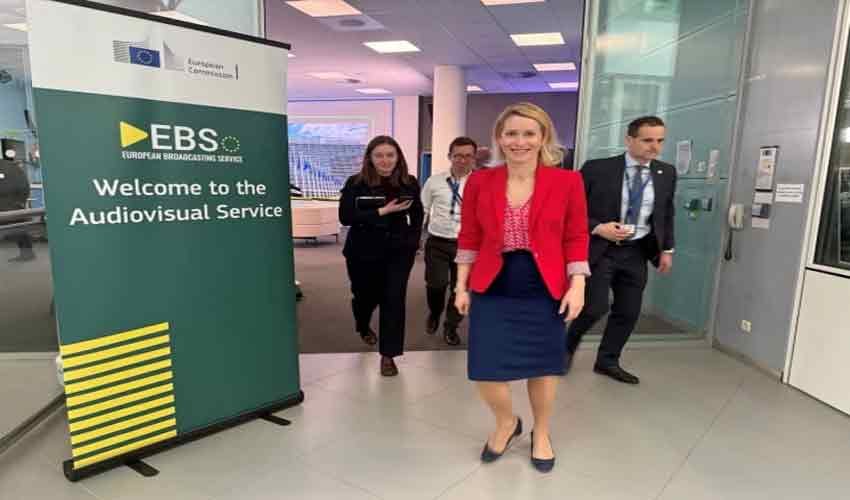

European Union foreign policy chief Kaja Kallas advised the United States and Israel to end their war with Iran. She warned that the conflict could escalate further and destabilise global markets.
Kallas emphasised that the EU is actively consulting Middle Eastern countries to identify pathways to de-escalation.
In an interview in Brussels, Kallas said Europe may support efforts to restore navigation through the Strait of Hormuz. However, she clarified that any role would likely remain diplomatic rather than military. The vital waterway, crucial for global oil and gas shipments, remains largely blocked by Iran.
Meanwhile, several European nations have rejected calls from US President Donald Trump to join a mission aimed at reopening the Strait. They argued that entering a conflict they did not initiate would be risky and could endanger lives. Despite pressure from Washington, European leaders continue to favour restraint.
Economic concerns deepen as crisis drags on
Kallas acknowledged that Europe has struggled to fully interpret US actions in Iran. Nevertheless, she said the bloc has adapted to Washington’s unpredictability by adopting a cautious and measured approach.
She stressed that ending the war serves everyone’s interests, noting that conflicts often escalate faster than they can be resolved. Therefore, the EU is engaging with regional partners, including Gulf states, Jordan and Egypt, to explore solutions allowing all parties to step back without losing face.
Additionally, Kallas warned of mounting economic consequences, particularly rising energy prices linked to tensions in the Strait of Hormuz. She cautioned that prolonged disruption could trigger a broader global crisis affecting food, fertiliser and energy supplies.
Instead of military action, Kallas advocated diplomatic frameworks similar to the UN-backed Black Sea grain deal, highlighting ongoing discussions with UN Secretary-General Antonio Guterres.

