

US President Donald Trump was warned before launching strikes on Iran that Tehran could retaliate against US allies in the Gulf, contradicting his claim that the response came as a surprise, according to a US official and sources familiar with intelligence assessments.
Pre-war intelligence reports outlined retaliation as a possible outcome, though not a certainty. One source said the scenario was “on the list of potential outcomes,” indicating that policymakers had been alerted to the risks.
Despite this, Trump said twice on Monday that Iran’s strikes on Qatar, Saudi Arabia, the United Arab Emirates, Bahrain, and Kuwait were unexpected. Speaking at a White House meeting, he said, “They weren’t supposed to go after all these other countries… Nobody expected that. We were shocked.”
His remarks followed other administration claims that lacked confirmation from US intelligence, including assertions that Iran was close to developing a missile capable of reaching the US mainland and could rapidly produce a nuclear weapon.
Officials had cited these concerns, along with an alleged imminent threat to US forces, as justification for joining Israel in launching airstrikes on Iran on February 28.
Fears of wider regional conflict grow
Meanwhile, sources said Trump had also been briefed that Iran might attempt to shut down the Strait of Hormuz, a critical global energy route. Over the past two weeks, Iran has significantly disrupted shipping through the waterway, through which about 20 percent of global oil supplies pass, driving up energy prices.
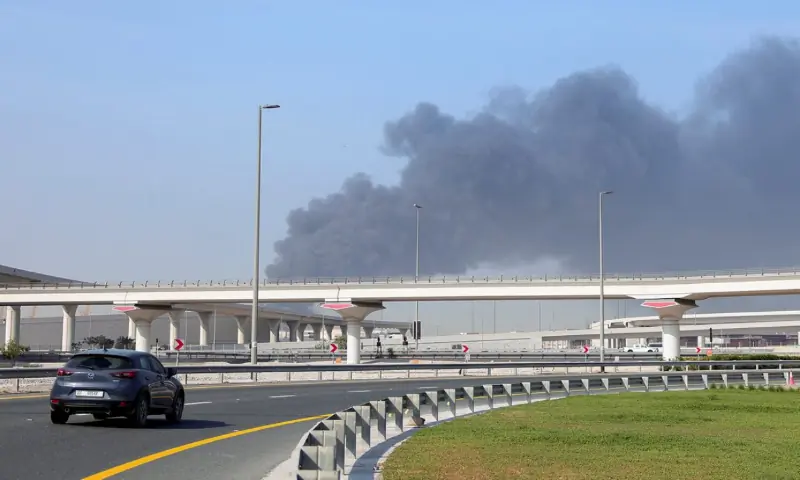
Iranian drones and missiles have struck multiple targets across Gulf states, including US military bases, diplomatic sites and civilian infrastructure such as hotels and airports.
A second source said US intelligence had assessed that Israeli plans to target senior Iranian leadership would likely trigger retaliation against American personnel and facilities in the region.
Furthermore, intelligence agencies warned that Iran could expand its response to include US allies, particularly if it perceived them as supporting the attacks.
However, diplomatic evacuations from some regional embassies only began after the strikes had already started.

